Best Time to Visit Portugal: A Month-by-Month Guide
If you have ever tried to book Lisbon flights for August and watched the price double overnight, you already understand why the best time to visit Portugal is not a throwaway line in a guidebook.
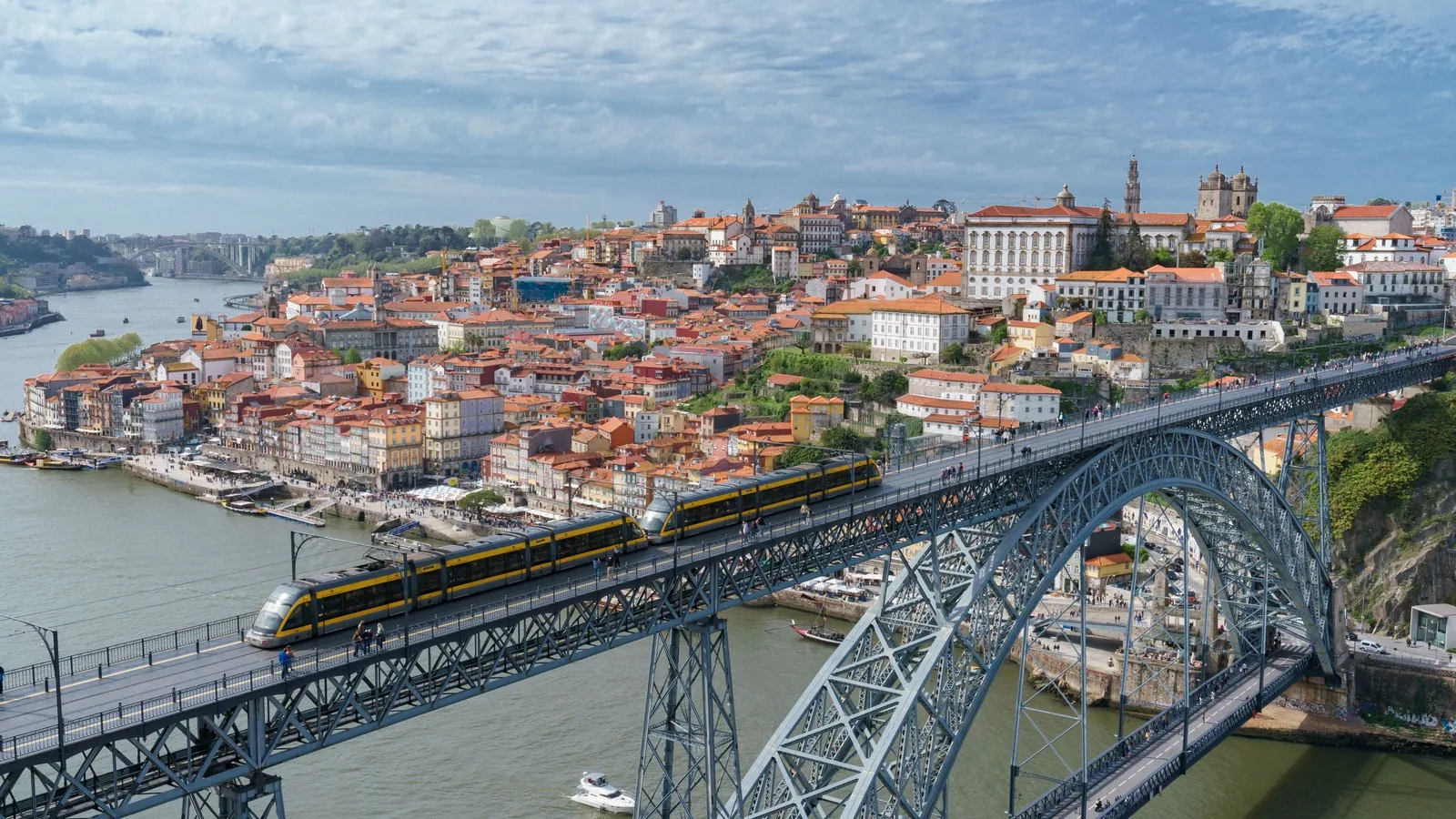
If you have ever tried to book Lisbon flights for August and watched the price double overnight, you already understand why the best time to visit Portugal is not a throwaway line in a guidebook. It is the single decision that shapes your budget, your crowd tolerance and how much of the country you actually get to enjoy rather than queue for.
For most travellers, the best time to visit Portugal is April to May or September to October: warm enough for sightseeing and coastal walks, without the July to August squeeze on prices and hotel rooms. If beach weather is non-negotiable, July and August are the driest and warmest stretch of the year in Lisbon and the Algarve, at the cost of crowds and higher rates. This guide walks through Portugal's climate baseline, what peak and off season actually look like, a month-by-month table covering January to December, how Lisbon, Porto and the Algarve differ, and how to pick your own window based on what you actually want from the trip.
Quick Answer
The best time to visit Portugal is April to May and September to October. In Lisbon those months open at a daily average high of about 20°C in April and climb into the mid-20s by September, rainfall sits well below the winter figures, and crowds and prices are below the July to August peak per IPMA's Lisboa/Gago Coutinho station normals. Choose July or August instead if warm sea water and reliable sun matter more to you than avoiding queues.
Not sure which month fits your trip?
The month finder gives you a recommendation based on your trip style, where you are going, how you feel about heat and what matters most to you.
Key Takeaways
- Shoulder season (April to May, September to October) gives the best balance of mild weather, lower crowds and lower prices across Lisbon, Porto and the Algarve.
- Portugal's official 30-year reference is IPMA's 1991-2020 normals. July is the driest month at the Lisbon, Porto and Faro stations alike; August is marginally the warmest in Lisbon and Porto.
- Room demand and rates are typically highest in high summer, and that pressure — not the weather — is what makes July and August expensive.
- Faro averages 455 mm of rain a year against Porto's 1,147 mm, so where you are going matters more than any national average.
- For July and August, aim to hold your core Lisbon, Porto and Algarve nights a few months out, especially if your dates or your preferred area are fixed.
- November to March is Portugal's off season: cheaper, quieter, but wetter and with shorter days and some seasonal closures.
In This Article
- Best Time to Visit Portugal at a Glance
- Portugal's Climate Baseline: What the Normals Show
- Portugal Shoulder Season: Why Spring and Autumn Win
- Portugal Peak Season: Weather, Crowds and Prices
- Portugal Off Season: November to March
- How Lisbon, Porto and the Algarve Differ
- Portugal Month by Month: January to December
- How to Choose Your Months by Travel Priority
- Costs, Bookings and Timing
- Common Mistakes Travellers Make
- Frequently Asked Questions

Best Time to Visit Portugal at a Glance
The best time to visit Portugal depends on what you are optimising for, but two windows cover almost every traveller's needs. Shoulder season, April to May and September to October, suits sightseeing, wine regions and general city travel because it pairs comfortable daytime highs with far fewer crowds than summer. Peak season, July and August, suits beach-first trips because it is the warmest and driest stretch of the year on the coast, and it also carries the highest prices and the tightest hotel availability.
A genuine third option exists for budget-conscious or heat-averse travellers: the off season, November to March, when prices fall further and the country empties out, though at the cost of shorter days, more rain and some seasonal closures along the coast. None of these three is objectively wrong. They simply trade different things for different priorities, which is why the rest of this guide compares them honestly rather than pushing one answer. If you are split between two seasons, the month finder below can narrow it down based on what matters most to you.
| Season | Best for | Verdict |
|---|---|---|
| Shoulder (April to May, September to October) | Sightseeing, wine regions, first-time visitors, couples | Best overall balance of weather, crowds and price for most trips |
| Peak (July to August) | Beach holidays, dependable sun and the best of the swimming season, families tied to school holidays | Best weather reliability, but book early and expect higher rates |
| Off season (November to March) | Budget trips, city breaks, avoiding crowds entirely | Cheapest and quietest, but wetter with shorter days and some closures |
Portugal does not really have a wrong time to visit. It has a time that matches what you actually came for, and a time that does not.
Portugal's Climate Baseline: What the Normals Show
Portugal's official climate reference is the Instituto Português do Mar e da Atmosfera's 1991-2020 normals, a 30-year dataset covering monthly temperature and precipitation at stations across the country as published by IPMA. This is the baseline meteorologists and tourism planners use to set expectations, and it is far more reliable for trip planning than a single year's weather or a short-range forecast.
Across the mainland's coastal stations, July is the driest month of the year and one of the two warmest. At Lisboa/Gago Coutinho the July normal is 2.9 mm of rain against an annual total of 722.5 mm; by October that has risen to 102.9 mm as the autumn rain returns per the station's IPMA fiche. Those two numbers — the monthly mean daily maximum and the monthly rainfall — will tell you more about a realistic trip than any amount of "Portugal in summer" prose.
Expert Insight: A climate normal is a 30-year average, not a forecast. It is the right tool for choosing between May and October three months out, and the wrong tool for deciding what a specific week will do. Pick the month on the normals, then check IPMA's short-range forecast once your dates are close.
Portugal Shoulder Season: Why Spring and Autumn Win
Portugal's shoulder season, April to May and September to October, gives the strongest overall balance of weather, crowd levels and price for most itineraries. In May, Lisbon's mean daily maximum is 22.8°C with 50.7 mm of rain across the month — comfortable enough for full days of walking in Alfama or the Douro valley without summer's heat fatigue.
September holds onto most of summer's warmth, with a Lisbon mean daily maximum of 26.8°C, while crowds and rates have already begun easing off their August peak. October is four degrees cooler at 22.6°C, but the bigger change is what you pack for: rainfall almost triples, from 35.9 mm in September to 102.9 mm per IPMA's Lisbon normals.
Expert Insight: That September-to-October step is the single biggest month-to-month change in Lisbon's whole year. Nothing else on the calendar shifts as much in four weeks, which is why a late-October trip needs a genuinely different packing list from an early-September one, even though the temperatures look similar on paper.
Are spring months genuinely good for sightseeing, not just a compromise? Yes. April and May deliver mild daytime highs, substantially lower crowding than summer, and less rain than the winter months, which makes them arguably the single best window for museum-and-market city travel rather than beach lounging. The catch is the water: a beautiful 23°C afternoon in May does not mean a warm Atlantic, and travellers whose whole holiday depends on long swims usually find spring less convincing than they expected.
Most coastal restaurants, seasonal attractions and small rural guesthouses run their full season from around April through October, and scale back or close for parts of November to March. That is what makes the shoulder months work: you get lower prices while nearly everything is still open, which is not true of January.
If I had to choose one month for the broadest mix of beach weather and easier sightseeing, I would pick September. Two caveats come with it. Early September still behaves a lot like August in the popular places, so the crowd relief mostly arrives after the first week or two, and the weather grows steadily less predictable as the month goes on.
Portugal Peak Season: Weather, Crowds and Prices
Portugal's peak season runs July through August, and the trade is simple: the most dependable weather of the year in exchange for the highest prices and the least choice. Demand for rooms typically concentrates into those weeks, and it is that concentration rather than anything about the climate that moves rates and empties the good addresses first.
The weather reward is real. Lisbon's mean daily maximum is 28.3°C in July and 29.0°C in August, with 2.9 mm and 5.0 mm of rain respectively — effectively a dry two months per IPMA's Lisbon fiche. Faro runs warmer and drier still, at 29.4°C and under a millimetre of rain in July per the Faro fiche. If you want to plan a beach day three months out and be right, this is the window that lets you.
If maximum reliability for swimming and sunbathing is your priority, travel in July or August and settle your core Lisbon, Porto and Algarve nights early. Expect higher rates and less flexible cancellation terms than at any other time of year.
Portugal Off Season: November to March
Portugal's off season runs November through March and is the lowest-demand window for most coastal tourism businesses, with higher monthly rainfall and less reliable beach weather than the rest of the year per the IPMA 1991-2020 normals. This is the cheapest, quietest time to see Lisbon and Porto, but it is not a beach trip.
Winter is also the point where treating Portugal as one country costs you the most. January brings 49.3 mm of rain to Faro and 151.0 mm to Porto, three times as much, with Lisbon between them at 95.9 mm. A winter week in the Algarve and a winter week in Porto are not the same holiday, and November is the wettest month of the year at both the Lisbon and Porto stations.
Coastal Algarve towns wind down considerably; some seasonal restaurants and smaller guesthouses close entirely, and the reliable sun that defines the region in summer becomes far less certain. Inland and city breaks fare much better, since museums, restaurants and transport all run at full capacity year round, just without the queues. Winter is genuinely viable for a Portugal trip if your focus is Lisbon, Porto or a wine-region itinerary rather than a beach holiday.
How Lisbon, Porto and the Algarve Differ
Portugal's climate is not uniform, and treating Lisbon, Porto and the Algarve as interchangeable is one of the most common planning mistakes. In July, the mean daily maximum is 24.3°C at Porto/Pedras Rubras, 28.3°C in Lisbon and 29.4°C at Faro — a five-degree spread on the same day of the same summer per IPMA's Porto fiche.
| Region | Strongest months | Summer | Winter | Best for |
|---|---|---|---|---|
| Lisbon | May, September, early October | 28.3°C in July, almost no rain in July or August | 14.4°C and 95.9 mm in January | City sightseeing, day trips, shoulder-season travel |
| Porto | May, June, September | 24.8°C in August; wetter than Lisbon in every month | 14.0°C and 151.0 mm in January | Cooler summers, the Douro, wine travel |
| Algarve (Faro) | Late May, June, September | 29.4°C in July, under 1 mm of rain | 16.3°C and 49.3 mm in January | Beaches, and the longest usable beach season |
The annual totals make the same point more bluntly. Porto records 1,146.9 mm of rain in an average year, Lisbon 722.5 mm and Faro 455.1 mm. Porto is not a wet-weather destination — its summers are dry and its cooler August is a genuine argument in its favour if you dislike heat — but a packing list built for the Algarve will let you down there, and the reverse is true in reverse.
What is the best time to visit the Algarve specifically? Late May, June and September give the best value: the sea has had time to warm, the light is excellent, and rates have not yet hit their August ceiling. If your trip is built around the coast itself, our guide to the best beaches in Portugal covers which ones suit families, couples and budget trips, and when their lifeguard seasons actually run.
Portugal Month by Month: January to December
Here is the whole year in one view. The feel described is Lisbon's; it shifts warmer and drier as you go south, cooler and wetter as you go north, and the table above carries the figures for all three regions.
| Month | Typical feel | Crowds | Prices | Best for | Main trade-off |
|---|---|---|---|---|---|
| January | Cool and wet; mildest in the Algarve | Very low | Lowest | Lisbon and Porto city breaks | No beach weather, shortest days |
| February | Cool and still wet | Very low | Lowest | Cities, Algarve walking | Rain likely; some coastal closures |
| March | Milder and changeable | Low | Low | Sightseeing, wine regions | Unsettled; sea still cold |
| April | Mild and green, with showers | Rising | Moderate | Lisbon, Sintra, the Douro | Easter and school holidays lift rates |
| May | Warm and mostly dry, 50.7 mm of rain | Moderate | Moderate | One of the two best all-round months | Atlantic still cool for swimming |
| June | Warm, dry, the longest days of the year | High from mid-month | Rising steeply | Beaches before the peak | Prices climb through the month |
| July | Hot, and the driest month of the year at 2.9 mm | Very high | High | Beach-first trips, reliable sun | Crowds, heat inland, book early |
| August | The warmest month in Lisbon and Porto; Faro's July and August are level | Highest | Highest | Warm sea, family beach holidays | Most expensive, least availability |
| September | Still warm, on land and in the water | High early, easing later | High, easing | The strongest all-round month | Early September still feels like August |
| October | Mild, but the rain returns at 102.9 mm | Low | Falling | Cities, harvest, walking | Wet spells; sea cooling fast |
| November | Cool, and the wettest month in Lisbon and Porto | Very low | Low | City breaks, food and wine | Short days, unreliable weather |
| December | Cool and wet; festive in the cities | Low, rising at Christmas | Low outside the holidays | Christmas city breaks | Coastal towns are very quiet |

Read the table by column rather than by row. If your constraint is money, the left and right ends of the year are where it goes furthest. If it is crowds, look at the crowd column and note that October and November buy you more solitude than April does for similar money. If it is swimming, only about four months of the year genuinely deliver it.
Two months deserve a warning label. June looks like a bargain against July on every metric, and in the first half of the month it usually is, but rates climb steeply as the month goes on rather than jumping on 1 July. September is the mirror image: the calendar says shoulder season from the first, and the popular parts of the Algarve do not agree until the middle of the month.
Find Your Best Month for Portugal
Four questions, and the table above turns into an answer for your trip rather than everyone's.
Pick an answer to each question and the months sort themselves.
A suggestion, not a forecast: it reads the same IPMA normals and the same crowd and price pattern as the rest of this guide.
How to Choose Your Months by Travel Priority
Start by naming your actual priority rather than defaulting to "summer." City sightseeing, wine and landscape travel, and beach holidays each favour different months, and Portugal rewards travellers who match the season to the plan rather than the other way round.
- City sightseeing (Lisbon, Porto, Sintra): April to May or September to October give the most comfortable walking weather with far fewer crowds at major sights.
- Wine regions and landscapes (Douro Valley, Alentejo): September and October coincide with harvest season and offer warm, generally dry days ideal for vineyard visits.
- Beach holidays (Algarve, Comporta): July and August are generally the strongest months for warmer Atlantic water and dependable sun, at the cost of the highest prices and the busiest beaches; late June and September come close for less.
- Road trips and outdoor travel: May, June and September suit long driving days and coastal walking — warm enough to be outside all day, cool enough that walking at midday is not a mistake.
- Budget-first travel: November to March offers the lowest prices nationally, best suited to city breaks rather than coastal plans.
- Avoiding crowds above all else: Target April to May or late September, when most seasonal businesses are still open but demand is well below its summer peak.
If Portugal is one half of a longer trip, the same logic applies across the border: our Spain and Portugal itinerary works best in exactly these shoulder windows, for the same reasons.
Before You Book
- Decide whether your trip is beach-first or city-first, since that single choice reshapes which months suit you.
- Check IPMA's station fiche for your exact destination rather than a national average, especially if comparing Porto against the Algarve.
- For July or August, hold your core Lisbon, Porto or Algarve nights a few months out rather than hoping for late availability.
- Pack a light rain layer for shoulder-season trips after mid-September, even if the temperatures look warm.
- Confirm which seasonal restaurants, guesthouses or attractions stay open if you are travelling November to March.
Costs, Bookings and Timing
Timing changes three things about a booking: what it costs, how much choice you have, and how easily you can change your mind. All three move against you in July and August, and all three move in your favour from November to March.
In practice that means the high-demand addresses — central Lisbon, the Algarve coast, the Douro in harvest season — need deciding first and booking earliest, while a January city break can be assembled a fortnight out with better cancellation terms and no real penalty.
Common Mistakes Travellers Make
The most expensive mistake is booking late for high-summer travel. Assuming availability in late July without an advance reservation is genuinely risky, and the cost of being wrong is not a slightly worse room but a much worse location.
The second mistake is treating Portugal as climatically uniform. Lisbon, Porto and the Algarve differ meaningfully in both temperature and rainfall — Porto gets two and a half times Faro's annual rain — and a packing list built for one region will let you down in another per IPMA's Faro station fiche.
The third is using long-run climate normals to plan a specific day months in advance. The 1991-2020 normals are excellent for setting realistic expectations for a month, but they are not a substitute for checking a short-range forecast once your trip is close.
A climate normal will tell you what May usually looks like. It will not tell you what your specific Tuesday will do, and no amount of wishful reading changes that.
Not Sure Your Hotel Is in the Right Area?
Timing your trip is half the decision. Where you stay once you get there is the other half, and it is just as easy to get wrong.
Score your hotel's location in 2 minutes →Frequently Asked Questions: Best Time to Visit Portugal
What is the best month to visit Portugal overall?
September, for most people. Lisbon stays in the mid-20s, the sea is usually still warm enough to swim in, and crowds and rates ease off the August peak. May is the strongest alternative if you would rather have quieter cities than warm water.
What is the cheapest time to visit Portugal?
November to March, outside the Christmas and New Year window. Demand is at its lowest, rates and cancellation terms are at their most forgiving, and the trade is shorter days, more rain and some closures in coastal towns.
What is the best time to visit Portugal for beaches?
July and August are generally the strongest months for warmer Atlantic water and dependable sun: Faro averages under a millimetre of rain across the whole of July. Late June and September deliver most of the same beach weather for less money and with fewer people.
What is the best time to visit Portugal to avoid crowds?
Late September and October, if you still want most things open, or November to March if you want the country close to empty. April and early May are the quieter half of spring, before the June build-up starts.
What is the best time to visit the Algarve?
Late May, June or September. The sea has warmed, the light is at its best, and rates sit below the August ceiling. Faro also has the mildest winter of the three regions in this guide, but that is a walking climate rather than a swimming one.
Is Portugal worth visiting in winter?
Yes for Lisbon, Porto and wine-region trips, where museums, restaurants and transport run at full capacity without the queues. No if the holiday depends on beach days: Algarve coastal towns wind down and reliable sun is not on offer.
Is Porto's weather different from Lisbon's?
Meaningfully, yes. Porto averages 1,146.9 mm of rain a year against Lisbon's 722.5 mm, and its warmest month is a full four degrees cooler. Porto summers are still dry; the difference shows up either side of them.
How far ahead should I book Portugal in summer?
For July and August I would aim to hold core Lisbon, Porto and Algarve nights a few months out, particularly if your dates are fixed or you want a specific neighbourhood. Outside those months, a few weeks is usually enough.
Sources and References
- Instituto Português do Mar e da Atmosfera. Normais Climatológicas 1991-2020. https://www.ipma.pt/pt/oclima/normais.clima/1991-2020/
- Instituto Português do Mar e da Atmosfera. Normal Climatológica — Lisboa / Gago Coutinho, 1991-2020. https://www.ipma.pt/bin/file.data/climate-normal/cn_91-20_LISBOA_GAGO_COUTINHO.pdf
- Instituto Português do Mar e da Atmosfera. Normal Climatológica — Porto / Pedras Rubras, 1991-2020. https://www.ipma.pt/bin/file.data/climate-normal/cn_91-20_PORTO_PEDRAS_RUBRAS.pdf
- Instituto Português do Mar e da Atmosfera. Normal Climatológica — Faro, 1991-2020. https://www.ipma.pt/bin/file.data/climate-normal/cn_91-20_FARO.pdf
Part of Plan & Budget.