Best Time to Visit South Africa: A Season by Season Guide
Ask five South Africa veterans when to visit and you'll get five different answers, and all five will be right. The country is split by two opposite rainfall patterns, so the best time depends entirely on what the trip is for.

Ask five South Africa veterans when to visit and you'll get five different answers, and all five will be right. The best time to visit South Africa isn't one month. It's a set of overlapping seasons that never quite agree, because the country is split down the middle by two opposite rainfall patterns. Kruger and the interior take their rain in summer and dry out in winter. The Western Cape does the exact reverse. Those two halves are never in season together, and no amount of planning will make them line up.
So the useful question isn't "when should I go to South Africa". It's "what is this trip actually for". This guide takes that apart region by region, and ends with a twelve-row month table you can plan straight from.
Quick Answer
There is no single best time to visit South Africa, because its regions run on opposite calendars. Go April to September for dry-season Kruger safaris; November to February for Cape Town's warmest beach weather, but April to May and September to October for the Cape at its best overall; June to November for Hermanus whales; and roughly August to September for Namaqualand's wildflowers. If you want Cape Town and a safari in one trip, September is the strongest compromise month of the year.
Key Takeaways
- Kruger's dry season, April to September, gives the clearest game viewing: SANParks says vegetation thins and water is restricted to rivers and waterholes.
- Cape Town's warmest, driest weather is November to February, but South African Tourism names April to May and early September to October as the best time to visit overall.
- Dry-season safari does not mean warm safari. SANParks describes winter as warm dry days and cold nights, and warns that night drives need warm clothing.
- The Garden Route is the exception to everything: SANParks calls it the only area in Africa where rainfall occurs throughout the year, so it has no dry season to aim for.
- A South African winter does not mean no beach anywhere: South African Tourism puts KwaZulu-Natal coast averages around 26 °C.
- September is the quietest month of the year for foreign arrivals, at 7,3% against January's 10,7%, per Statistics South Africa's Tourism 2024 report.
In This Article
- Which Season Fits Your Trip
- There Is No Single Best Month
- Best Time for Kruger Safari
- Cape Town and the Western Cape
- The Garden Route, KZN and the Drakensberg
- Namaqualand Wildflower Season
- Hermanus Whale Season
- Combining Cape Town and Safari
- Peak vs Off Season Trade-offs
- School Holidays and Demand
- Weather by Month
- Frequently Asked Questions
Which Season Fits Your Trip
Start here. Find the thing you would be most annoyed to miss, take the window next to it, and treat everything else in the trip as negotiable. Every row below is unpacked in its own section further down.
| Your priority | Aim for | Why | Main trade-off |
|---|---|---|---|
| Kruger game viewing | April to September | Thin vegetation, animals tied to remaining water | Cold dawns and night drives; busiest safari season |
| Cape Town beach weather | December to February | Warmest and driest stretch of the Cape year | Busiest and most expensive; also the windiest months |
| Cape Town sightseeing | April to May, September to October | The tourism board's own pick for the city at its best | Beach weather is a gamble rather than a given |
| Whales at Hermanus | June to November | The southern right season, free from the cliff path | Boat trips run weather permitting, not on demand |
| Namaqualand wildflowers | Roughly August to September | The bloom follows the winter rain | Rainfall-dependent dates; flowers need a sunny day |
| Winter beach | June to August, KwaZulu-Natal | Coast averages around 26 °C while the Cape is wet | A different trip entirely from a Cape Town one |
| Cape Town and safari together | September, or April to May | Dry-season Kruger overlapping the Cape's best window | Neither region is at its own absolute peak |
There Is No Single Best Month, So Choose by Priority
Treating South Africa as one climate zone is where a lot of itineraries quietly fall apart. The country straddles two rainfall regimes. Kruger, the Lowveld and most of the interior are summer-rainfall country: wet and green from October to March, dry and sparse from April to September. The Western Cape is winter-rainfall country and runs the mirror image, wettest June to August and driest November to February. Book a February trip built around waterhole sightings and you have chosen the month when the bush is thickest and the animals least need to come to the water.
According to South African Tourism's own regional guidance, seasonality here is region-specific rather than national, which is why a single "best month" recommendation for the whole country is close to meaningless. Rank what you actually want out of the trip first, then let that choose the month.
South Africa doesn't run on one clock. It runs on four, and they rarely agree.
Best Time to Visit Kruger National Park for Safari
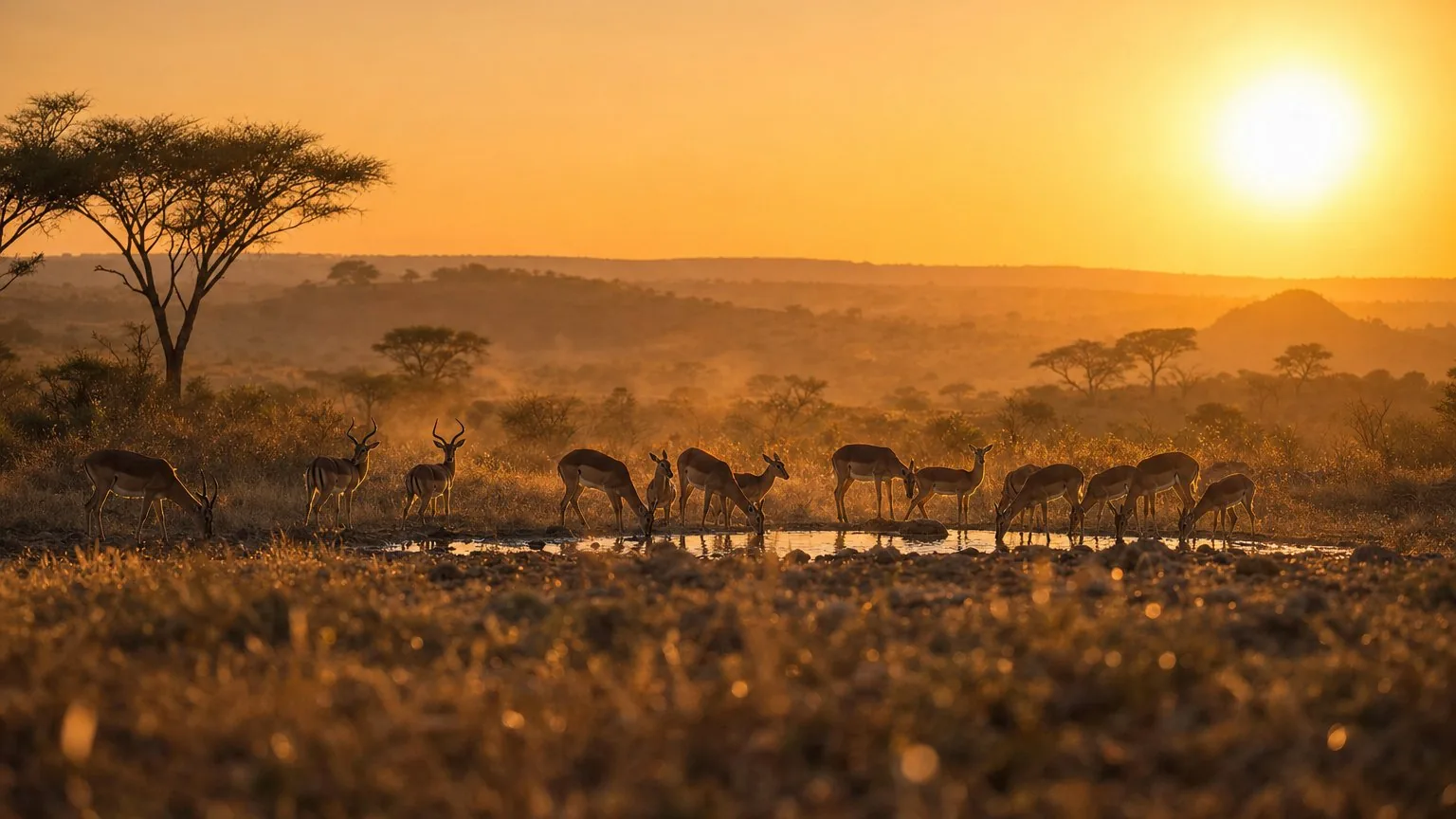
The best time for game viewing in Kruger is the dry season, April to September. SANParks' climate page for the park sets out both halves of the year plainly: the rainy season runs October to March, and the dry season April to September, when "traditionally, the best game viewing is in the winter as the vegetation becomes sparse and water is restricted to rivers and water holes". Fewer places to drink, less cover to hide in, and animals that have to come to you.
The wet season is not a write-off, it is a different park. SANParks describes the summer rains transforming "the arid park into a lush flowering paradise", with the caveat that "the increased foliage does make animals harder to see". Expect green landscapes, excellent birding and young animals among some species, rather than one synchronised calving event of the kind East Africa's migration is known for. Lodge rates often soften to match the harder sightings.
The part that catches people out is temperature. A dry-season safari is not a warm safari, or at least not all day. SANParks describes those winter months as "warm dry days and cold nights", and adds a flat warning that "visitors going on night-drives will require warm clothing". Game drives leave before dawn and return after dark, which is precisely when it is coldest: an open vehicle at 6am in July can be genuinely painful in the shorts you packed for the afternoon. Pack as though for two different climates in the same day, because that is what you have booked.
Cape Town and the Western Cape by Season
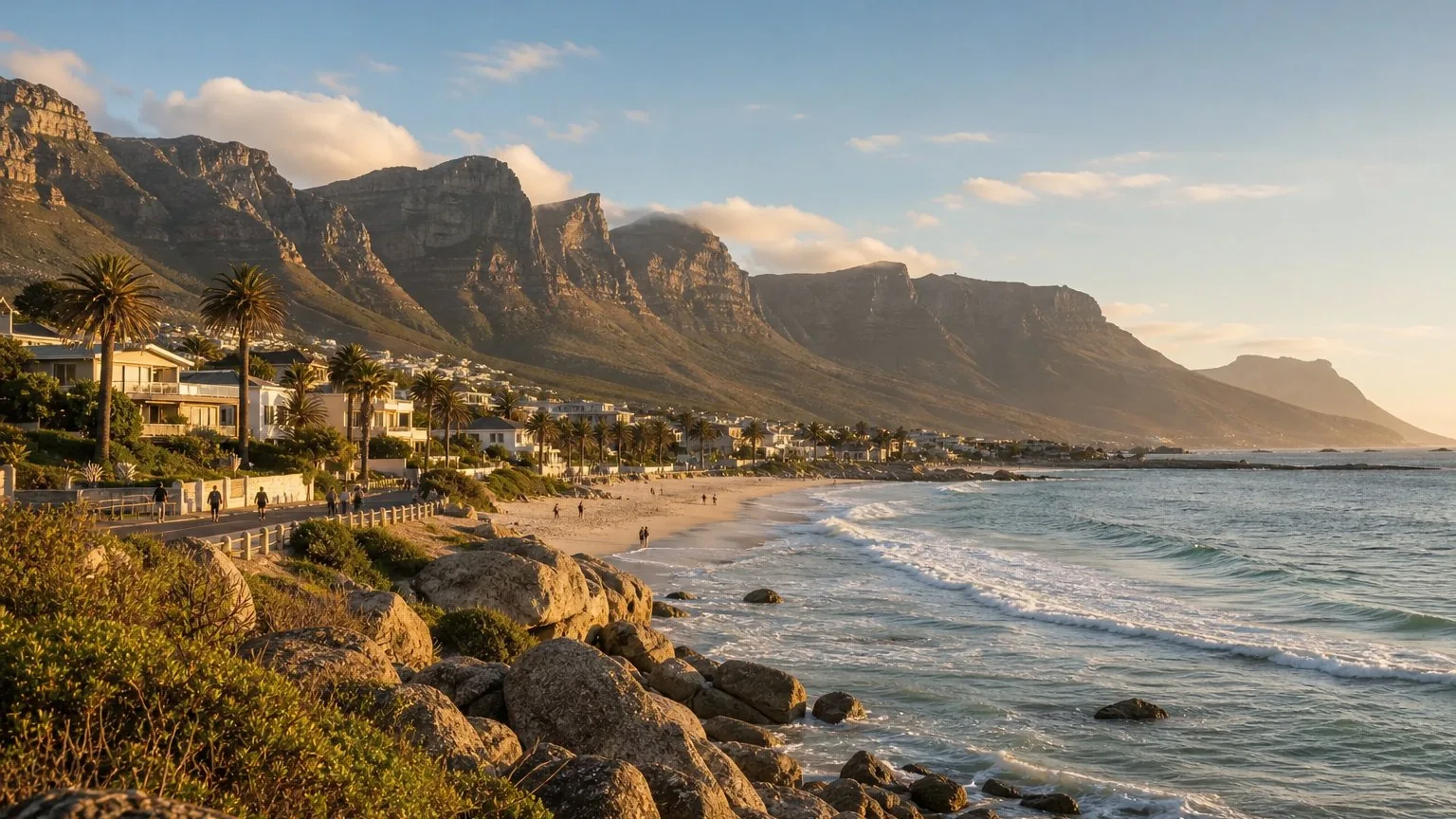
Cape Town's best time depends on what "best" means to you, and the honest answer is not the one most guides give. For warm, dry, swim-and-sundowner weather, it is the local summer, November to February. But South African Tourism, asked straight out when to visit, answers differently: "the best time to visit is in spring and autumn, which is April and May or the beginning of September to October." Milder days, thinner crowds, the Winelands turning colour in autumn and wildflowers arriving in spring. Summer is the peak, not automatically the best.
Winter, June to August, is the genuine off-season, and the same source is blunt about why: it is "characterised by wet and windy spells". That is not the same as unusable. Cape winter delivers clear bright days between the fronts, the lowest demand of the year, and a city that belongs to the people who live in it. It is a gamble rather than a washout.
| Season | Best for | Verdict |
|---|---|---|
| Summer, Nov to Feb | Beaches, long evenings, festivals | Best odds of warm, dry weather; busiest and windiest |
| Shoulder, Apr to May and Sep to Oct | Sightseeing, Winelands, walking | The tourism board's pick for the city at its best |
| Winter, Jun to Aug | Quiet streets, whales within reach | Wettest and windiest; generally the lowest demand |
Then there is the factor almost nobody plans for, and it is not rain. Cape Town's south-easter, the wind locals call the Cape Doctor, blows hardest from roughly October to March, so the summer you booked for reliable weather is also the windiest part of the year. It builds through the day and peaks in the afternoon, which makes mornings the safer slot for anything exposed. The Table Mountain cableway simply stops running when the wind is up: its live status page said exactly that on the day this guide was last checked, 27 September 2026 — closed, adverse weather, gale-force winds. When the south-easter blows, the False Bay side of the peninsula, Muizenberg through to Simon's Town, is usually sheltered when the Atlantic beaches are not.
My advice: keep one Cape Town day loose. Not a spare day, just an unbooked one you can move Table Mountain, a boat trip or Cape Point into. The mountain is the single most weather-dependent thing on most itineraries, and the cableway closing is an ordinary event rather than bad luck. If you have three days in the city and the mountain is open on day one, go on day one, even if the plan said Thursday.
The Garden Route, KwaZulu-Natal and the Drakensberg
Three more regions matter to a first South Africa trip, and none of them inherits Cape Town's or Kruger's calendar.
The Garden Route is the genuine oddity. SANParks describes it as "unique in Africa as the only area in which rainfall occurs throughout the year", adding that most of that rain falls at night. No dry season to aim for, no wet season to avoid: you will never get a guaranteed run of clear days, but you also can't pick the wrong month. That makes it the most forgiving stretch of a shoulder-season itinerary, and the sensible place to put your flexible days if the Cape is misbehaving.
The KwaZulu-Natal coast is the answer to the question people ask when they discover the Cape is wet in July. South African Tourism puts it plainly: "you can go on a winter beach holiday in Durban or on the KwaZulu-Natal coast as average temperatures hover around the 26 °C mark." This is the fact that breaks the idea of a single national winter. While Cape Town takes its rain, the eastern seaboard is warm, dry and swimmable, and it sits a short flight from Johannesburg and within reach of the Kruger region. A June-to-August trip built around KZN and a safari is a coherent itinerary; the same dates built around Cape Town beaches is not.
The Drakensberg belongs to the summer-rainfall half of the country, so its wet months are the Cape's dry ones. South African Tourism sums the year up in three short lines: "spring (September, October and November) and autumn (March, April and May) are very good months with stable weather", while "summer is characterised by dramatic thundershowers" and "in winter it can get very cold with snow". For walking, that points hard at the shoulder months either side of summer. Take rain gear in summer and proper warm layers in winter, and treat the afternoon as the unreliable part of a summer day.
When Do the Namaqualand Wildflowers Bloom
Namaqualand's wildflower season runs broadly through August and September, but it is rainfall-driven rather than calendar-driven, and the dates move every year. In its seasonal update of 29 July 2026, SANParks reported the bloom already beginning in Namaqua National Park after "early winter rains and consistently cool temperatures", and expected the peak "between mid-August and mid-September 2026, subject to favourable weather conditions". A season that starts early after good rain can finish early too.
There is a second dependency that catches people who did everything else right, and SANParks states it directly: for the best display, visit "on sunny days when temperatures reach 18 °C or higher, as most flowers open fully in warm sunshine". The flowers close in cold and cloud. You can book the correct fortnight and still arrive on a grey morning to a field that hasn't opened, which is the strongest possible argument for giving this two days rather than one, and for checking SANParks' current update before you commit to dates at all.
Hermanus Whale Watching Season
Southern right whales are in the bay from roughly June to November. Hermanus Whale Watchers gives the season as 1 June to 30 November annually and runs trips daily within it, weather permitting. Shore sightings tend to cluster strongest in September and October, which is also when the town is at its busiest: the Hermanus Whale Festival falls on 2 to 4 October 2026, in its 35th year.
The thing worth knowing before you budget is that the best whale watching in Hermanus is free. The cliff path runs along the town's edge and southern rights come close enough in to be watched properly without a boat, which is unusual anywhere in the world. Boat trips are an addition, not a requirement: among operators checked for 2026, adult fares start around R1,500, with premium packages costing more, and every departure is weather-dependent. Book one if you want it, but don't build the trip around a sailing the wind may cancel.
A whale doesn't care about your schedule, but the cliff path is free, and that's the best insurance policy going.
The Best Time to Combine Cape Town and Safari
Most people don't choose between Cape Town and a safari. They want both, usually with the Winelands or the Garden Route in between, and that is where the country's split calendar stops being trivia and starts costing money. Kruger's dry season is April to September. Cape Town's warmest beach weather is November to February. Those windows do not overlap at all. There is no month in which both regions are at their own peak, and any guide that implies otherwise is selling you something.
What you are looking for is the best compromise for the whole trip, and once you line the evidence up it points at one month more than any other. September sits inside Kruger's dry season, inside South African Tourism's own best-time window for Cape Town, inside the whale season, and at the tail of the Namaqualand bloom. It is also, by a clear margin, the quietest month of the year to arrive: Statistics South Africa's Tourism 2024 report records September as the lowest month for foreign arrivals at 7,3%, against 10,7% in January. Four seasonal calendars agreeing at the same time as the year's thinnest crowds is as close to a right answer as this country offers.
April to May is the alternative, and a good one: Kruger is drying out, the Cape is in its other recommended window, and autumn in the Winelands is worth the trip on its own. You give up the whales, which have not arrived yet, and the flowers, which are months away.
What September will not give you is Cape Town beach weather. It is spring, the water is cold, and the wind is picking up for summer. If lying on a Camps Bay beach is the non-negotiable, you are taking a December or January trip and accepting a greener, harder Kruger and the busiest, priciest few weeks of the South African year. That is a legitimate choice. It just isn't a compromise, and it helps to know which one you're making.
My advice: don't try to optimise every stop for its own peak season. It cannot be done here, and chasing it produces a worse trip than choosing a good compromise on purpose. Pick the one thing the trip is really for, put that in its best window, and let the other stops sit in their merely-decent months. A September safari with a bright, quiet, slightly windy Cape Town beats a February trip where the Cape is perfect and you spend four days looking at thick green bush.
Peak Season vs Off Season: What You Actually Trade
South Africa's peak is a stack of regional peaks that pile up around December and January, when the Cape summer, the long domestic school holiday and the year's heaviest international arrivals all land together. Note what that figure measures: arrivals at the border, not hotel prices. It tells you when you will be sharing the country, not what a room will cost.
Off-season windows exist in every region and are worth choosing rather than enduring. Kruger's wet season is greener and cheaper with harder sightings; Cape winter is wet and windy with the lowest demand of the year. The trick is knowing which trade you are making before you arrive.
| Priority | Peak window | Off-season alternative |
|---|---|---|
| Safari game viewing | Apr to Sep, dry season | Oct to Mar: greener, cheaper, harder to spot |
| Cape Town beaches | Dec to Feb, high summer | Apr to May or Sep to Oct: milder, quieter |
| Whale watching | Sep to Oct, peak sightings | Jun and Nov: whales present, fewer people |
| Avoiding crowds generally | — | September, the year's lowest arrivals month |
School Holidays and Domestic Demand in 2026
South Africa's own school calendar moves domestic demand as much as international arrivals do, and on the coast it often matters more. The 2026 calendar for public schools was published by the Minister of Basic Education in Government Gazette No. 52177 on 25 February 2025. It is final, and it sets one set of term dates for public schools nationally. The gaps between those terms are when South African families travel.
| Break | 2026 dates | What it affects |
|---|---|---|
| Autumn / Easter | 28 March to 7 April | Coastal towns and the Garden Route; Good Friday 3 April, Family Day 6 April |
| Winter | 27 June to 20 July | Kruger and the Lowveld in peak dry season; KZN coast |
| Spring | 24 September to 5 October | Overlaps the Hermanus festival weekend; Heritage Day 24 September |
| Summer | From 10 December | The long one: Cape Town, the whole coast, into January |
Two of those deserve a flag. The spring break runs straight through the Hermanus Whale Festival weekend, so the first weekend of October is the single most contested date in this guide. And if you were drawn to September for the reasons above, note that the month's last week is a school holiday: the first three weeks are the quiet part.
South Africa Weather by Month
Here is the whole year in one place. Read across your month rather than down a column, because the useful question is what a given month is good for, not what the thermometer says. "Safari" here means Kruger and the Lowveld; the Cape column covers Cape Town and the Winelands.
| Month | Cape Town & Western Cape | Safari (Kruger) | Also worth it | Main trade-off |
|---|---|---|---|---|
| January | Peak summer, hot and dry | Wet season, thick green bush | Beaches, Winelands harvest | Busiest arrivals month of the year |
| February | Hot and dry, slightly calmer than January | Wet, green, strong birding | Winelands, coastal drives | Heat; sightings still hard |
| March | Late summer easing into autumn | Rains tailing off | Drakensberg, Garden Route | Transitional; school break from the 28th |
| April | Mild, settled, autumn colour | Dry season begins | Strong all-round compromise month | Easter demand in the first week |
| May | Cool, clear, quiet | Drying out, good viewing | Winelands, hiking | Cooler evenings; sea too cold to swim |
| June | Winter begins, wet and windy | Dry, cold mornings | Whale season opens; KZN beaches | Cape rain; first cold dawns |
| July | Wettest Cape month | Prime dry-season viewing | Whales; winter beach in KZN | Cold dawn drives; school break to the 20th |
| August | Wet, improving late | Excellent, very dry | Namaqualand bloom begins | Variable weather in the Cape |
| September | Spring, the Cape at its best | Late dry season, still strong | Flowers, whales, quietest arrivals | Not beach weather; last week is a school break |
| October | Spring, warming, windier | First rains, bush greening | Whale festival, 2–4 October | Festival weekend is heavily booked |
| November | Early summer, warm | Wet season resuming | Whales to the 30th; beaches | Regional priorities start to conflict |
| December | Peak summer | Wet, green, hardest viewing | Beaches and holidays | Long school break; second-busiest month |
Before You Book
- Decide which single region the trip is really for. Kruger's dry season and Cape Town's summer never overlap, so one of them is going to be the compromise.
- If you want both, start from September, or April to May, rather than trying to find a perfect month.
- Check SANParks' current seasonal update before fixing Namaqualand dates, and give the flowers two days rather than one.
- Leave one Cape Town day unbooked for the mountain, and take it the first time the cableway is running.
- Pack for cold dawns on safari even in a warm month; SANParks warns night drives need warm clothing.
- Cross-check the 2026 school breaks if you are travelling around Easter, late September or December.
Once you've settled on a season, the next question is where to stay, and that is where trips quietly go wrong regardless of timing.
The right season still needs the right base
A cheaper room in the wrong part of Cape Town can cost you an hour and a transfer fare every day of the trip. Two minutes of arithmetic tells you whether the saving is real.
We also keep a small shop of the planning tools we use ourselves, at thewanderesstravels.com/shop, if you want something more detailed than the free check.
Frequently Asked Questions: Best Time to Visit South Africa
What is the best month to visit South Africa?
There isn't one national best month, because the country's regions run on opposite rainfall calendars. If you want a single month that does more things well than any other, September comes closest: dry-season Kruger, the Cape at its recommended best, whales in the bay, the tail of the wildflowers and the quietest arrivals of the year.
What is the best time for a safari in South Africa?
April to September, the dry season. SANParks says vegetation thins and water is restricted to rivers and waterholes, so animals concentrate where you can see them. Expect warm days and genuinely cold mornings and nights.
What is the best time to visit Cape Town?
It depends what you want. November to February is the warmest and driest stretch, so it's the beach answer. South African Tourism's own answer for the city overall is April to May and the beginning of September to October, when the weather is milder and the crowds thinner.
When is whale season in Hermanus?
Roughly June to November, with operators giving the southern right season as 1 June to 30 November. Shore sightings are usually strongest in September and October. The Hermanus Whale Festival falls on 2 to 4 October 2026.
When do the Namaqualand wildflowers bloom?
Broadly August into September, but the season follows the winter rain rather than the calendar and shifts each year. SANParks also advises visiting on sunny days of 18 °C or more, because the flowers only open fully in warm sunshine. Check its current seasonal update before booking.
What is the best time to combine Cape Town and safari?
September, or April to May. Those are the only windows where Kruger's dry season overlaps a period South African Tourism recommends for Cape Town. Neither region will be at its absolute peak, which is the unavoidable trade-off in a combined trip.
Is winter a good time to visit South Africa?
For a safari, yes: winter is the dry season and the best game viewing of the year. For the Cape, it's the wet and windy off-season, though quiet and cheap. And if you want a winter beach, the KwaZulu-Natal coast averages around 26 °C while Cape Town is taking its rain.
When is South Africa busiest, and when is it quietest?
Statistics South Africa's Tourism 2024 report puts January highest for foreign arrivals at 10,7% and December second at 10,4%, with September lowest at 7,3%. Domestic demand adds its own peaks around the school breaks, above all the long December holiday.
Sources and References
- SANParks. Climate, Kruger National Park. sanparks.org. Checked 27 September 2026.
- SANParks. Climate, Garden Route National Park. sanparks.org. Checked 27 September 2026.
- SANParks. Namaqua National Park begins to bloom as wildflower season unfolds, 29 July 2026. sanparks.org.
- South African Tourism. Best times to visit South Africa. southafrica.net.
- South African Tourism. The uKhahlamba-Drakensberg mountains. southafrica.net.
- Statistics South Africa. Tourism 2024, Report No. 03-51-02, 27 March 2025. statssa.gov.za.
- Department of Basic Education. 2026 Calendar for Public Schools, Government Notice No. 5901, Government Gazette No. 52177, 25 February 2025. gov.za.
- Hermanus Whale Watchers. Whale watching rates 2026 and season dates. hermanuswhalewatchers.co.za. Checked 27 September 2026.
- Hermanus Whale Festival. Festival dates, 2 to 4 October 2026. hermanuswhalefestival.co.za.
- Table Mountain Aerial Cableway. Live operating status. tablemountain.net. Checked 27 September 2026.

Part of Plan & Budget.