The Best Beaches in Portugal for 2026
Eight beaches worth planning a day around, sorted by who you are travelling with and what the car park does in August — with the 2026 lifeguard seasons, which differ by more than four months from one coast to the next.
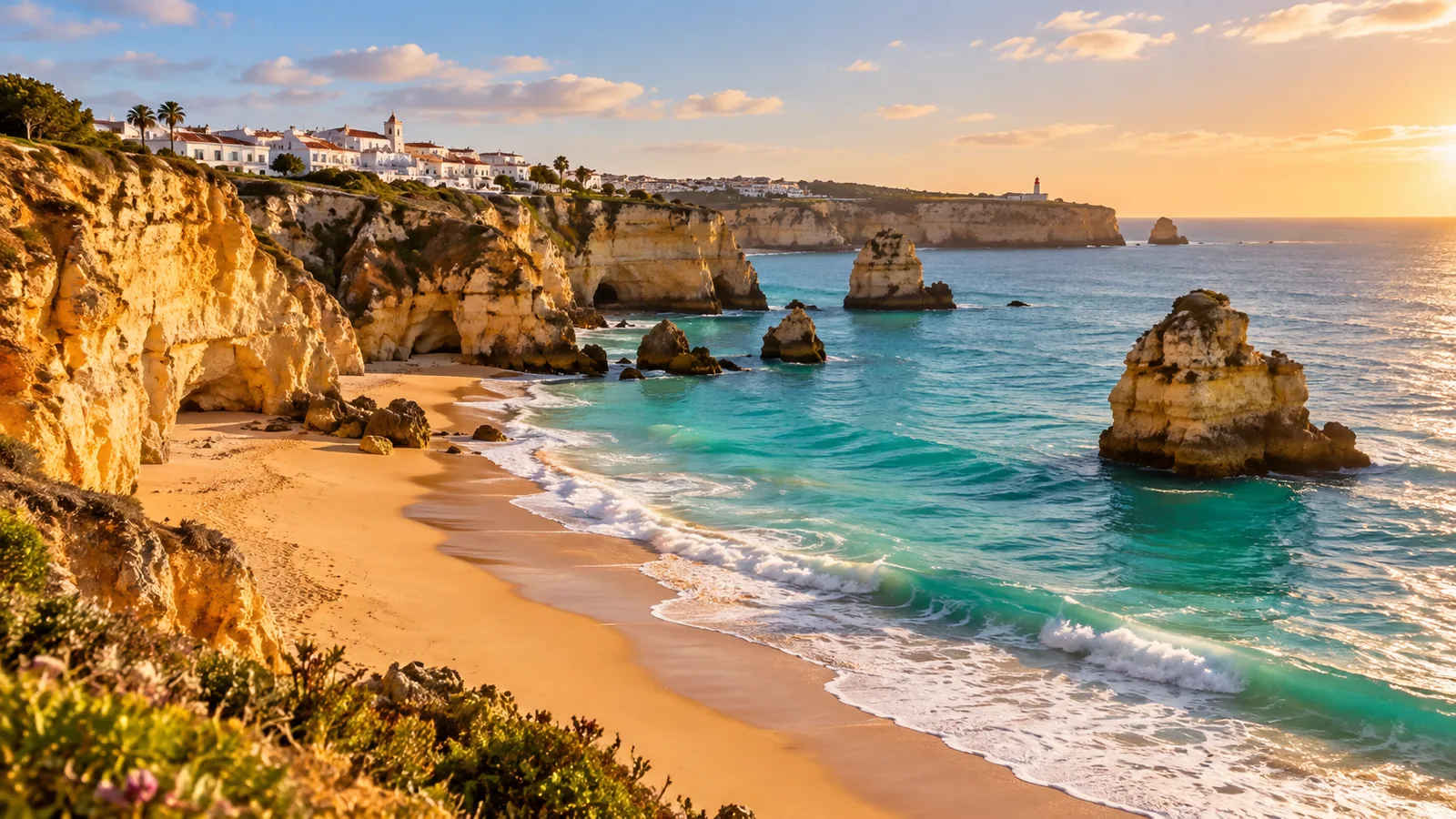
A photograph will not tell you whether the car park was full by ten, whether anyone is watching the water in late September, or whether the walk down is forty steps or four hundred. The best beaches in Portugal in 2026 run from Algarve coves cut into limestone to Alentejo dunes and the windswept Atlantic west of Lisbon, and the right one depends less on which is prettiest than on who you are going with and what month it is. This guide names eight worth planning a day around, then sorts them by the things that actually decide it: couples, families, budget, wind, and whether there will be a lifeguard.
Quick Answer
For a first trip: Praia da Falésia in Albufeira for a full beach day, Praia da Marinha near Lagoa for the view, Praia do Barril in Tavira with children, Praia do Guincho for wind and waves near Lisbon, Portinho da Arrábida for a calm cove an hour from the capital, Praia da Comporta for space in the Alentejo, and Odeceixe on the Costa Vicentina if you are counting the cost. Check two things before you commit to any of them: the 2026 bathing season dates for that municipality, which vary by more than four months across the country, and where you are going to park.
Key Takeaways
- 396 Portuguese beaches were awarded Blue Flag status for 2026 — 350 coastal and 46 river beaches — which is six fewer than 2025.
- Blue Flag measures facilities, access, lifeguarding and management as well as water. Praia da Marinha is not listed among Lagoa's 2026 Blue Flag beaches, and its water still carries Quercus's gold rating.
- Lifeguard seasons are set by government order and differ sharply: Cascais covers 1 May to 30 September, Albufeira runs latest to 15 October, and the Arrábida beaches stop on 15 September.
- My pick for a full Algarve beach day is Falésia; Marinha is the one for the photograph, and the least straightforward of the Algarve picks here.
- Barril near Tavira is the family answer — sheltered water, flat sand, and a train ride that children treat as the point.
- In July and August, parking decides more beach days than scenery does.
In This Article
- How to choose, in one table
- The eight beaches worth the drive
- The Algarve: Marinha, Falésia and Barril
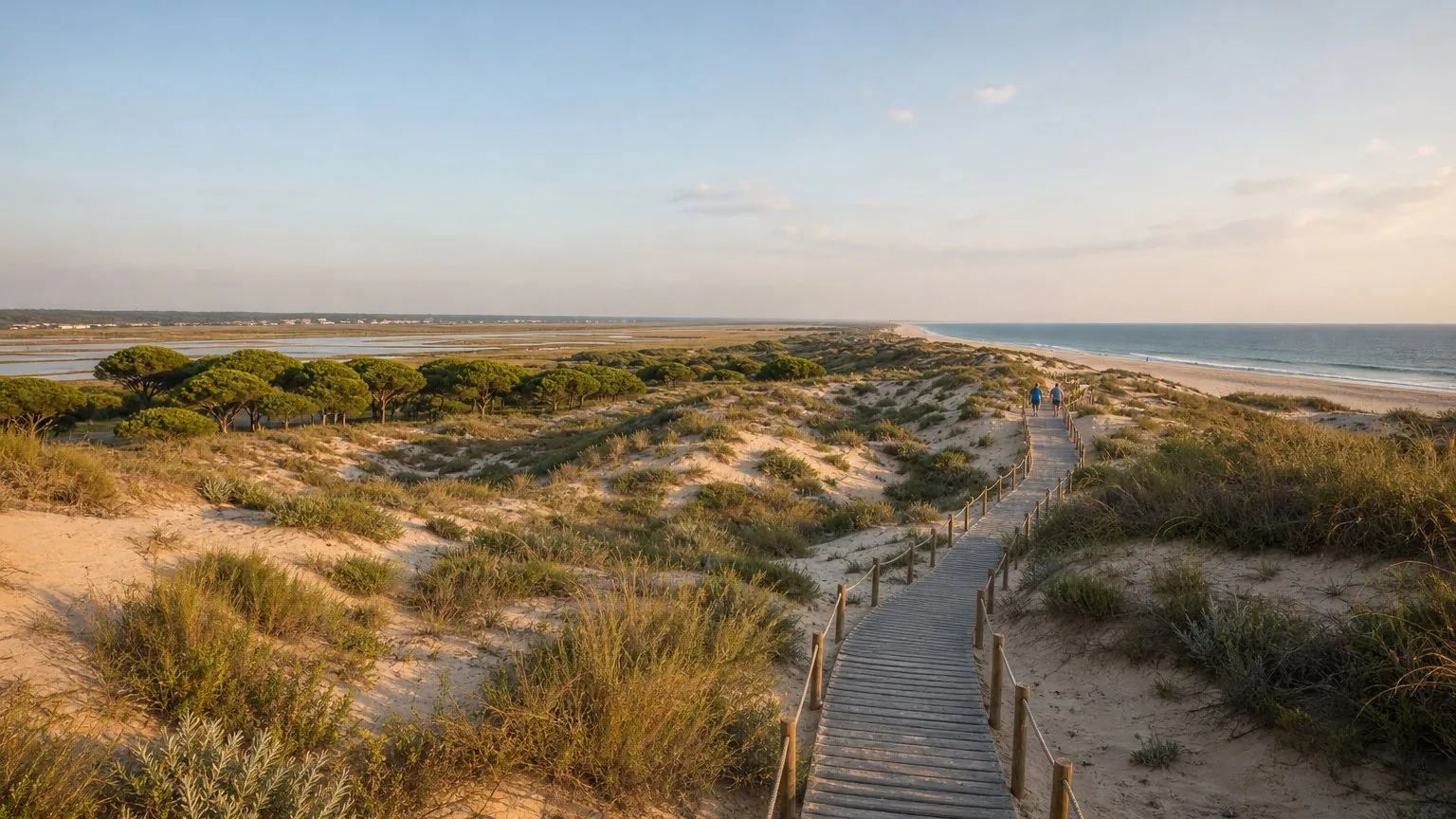
- Near Lisbon: Guincho, Arrábida and Comporta
- Best for couples
- Best for families
- Best on a budget
- Best for wind and waves
- Blue Flag status in 2026
- The 2026 lifeguard season
- Parking, ferries and getting there
- FAQ
How to Choose a Portuguese Beach in 2026
Portugal has no shortage of beautiful sand, so the useful question is not which beach is best but which one suits the day you are actually having. Four things separate them: how exposed the water is, how hard the beach is to reach, how long the lifeguard season runs, and what happens to the car park in August.
| Beach | Region | Best for | Water | Access | Main downside |
|---|---|---|---|---|---|
| 1. Praia da Marinha | Lagoa, Algarve | The view, photography | Sheltered cove | Car, then steep steps | Parking and crowds by mid-morning |
| 2. Praia da Falésia | Albufeira, Algarve | A full day, couples | Open, gentle | Car, several access points | Long and exposed; busy in summer |
| 3. Praia do Barril | Tavira, Algarve | Families | Sheltered sandbar | Train or walk over the marsh | Getting there takes planning |
| 4. Praia do Guincho | Cascais | Wind, surf, drama | Exposed Atlantic | Car or bus from Cascais | Windy; rough for swimming |
| 5. Portinho da Arrábida | Setúbal | A calm cove near Lisbon | Very sheltered | Car, restricted in summer | Access and parking limits in season |
| 6. Praia da Comporta | Grândola, Alentejo | Space, style | Open Atlantic | Car, flat boardwalk | Everything behind it is expensive |
| 7. Praia de Odeceixe | Aljezur, Costa Vicentina | Value, quiet | River mouth and ocean | Car; remote | Little on site, and a long drive |
| 8. Praia de São Jacinto | Aveiro | Long walks, low cost | Open Atlantic | Ferry from Aveiro or car | Cold water, few services |
Where Are These Beaches?
The eight beaches in this guide, from the Algarve to Aveiro.
Around Lisbon
Alentejo and Costa Vicentina
Click or tap any beach to open it in Google Maps.
The Eight Beaches Worth Planning a Day Around
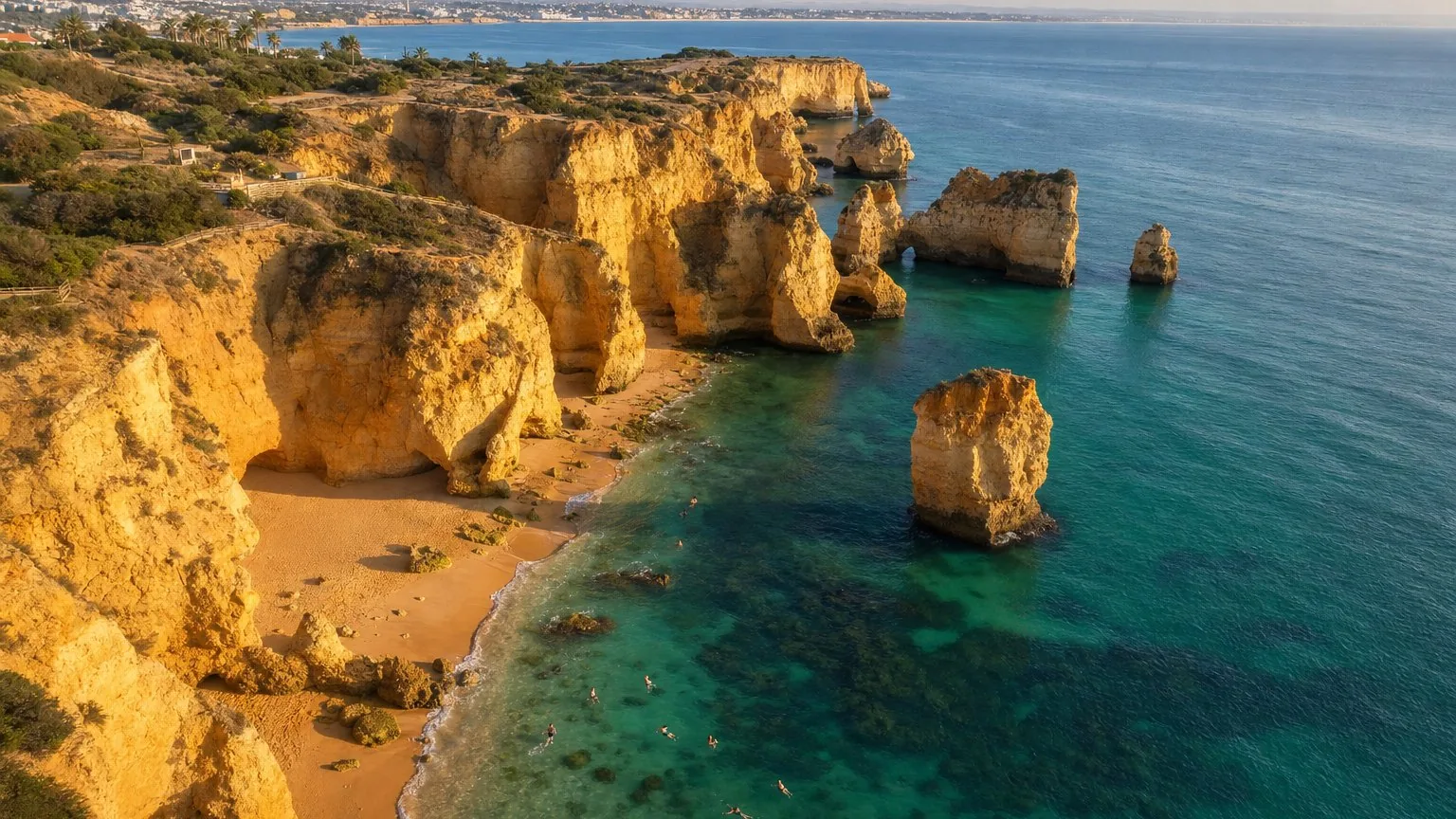
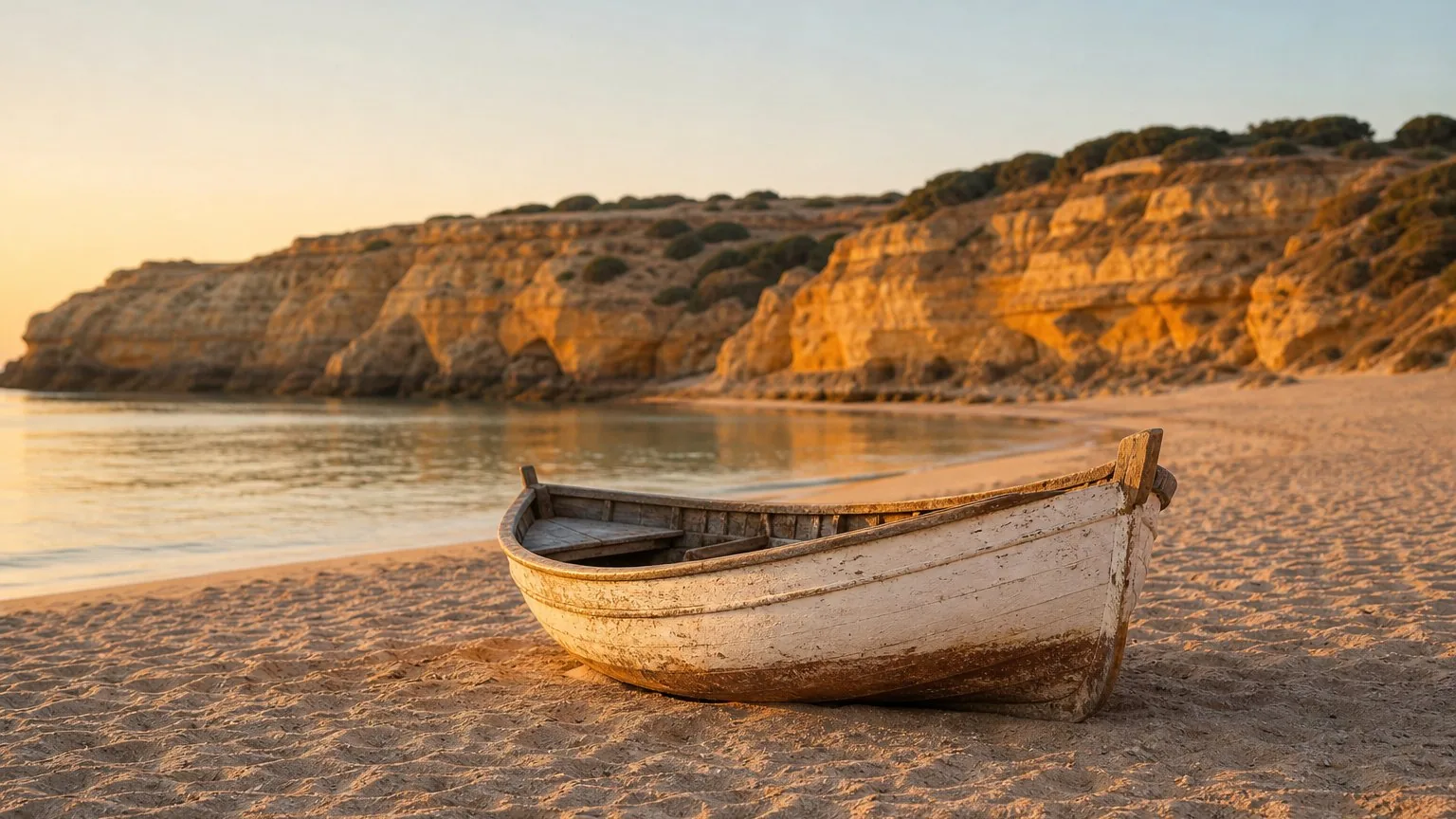
- Praia da Marinha (Lagoa, Algarve) — the one on the postcards: limestone stacks, arches and clear water, with a clifftop path toward the Seven Hanging Valleys.
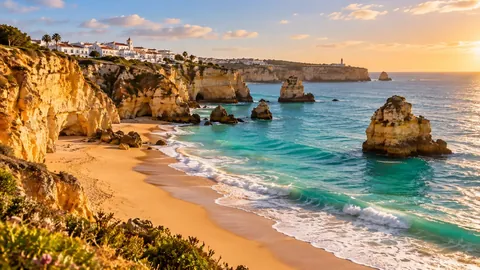
- Praia da Falésia (Albufeira, Algarve) — six kilometres of ochre cliff and soft sand, at its best in the last hour of light.
- Praia do Guincho (Cascais) — wide dune-backed Atlantic sand, and the country's benchmark wind beach.
- Portinho da Arrábida (Setúbal) — a green-water cove inside a natural park, about 45 minutes from Lisbon.
- Praia da Comporta (Grândola, Alentejo) — flat, wide and quiet, with accessible boardwalk access across the dunes.
- Praia do Barril (Tavira, Algarve) — sheltered sandbar water on the Ria Formosa, reached by a miniature train.
- Praia de Odeceixe (Aljezur) — where the Ribeira de Seixe meets the ocean, on the Alentejo–Algarve border.
- Praia de São Jacinto (Aveiro) — dunes and pine forest north of the usual circuit, and the cheapest day of the eight.
The Algarve: Marinha, Falésia and Barril
These three are within about an hour of each other and behave nothing alike. Marinha is the photograph — a cove framed by rock arches, best seen from the clifftop before you go down to it. The descent is a long flight of steps, there is little shade, and the small car park above fills by mid-morning in summer. Official records classify it as a praia de uso limitado: a limited-use beach, with less support infrastructure than a full bathing beach. Beautiful, and not the easy option.
Falésia is the opposite trade: less drama in a single frame, far more beach. Six kilometres of it, under cliffs that turn from ochre to red as the sun drops, with several access points and enough parking that arriving at two in the afternoon is not a disaster. It also has the longest guarded season in this guide, to 15 October.
Barril, past Tavira on the eastern side, is the calm one: a sandbar beach on the Ria Formosa reached across the salt marsh on foot or by a miniature train, with an old tuna-fishing anchor cemetery behind the dunes. Sheltered water, flat sand, and a fifteen-minute journey that is part of the day rather than an obstacle to it.
Near Lisbon: Guincho, Arrábida and Comporta
You do not have to fly to Faro for a good beach day, and if the beaches are one half of a longer trip, our Spain and Portugal itinerary covers how the two countries fit together. Guincho, past Cascais, is forty minutes from the city and an entirely different ocean: cold, wind-scoured, magnificent, and better for watching than swimming on a blowing afternoon. Portinho da Arrábida, about 45 minutes south, is the calm counterweight — a sheltered cove of pale green water inside the Arrábida natural park, and the prettiest water within reach of Lisbon.
It is also the hardest to reach in summer. Access down to Arrábida is restricted in the high season, with a shuttle in place of private cars for much of it, which is precisely why the water still looks the way it does. Further south, Comporta trades all of that for space: a flat wide beach behind dunes, boardwalk access, and a village that has become expensive enough to make the beach itself feel like the cheap part.
Best for Couples
Falésia at the end of the day is the easy recommendation: walk out along the sand away from the hotels, and the cliffs do the work. Marinha earns a sunset too, if you take the clifftop path rather than the beach itself. Near Lisbon, Arrábida's cove is the one worth the effort of the shuttle.
My advice: pick one beach a day. The instinct on a first trip is to collect three — Marinha in the morning, lunch somewhere, Falésia for sunset — and it never works. Between the parking, the steps and the August traffic, you get three rushed hours instead of one good afternoon.
Best for Families
My family pick is Barril, for the sheltered water and the flat walk-in. Comporta second, because the boardwalk over the dunes is genuinely accessible — pushchairs and wheelchairs included — where most Algarve coves involve stairs cut into a cliff. Falésia works too if you pick an access point near the middle rather than the far end.
What matters more than the sand is the calendar. A beach that is family-friendly in July is an unguarded beach in late September, and the dates are not the same from one municipality to the next: the Arrábida beaches lose their lifeguards on 15 September, while Falésia keeps them a month longer.
Best on a Budget
Odeceixe and the Costa Vicentina are the value answer: free access, guesthouses in the villages behind the coast at a fraction of Algarve resort rates, and very little on site to spend money on. São Jacinto, north near Aveiro, is the same idea in colder water — dunes, pine forest and a ferry ride from the city.
Public beach access in Portugal is generally free, which surprises people expecting Italian-style paid rows. What you pay for is parking, a sunlounger if you want one, and lunch — and on the quieter coasts, two of those three do not exist.
Best for Wind and Waves
Guincho is the benchmark: consistent Atlantic wind, schools on the sand, and a regular fixture on the competitive windsurfing and kitesurfing circuit. It is not a beginner's swimming beach — the water is cold and the shore break is serious — but for a lesson with an instructor who knows the bay, it is the best introduction in the country.
Further south, the Sagres coast and Cordoama pick up reliable swell for surfers who already know what they are doing. First-timers usually have a better morning in a sheltered bay with a school than on an exposed west-facing beach in an onshore wind.
Which Beaches Have Blue Flag Status in 2026?
396 Portuguese beaches were awarded Blue Flag status for 2026 — 350 coastal and 46 river beaches, six fewer than 2025. The 438 that ran in most of the Portuguese press is the total of all awards, marinas and eco-tourism vessels included; for beaches, it is 396.
The flag is broader than water quality: it covers information and environmental education, bathing water, environmental management, and safety and services. A beach can have excellent water and no flag because it has no lifeguard hut, no bins and no wheelchair access.
Portugal's most photographed beach makes the point. Praia da Marinha is not listed among Lagoa's 2026 Blue Flag beaches, which are Ferragudo/Praia Grande, Caneiros, Carvoeiro, Vale Centeanes, Senhora da Rocha and Vale Olival. Marinha's bathing water holds Quercus's Qualidade de Ouro, the gold rating for consistently excellent water; what it lacks is facilities. Read the flag as "this beach is well run", not "this water is cleaner".
My advice: use the flag to sort a shortlist, not to build one. If you are travelling with small children or anyone who needs a ramp rather than steps, it is genuinely useful. If you are choosing between two coves for an afternoon, it will tell you almost nothing you care about.
The 2026 Lifeguard Season, Which Is Not the Same Everywhere
Portugal's bathing season — the época balnear, when lifeguards are on duty — is set municipality by municipality in a government order each spring. For 2026 that is Portaria n.º 204-A/2026/1, published on 30 April. The spread is wider than most visitors assume, and it is the single most useful table in this guide if you are travelling outside July and August.
| Beach | Municipality | Lifeguard season 2026 |
|---|---|---|
| Praia do Guincho | Cascais | 1 May – 30 September |
| Praia da Falésia | Albufeira | 15 May – 15 October |
| Praia da Comporta | Grândola | 30 May – 30 September |
| Praia da Marinha, Carvoeiro | Lagoa | 1 June – 30 September |
| Praia do Barril | Tavira | 1 June – 30 September |
| Praia de Odeceixe | Aljezur | 1 June – 30 September |
| Portinho da Arrábida, Figueirinha, Galapinhos | Setúbal | 4 June – 15 September |
| Sesimbra beaches | Sesimbra | 4 June – 13 September |
End to end that is a spread of more than four months. Cascais opens on 1 May and Albufeira closes on 15 October, while the Arrábida coves — the calmest water on this list, and the ones most likely to tempt a family — are unguarded from 16 September. A late-September trip to Lisbon and a late-September trip to the Algarve are not the same holiday.
Parking, Ferries and Getting There
In July and August the car park is the beach day. Marinha's is small and full by mid-morning; Arrábida's road is restricted in season with a shuttle running instead; Comporta's is flat, large and still fills at weekends. The two beaches that reward planning rather than early rising are Barril, reached on foot or by the little train from Pedras d'El Rei, and São Jacinto, reached by the Aveiro ferry — both run to timetables you can check the night before, which is a kinder way to start a day than circling a full car park at eleven.
A word on drive times, because map estimates lie in August: Faro to Marinha or Falésia is around forty to forty-five minutes in April and can be half as long again in high season, and Lisbon to Arrábida behaves the same way. If two beaches in a day still sounds appealing after that, do them on either side of a long lunch, not back to back.
Before You Book
- Check the 2026 bathing season for that municipality, not for "the Algarve" — the dates differ by months.
- Look up the specific beach's current Blue Flag status if facilities and access matter to you.
- Work out where you will park, and what time you need to arrive in July or August.
- For Barril or São Jacinto, check the train or ferry timetable before you plan the day around it.
- Match the water to the group: sheltered for children, open Atlantic for wind and waves.
- Plan one beach a day, and let the second one be a walk rather than a second car park.
Staying near the right beach is half the trip.
Score any Algarve or Alentejo hotel's location in two minutes, before you book the photogenic one that turns out to be a twenty-minute drive from the sand.
Frequently Asked Questions: Best Beaches in Portugal
What is the best beach in Portugal overall?
Praia da Marinha in Lagoa, if you are choosing on looks alone: limestone stacks, clear water and a clifftop trail above it. It is also the one with the most caveats — steep steps down, a car park that fills by mid-morning in August, and no place on Lagoa's 2026 Blue Flag list, though its bathing water holds Quercus's gold rating. If you want one beach that works for a whole day rather than one photograph, Praia da Falésia in Albufeira is the better answer.
What is the best beach in the Algarve?
Falésia for a full day, Marinha for the view, Barril near Tavira if you have children. The three are within about an hour of each other but feel like different coastlines: six kilometres of ochre cliff, a cove framed by rock arches, and a flat sheltered sandbar reached by a miniature train across the salt marsh.
What is the best beach near Lisbon?
Praia do Guincho, about 40 minutes away past Cascais, if you want Atlantic drama and do not mind wind. Portinho da Arrábida, roughly 45 minutes south, if you want calm green water in a sheltered cove. Arrábida is the prettier of the two and the harder to park at: in July and August the road down is restricted and you are expected to take the shuttle instead.
What is the best beach in Portugal for families?
Praia do Barril in Tavira. The water is sheltered by the Ria Formosa sandbar, the sand is flat and long, and the walk in over the marsh — or the little train, if legs are short — is part of the day rather than an obstacle. Its 2026 bathing season runs 1 June to 30 September, which is when lifeguards are on duty.
What is the best beach in Portugal for couples?
Falésia at the end of the day, when the cliffs turn properly orange and the crowd thins toward the hotels. Comporta if you would rather have space than scenery, and are prepared for the restaurants behind it to cost what Lisbon costs.
What is the best beach in Portugal for surfing and watersports?
Praia do Guincho, near Cascais, for wind: it is Portugal's benchmark windsurfing and kitesurfing beach, with reliable Atlantic swell and schools on the sand. Beginners are usually happier on a lesson in a bay than at Guincho on a windy afternoon, which is a serious ocean rather than a swimming pool.
Do I need a car for these beaches?
For most of them, yes. Guincho is reachable by bus from Cascais and Barril by train to Tavira then a walk or the little train, but Comporta, Odeceixe, Arrábida and the Algarve coves realistically need a car — and in August, a car and an early start, because the car park fills long before the beach does.
When are lifeguards on duty in 2026?
It depends on the municipality, and the range is wider than most people expect. Cascais runs 1 May to 30 September, Albufeira 15 May to 15 October, Lagoa and Tavira 1 June to 30 September, and the Arrábida beaches only 4 June to 15 September. The dates are set each year by government order — Portaria n.º 204-A/2026/1 covers 2026.
Further Reading
Sources and References
- Portaria n.º 204-A/2026/1, Diário da República, 30 April 2026 — 2026 bathing season dates by municipality. diariodarepublica.pt
- ABAE. Bandeira Azul 2026, galardoados. bandeiraazul.abaae.pt
- idealista/news. Praias com Bandeira Azul 2026: o que mudou este verão, 14 July 2026. idealista.pt
- Mais Algarve. Bandeira Azul e Qualidade de Ouro no Algarve, 5 May 2026. maisalgarve.pt
- Barlavento. Lagoa renova seis bandeiras azuis nas praias do concelho. barlavento.pt
- Câmara Municipal de Cascais. Época balnear de Cascais 2026. cascais.pt
- Câmara Municipal de Albufeira. Está oficialmente aberta a época balnear em Albufeira. cm-albufeira.pt
- Cascais Ambiente. Praia do Guincho. ambiente.cascais.pt
- Visit Albufeira. Praia da Falésia. visitalbufeira.pt
Part of Destinations & Itineraries.