Best Time to Visit France: A Season-by-Season Guide
France does not have one best month. Paris, the Mediterranean, the Atlantic coast, the wine regions and the Alps run on calendars that barely overlap, so the right month depends entirely on which trip you are actually taking.

Photo: Lukáš Konvica / Unsplash
France does not have one best month, and the reason is structural rather than fussy. Paris, the Mediterranean, the Atlantic coast, the wine regions and the Alps run on calendars that barely overlap. The month that gives you warm sea water off Nice is the month the Alpine passes are busiest and Paris is hottest; the month that suits a Burgundy harvest is not the month to teach anyone to surf. Choose for the trip you are actually taking, not for the country.
What follows is the honest version of that: a table to pick your month from your priority, a month-by-month grid for the whole year, and the parts most guides get wrong — that shoulder season is not automatically quiet or cheap, that June can be brutally hot, and that "November to March is the off season" is not true of the Alps, Alsace or a Paris hotel in December.
Quick Answer
There is no single best time to visit France. For general sightseeing, late April to June and September to early October usually give the best balance of daylight, open services and comfortable conditions — but they are not reliably quieter or cheaper, and June is now a heat risk as much as a safe bet. July and August are the leisure and coastal peak. For the warmest Mediterranean sea, aim July to September; for Provence lavender, late June into July depending on altitude; for the wine harvest, September into October by region; for skiing or Alsace Christmas markets, the months everyone else calls off season.
Key Takeaways
- Insee recorded 257.8 million nights in collective tourist accommodation across May to August 2025, up 3.7% on 2024 — the summer peak is real and growing.
- But "shoulder season means quieter" is wrong for hotels: Insee's metropolitan occupancy series puts June 2026 at 73.5% and September 2025 at 70.3%, both above July and August.
- Summer 2026 was the hottest in France since 1900, +3.6 °C above the 1991–2020 average, with 53 heatwave days and an early episode from 17 to 30 June.
- France has no universal cheapest month. Lower-demand periods often mean better value, but ski regions, Alsace in December and event weekends in Paris all run counter.
- School holidays are staggered across three zones, so French family demand arrives in waves rather than one block.
- Lavender is set by altitude, not the calendar: Valensole is usually cut around mid-July while higher plateaux run into August.
In This Article
- Choose Your Month by Trip Type
- France Month by Month
- Why Shoulder Season Isn't Automatically Quiet
- Heat, and What 2026 Changed
- School Holidays and the May Bridges
- Paris by Season
- The Mediterranean and the Atlantic
- Lavender, Harvest and Alsace
- The Alps and Pyrenees
- What This Means for Prices
- Frequently Asked Questions

Choose Your Month by Trip Type
Start from the thing you would be most disappointed to get wrong. Everything else in the trip can bend around it.
| If your priority is… | Aim for | Why | Main catch |
|---|---|---|---|
| Paris, first visit | Late April to May, or October | Mild city conditions, long enough days | September is not the cheap month people assume |
| Swimming on the Riviera | July to September | Warmest sea of the year, well into September | Peak crowds and peak heat |
| Provence lavender | Late June into July, by altitude | Flowering runs low ground first | Valensole is often cut by mid-July |
| Wine harvest atmosphere | September to October, by region | Vendange runs south to north | Estates are working, so access can be harder |
| Alpine hiking | July to September | High routes mostly clear of snow | Openings vary with the year's snowpack |
| Skiing | Winter, resort and altitude dependent | The mountains' own peak season | School-holiday weeks are the busiest |
| Learning to surf | July to August | Smaller, gentler Atlantic waves | Busiest water of the year |
| Surfing properly | September to November | Stronger, more consistent swells | Cooler, rougher, not for beginners |
| Alsace Christmas markets | Late November to December | The region's deliberate high season | Booked early; not a quiet winter trip |
| Lowest hotel demand | January to February | The genuine national trough | Short days, cold, coastal closures |
France Month by Month
Read across your month. "Strong for" is what that month does better than the others, not a promise about weather.
| Month | Strong for | Region or experience | Main trade-off |
|---|---|---|---|
| January | Cities without queues; ski season | Paris museums, Alps | Lowest hotel demand nationally, but short dark days |
| February | Skiing | Alps, Pyrenees | Staggered school holidays fill resorts for weeks |
| March | Cities; first southern warmth | Paris, Provence | Genuinely variable weather |
| April | Gardens, broad touring | Loire, Paris, Normandy | Easter and school holidays move demand around |
| May | Wide-open sightseeing | Loire, Provence, cities | Public holidays cluster into long weekends |
| June | Longest days, early coast | Everywhere | Already peak hotel demand; heatwaves possible |
| July | Beaches, mountains, lavender | Riviera, Alps, Provence | Domestic peak begins; heat |
| August | Coast and mountains | All coasts, Alps | The biggest domestic leisure month of the year |
| September | Warm sea, harvest, culture | Riviera, wine regions, cities | City hotel demand stays high; not a bargain month |
| October | Wine, autumn colour, cities | Burgundy, Bordeaux, Paris | Sea cooling; Toussaint holiday week |
| November | Quiet countryside, city culture | Paris, Lyon | Short days; many coastal services shut |
| December | Christmas markets, early ski | Alsace, Paris, Alps | Alsace and the holidays are a deliberate peak |
Why Shoulder Season Isn't Automatically Quiet
This is where most France timing advice, including the earlier version of this guide, goes wrong. "Shoulder season" gets used as shorthand for thinner crowds and lower prices. The national data does not support that for hotels.
Insee publishes a monthly hotel occupancy series for metropolitan France. In the most recent figures, June 2026 ran at 73.5% occupancy — the highest month in the series, above July's provisional 69.7%. In 2025 the pattern was the same shape: June 72.7%, July 69.1%, August 68.6%, and then September at 70.3%, higher than either midsummer month. The genuine national trough is January and February, at around 51% to 54%.
That does not mean September is busier than August everywhere, and it is important not to over-read it. Hotel occupancy is weighted towards cities and business travel. The leisure and coastal peak really is July and August — Insee's summer figures show campsites taking 124.9 million nights across May to August 2025 against 90.4 million for hotels, and campsites are the coastal, family mode of travel. So the split is roughly this:
- Coast, campsites and family holiday destinations — July and August are the peak, unambiguously.
- Cities — June and September carry peak-grade demand, driven by international visitors, business travel, conferences and events. In 2025 non-residents accounted for 31.9% of all nights and drove hotel growth by 10.9%.
My advice: shoulder season is not a discount code. Treat "late spring and early autumn" as a good default for comfort and daylight, not as a promise about crowds or price. If you are going to a city, check the dates against events and expect June and September to feel busy. If you are going to the coast, the shoulder really does thin out — because the families who fill it are back at school.
Heat, and What 2026 Changed
Climate normals describe the average of the past, not the weather you will get. France's most recent summer makes the point unavoidable.
Météo-France's climate report for summer 2026, published on 3 September 2026, records it as the hottest summer in France since 1900, with a mean 24-hour temperature of 24.0 °C — an anomaly of +3.6 °C against the 1991–2020 reference, ahead of 2003 (+2.7 °C) and 2022 (+2.3 °C). The season ran 53 days in heatwave conditions across three episodes, and it was also the second least rainy summer since 1959, with a 40% rainfall deficit and what the agency calls a historic, generalised soil drought.
The detail that matters for planning is when the first episode landed. It ran from 17 to 30 June, with up to 72 departments placed on red vigilance and 40% of the country exceeding 40 °C. June is routinely sold as safe shoulder weather. In 2026 it was the month of the heatwave.
One hot summer does not rewrite the climate normals, and you should not plan a 2027 trip on the assumption of a 2026 repeat. What it should change is your posture: treat the long-run averages as a baseline rather than a forecast, keep indoor or shaded options in reserve for July and August, and check Météo-France's own vigilance and forecast pages in the week before you travel rather than trusting a monthly average from a guide.
School Holidays and the May Bridges
Two domestic patterns move French demand in ways a weather chart will not show you.
School holidays run in three zones. France has divided its holidays across zones A, B and C since a 1995 order, and the winter and spring breaks are deliberately staggered between them. The practical effect is that French family demand does not arrive as one national week — it rolls through in consecutive waves. For a ski trip this is the single biggest factor after snow: a resort can be full for three or four successive weeks in February and March as each zone takes its turn. It matters for the coast in summer, for family attractions, for motorway traffic and for holiday-rental availability. The Toussaint, Christmas and summer holidays are common to all zones, so those concentrate rather than spread. Dates shift each year, so check the Ministry's official calendar for your travel year rather than any date printed in a guide.
May is full of public holidays. On paper May looks like ideal shoulder season — mild, long days, everything open. In practice it carries a cluster of public holidays, and when one falls on a Tuesday or Thursday it is common to faire le pont, bridging the gap to the weekend into a four-day break. Those bridges generate domestic short trips, pressure on trains and roads, and patchy accommodation in exactly the destinations a visitor wants. Not everyone takes every bridge, and the effect is uneven rather than universal, but a May weekend that looks quiet on a climate chart can be anything but. Check the public-holiday dates for your year before you assume a mid-May Tuesday is an ordinary day.
Paris by Season
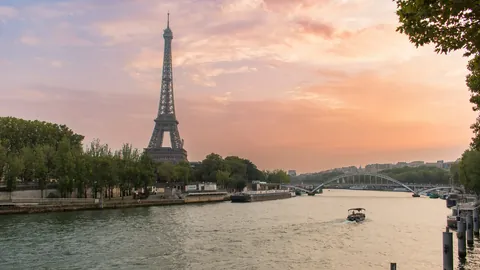
April and May are the strong spring window: gardens open up, terraces work, and the city is comfortable to walk. June gives the longest days of the year and is genuinely lovely, but it is also the busiest hotel month nationally and, in 2026, the month of a historic heatwave — a Paris flat with no air conditioning in a 40 °C week is a different holiday from the one you booked.
July brings high visitor numbers and real heat risk. September and October are excellent for culture and for walking, with the caveat this guide keeps repeating: September is not automatically cheap or quiet in Paris. The rentrée restarts business travel, the cultural season launches, exhibitions open and international visitors are still arriving. Expect it to feel busy and priced accordingly, and do not count on shorter queues without checking the specific attraction.
August deserves its own paragraph, because the received wisdom is wrong. Paris does not close in August. The major museums and monuments keep working through it, and tourist Paris runs normally. What genuinely changes is the neighbourhood layer: a proportion of small independent restaurants, bakeries and shops close for annual leave, and business districts feel emptier. The effect is real but local, and it is specific to the addresses you happen to care about. Paris does not close in August. Your favourite tiny bistro might. If a particular place matters, check its own August hours rather than trusting either the myth or its rebuttal.
One more habit worth forming for any city trip: check the local calendar, not just the climate calendar. A heritage weekend, a major exhibition opening, a trade fair or a large public event will do more to your hotel price and your queueing time than a two-degree difference in the average maximum.
The Mediterranean and the Atlantic
Air temperature and sea temperature do not move together, and that gap is the single most useful thing to understand about a French coastal trip. The sea lags the air by roughly two months: it is still warming when the air peaks, and still holding warmth when the air has turned. That is why September is the quiet star of a Riviera trip — the sea is around its warmest of the year while the beaches have thinned out, and it is why a hot June day can end with a cold swim.
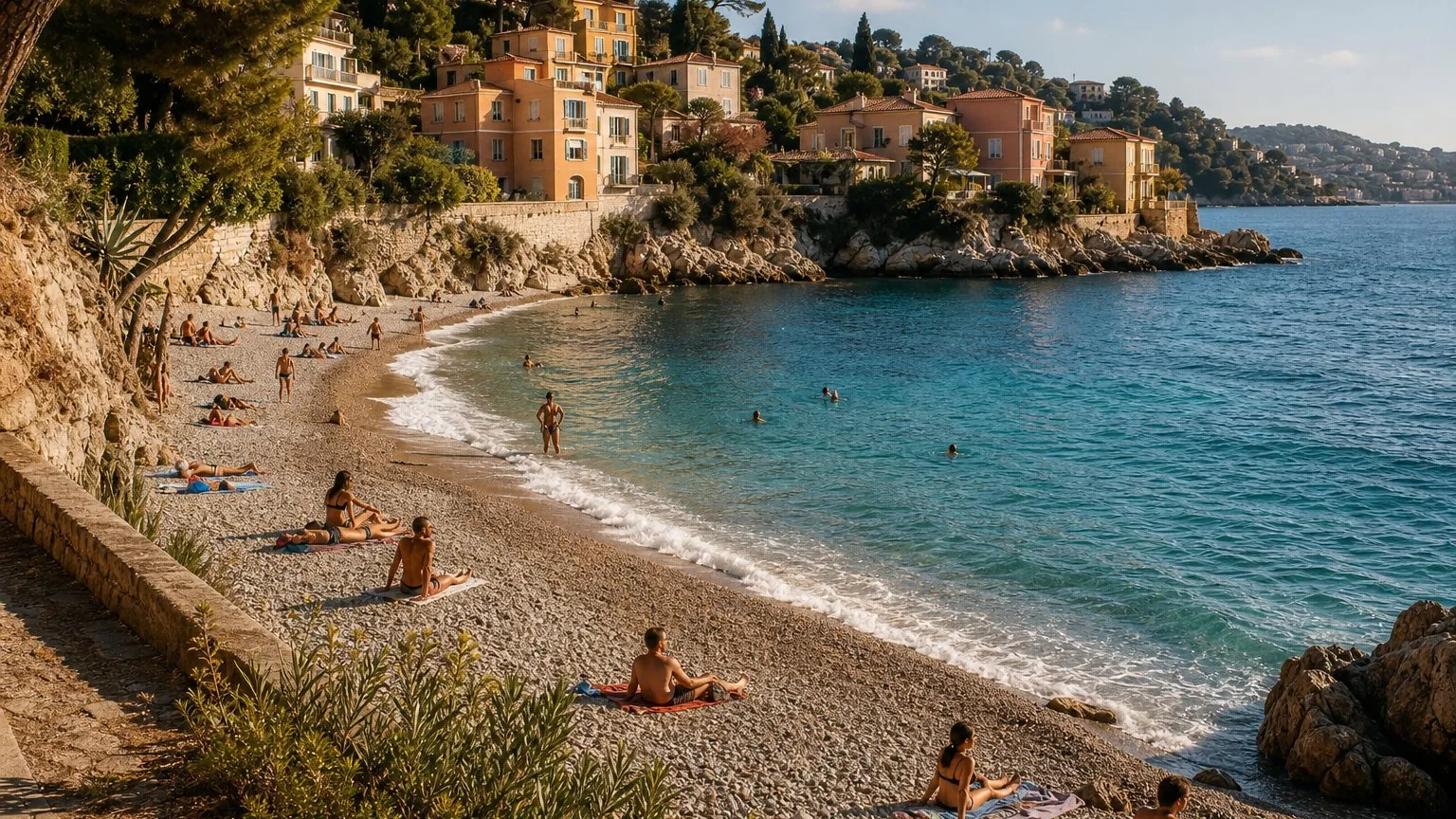
For the Mediterranean, July to September is the warm-sea window, with September typically at or near the top of it. October cools noticeably, and while people do swim, you are trading down. There are no guarantees in either direction; sea temperatures vary year to year.
The Atlantic southwest needs splitting in two, because a beach trip and a surf trip want opposite months. For swimming and learning to surf, July and August give the gentlest, smallest waves and the warmest water, at the cost of the busiest line-ups of the year. For actually surfing, September to November is the better season: more consistent and better-directed Atlantic swells, frequent offshore winds, water still pleasant well into autumn, and a fraction of the summer crowd. Winter brings powerful conditions for experienced surfers only. Biarritz in September is a better surf trip than Biarritz in August, which is the reverse of the beach answer.
Lavender, Harvest and Alsace
Lavender is set by altitude, not by the calendar. Flowering runs broadly from mid-June into early August, but it moves up the hills as the season goes: the lower Luberon comes first, the Valensole plateau usually peaks from late June into the first week of July, and the higher ground around Sault and the Plateau d'Albion runs latest and longest, sometimes into mid-August. In any one place the window is short — four or five weeks.
The mistake that ruins the trip is assuming July means lavender. Valensole is typically harvested around the middle of July, and in a hot year it goes earlier. Given that 2026 was the hottest summer since 1900 with a heatwave from 17 June, that risk is not theoretical. If you are going for the fields, pick your altitude and check locally in the fortnight before you travel.
The wine harvest moves south to north and runs roughly from late August in the southern regions, through early September in the Rhône and Beaujolais, mid-September in Burgundy, Bordeaux and the Loire, late September in Champagne and Alsace, and into October in Cognac. Those are general patterns rather than dates you can book against; the vintage moves with the year's weather. And there is a trade-off worth knowing before you plan a trip around it: harvest is atmospheric, but the estates are working flat out, so cellar doors can be less available then, not more. Book visits ahead rather than turning up.
Alsace in December is the clearest exception to any story about a French winter off season. Late November through December is the primary travel season for Strasbourg, Colmar and a number of Alsace villages, built around the Christmas markets. It is busy, it is priced as a peak, and it is booked early. Going in December is not a way to avoid crowds — it is choosing a different crowd.
The Alps and Pyrenees
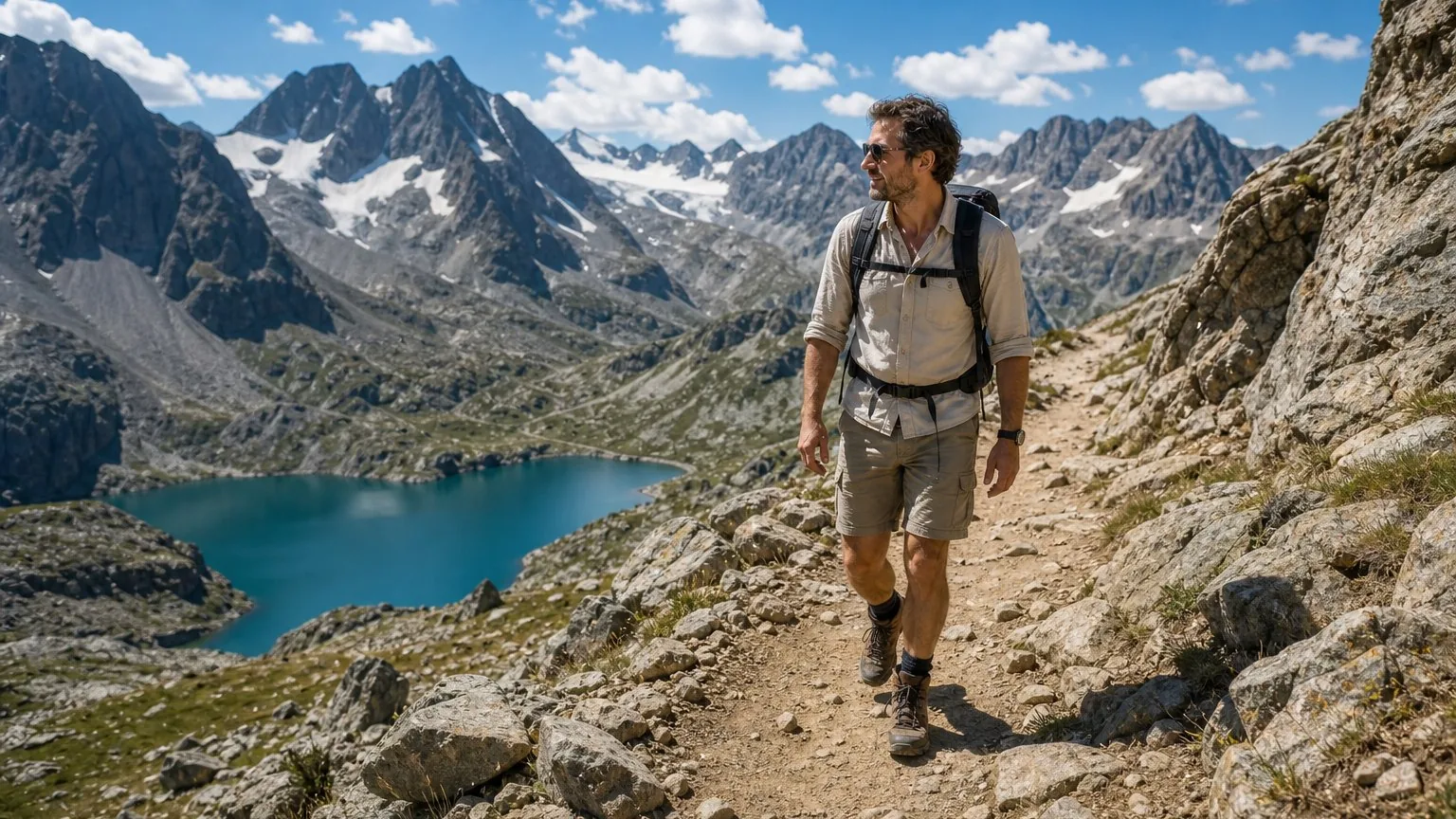
There is no single national opening date for the mountains, and that is the whole point. Elevation decides almost everything. Lower valley trails open earlier and stay open later; high Alpine routes and passes can hold snow well into the summer, and in a heavy snow year a route that walked fine in late June one year will not the next. Refuge opening dates, lift-assisted access and pass clearance all move with the snowpack.
As a working default, July to September is the reliable window for high routes, with June workable lower down and October often beautiful but shortening fast. For skiing, the season likewise varies by resort and altitude rather than by a national calendar, and the staggered school holidays are the demand factor to plan around. Check the specific resort, park or refuge for your dates rather than a regional rule of thumb.
What This Means for Prices
France has no universal cheapest month, and anyone who tells you otherwise is generalising from one region. There is no single national monthly lodging price index to point at, which is precisely why this guide talks about demand rather than quoting price drops.
What the demand data supports is narrower and more useful: lower-demand periods often offer better accommodation value, and nationally the lowest-demand hotel months are January and February. But the exceptions are large and they are exactly where people travel. Ski regions invert the pattern completely. Alsace in December is a peak. A major event can move Paris prices more than a season does. And because school holidays are staggered, a "quiet" week in one zone can be a full week in another.
My advice: don't pick a month for France — pick it for your trip. Paris and the Loire, a Riviera swim, an Alpine hut walk, a Burgundy harvest and an Alsace Christmas market do not share an optimum, and averaging them produces a month that suits none of them. Decide which one is the reason you are going, book that in its own window, and let the rest of the itinerary be merely fine. A September trip built around the sea and the vendange is a better holiday than a May trip built around nothing in particular.
Before You Book
- Decide the one thing the trip is for, then pick the month for that rather than for the country.
- Check the school-holiday zones for your dates if you are going to the mountains or the coast.
- Check the public holidays if you are travelling in May.
- For a city trip, check the events calendar before assuming September is quiet.
- For lavender, pick your altitude and check locally in the fortnight before.
- For the mountains, check the specific resort or refuge rather than a regional date.
- In July and August, look at Météo-France's forecast and vigilance pages close to departure.
Once the month is settled, the remaining question is where to base yourself, and that decision quietly shapes every day of the trip.
Good timing won't fix the wrong neighbourhood
You've picked the month. Now check whether the hotel location actually works for the trip you're planning.
Frequently Asked Questions: Best Time to Visit France

What is the best month to visit France?
There isn't one, because the regions run on different calendars. For general sightseeing, late April to May and September to early October give the best balance of daylight and comfortable conditions. For sea swimming aim July to September, for skiing the winter months, and for the wine harvest September into October.
Is May or September better for France?
May is better for gardens, the Loire and broad touring, but it carries clusters of public holidays that create busy long weekends. September is better for the Mediterranean, the wine harvest and warm evenings, but city hotel demand stays high — Insee recorded 70.3% occupancy in September 2025, above both July and August.
Is September warm enough for the French Riviera?
Usually yes, and it is often the best month for it. The sea lags the air by roughly two months, so it is near its warmest in September while the beaches have thinned out. October cools noticeably. Sea temperatures vary year to year, so there are no guarantees.
Is August a bad time to visit Paris?
No, though it is hot and busy. The major museums and monuments stay open and tourist Paris runs normally. What changes is the neighbourhood layer: some small independent restaurants, bakeries and shops close for annual leave. Paris does not close in August, but your favourite small bistro might, so check its own hours.
When is lavender season in Provence?
Broadly mid-June into early August, but altitude decides it. The lower Luberon flowers first, Valensole usually peaks from late June into early July and is often harvested around mid-July, and the higher ground near Sault runs latest. Pick your altitude and check locally shortly before you travel.
When is the best time for French wine regions?
The harvest moves south to north: late August in the south, early September in the Rhône and Beaujolais, mid-September in Burgundy, Bordeaux and the Loire, late September in Champagne and Alsace, into October in Cognac. Dates move with the vintage, and estates are working during harvest, so book cellar visits ahead.
Is winter a good time to visit France?
It depends entirely where. January and February are the genuine national low for hotel demand, which suits city culture trips. But the Alps are in their own peak season, and Alsace in late November and December is a deliberate high season built around the Christmas markets. There is no single French off season.
When do French school holidays affect travel?
Constantly, but in waves. France splits its holidays across three zones, and the winter and spring breaks are staggered between them, so ski resorts and family destinations can stay full for several consecutive weeks. Toussaint, Christmas and summer are common to all zones and concentrate demand instead. Check the Ministry's calendar for your year.
What is the best time for the French Alps?
For hiking, July to September for high routes, with lower trails workable earlier and later. There is no national opening date — elevation and that year's snowpack decide, and high passes can hold snow into summer. For skiing it varies by resort and altitude, with the staggered school holidays the main demand factor.
Sources and References
- Insee. "Saison touristique d'été 2025", Insee Focus n°363, 26 September 2025. insee.fr.
- Insee. "Taux d'occupation dans l'hôtellerie — France métropolitaine", series 010599343, published 10 September 2026. insee.fr.
- Météo-France. "Bilan climatique de l'été 2026 (juin-juillet-août)", 3 September 2026. meteofrance.com.
- Ministère de l'Éducation nationale. Calendrier scolaire, school year 2026–2027. education.gouv.fr.
- Météo-France. Climatological normals 1991–2020 and vigilance service. meteofrance.com.
- Atout France / France.fr. Regional seasonal guidance on lavender, the wine harvest and Alsace Christmas markets. france.fr.
- Copernicus Marine Service. Mediterranean and Atlantic sea surface temperature climatology. marine.copernicus.eu.
Part of Plan & Budget.