Mykonos vs Santorini: Two Hours Apart, Twice the Rental Price
Mykonos and Santorini sit about two hours apart by ferry, but Mykonos short-term rentals currently average more than twice the nightly rate. What each island is for, what it costs, and which one gets the extra night.
Mykonos and Santorini sit about two hours apart by fast ferry, and short-term rentals on one currently average more than twice the nightly rate of the other. That is the short version, and it is most of what the decision turns on once you have stopped looking at photographs.
Santorini is the caldera: Fira and Oia strung along a cliff edge, the Akrotiri excavations, sunsets that half the island watches at once. Mykonos is flatter, sandier and louder — beach clubs, a walkable old town, and a night that genuinely starts after midnight. Both are expensive. Only one is expensive in a way that will reshape your budget, and the gap between them has been closing.
Quick Answer
Go to Santorini for scenery, villages and a first trip to Greece; go to Mykonos for beaches, beach clubs and late nights. The cost difference is the deciding factor for most people: short-term rentals on Mykonos averaged US$769 a night against Santorini's US$353 in AirDNA's data through August 2026, roughly 2.2 times as much. The two are linked by a seasonal fast ferry of about 2 hours 10 minutes at its quickest, running roughly late March to early November. Budget three nights each, and add the fourth night to Santorini if it is your first Greek trip or to Mykonos if nightlife is the reason you are going.
Key Takeaways
- Mykonos short-term rentals averaged US$769 a night against Santorini's US$353 — about 2.2 times — in AirDNA data through August 2026.
- That gap is narrowing, not widening: Mykonos rates fell 18.9% year on year while Santorini's fell 6.5%, closing the gap by roughly a quarter in dollar terms.
- The fast ferry runs about 2 hours 10 minutes at its quickest in season, stretching to nearly three hours on slower boats and later in the year.
- A day trip between them does not work, and the reason is the return: on a late-September sailing day there were five southbound departures but only two northbound, the last at 13:15.
- The ferry is seasonal — roughly late March to early November. In deep winter there is no direct sailing at all.
- Flights from Athens are 40 to 45 minutes to Mykonos and 45 minutes to an hour to Santorini, with Santorini far better served in shoulder season.
In This Article
The Comparison, in One Table
| Mykonos | Santorini | |
|---|---|---|
| Best for | Beaches, beach clubs, late nights, groups | Scenery, villages, a first trip to Greece |
| Rental cost per night | US$769 average | US$353 average |
| Beaches | Sandy, swimmable, organised | Volcanic sand and shingle, further from the villages |
| Nightlife | The point of the island | Dinner and a view |
| Getting around | Buses and taxis; a car helps | Walkable villages, but steep; buses via Fira |
| Ideal stay | 3 nights, 4 if nightlife is the point | 3 nights, 4 on a first Greek trip |
| Biggest drawback | The price of everything | Crowds at the caldera rim, and stairs |
Figures are AirDNA's short-term rental averages through August 2026; the rest is our own assessment of what each island is set up to do.
What Each Island Actually Costs
The cleanest number available is the average nightly rate people actually paid for short-term rentals. Through August 2026, that was US$769 on Mykonos and US$353 on Santorini — Mykonos about 2.2 times Santorini. This is rental data, not hotel data: it covers listings on Airbnb, Vrbo and Booking.com and measures what was paid per booked night, so it is the right yardstick for a villa or an apartment and the wrong one for a five-star cave hotel.
The more interesting fact is the direction of travel. Mykonos rates fell 18.9% year on year; Santorini's fell 6.5%. Because the dearer island fell harder, the gap closed — from roughly US$570 a night to US$416, about a quarter in dollar terms. Mykonos is still much more expensive. It is less more-expensive than it was. One caveat worth knowing: the number of listings in that dataset dropped by nearly 40% on both islands over the same period, which points to a change in how the data is collected rather than a collapse in supply, so treat the year-on-year percentages as directional rather than precise.
Where the gap bites hardest is the part of the trip you cannot avoid. A Mykonos beach club day — lounger, lunch, drinks — is a genuine budget line rather than an afternoon out. Santorini's fixed costs are smaller and easier to name: a €10 cable car ride, a €2.20 bus, a taxi from the airport.
The Ferry, and Why the Day Trip Fails
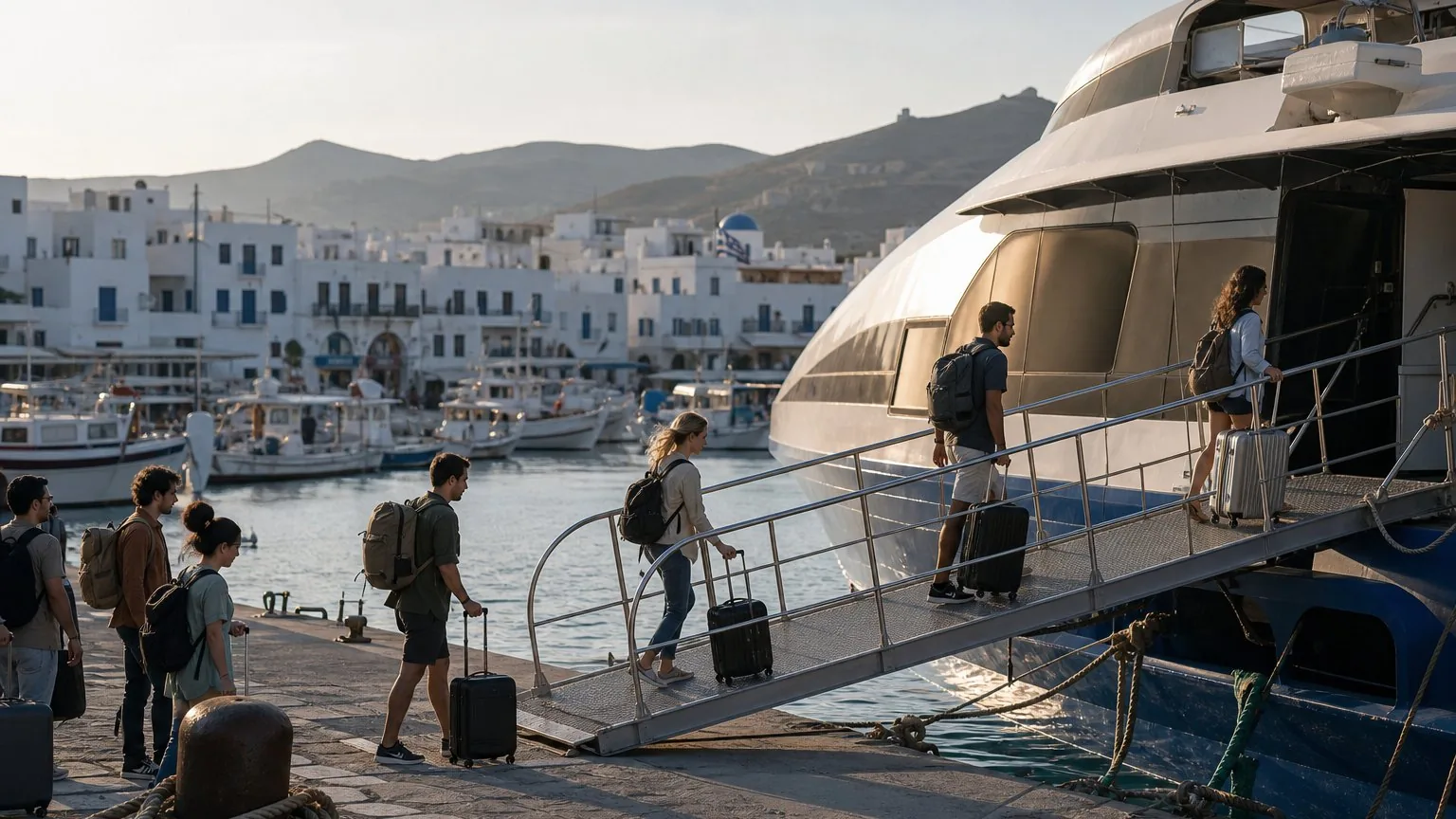
Two operators run the crossing, SeaJets and Golden Star, and the service is seasonal — roughly late March to the first days of November. In deep winter there is no direct sailing; you would connect through Paros, Naxos or Syros, or fly back through Athens.
In season the fastest boat takes about 2 hours 10 minutes, and slower or multi-stop sailings stretch past three. By late October the quickest crossing had already slipped to about 2 hours 45. A one-way economy seat on SeaJets was €93.70 to €96.70 in late September 2026; Golden Star advertises from €79.
Now the part that decides whether you can day-trip, and which almost nobody mentions: the schedule is lopsided. On a Wednesday in late September there were five southbound departures from Mykonos and only two northbound from Santorini — and the last of those left at 13:15. Take the 09:50 out, arrive at 12:00, and you have an hour and a quarter before you need to be back on the boat. A month later it was 45 minutes. Athinios port to Fira is about 25 minutes each way, so in the best case you would reach the town, turn around and leave.
So: technically bookable, genuinely not worth doing. If you want both islands, move your luggage and sleep on both.
How Many Nights Each Island Needs
Three nights each is the working answer, and six or seven nights total if you are doing both, with one of them absorbed by the crossing. Two nights on either island is survivable but means one full day and two half-days broken by ferries or flights.
The question nobody settles is which island gets the fourth night, so here is our answer. Give it to Santorini if this is your first trip to Greece: Fira and Oia are two separate evenings, Akrotiri is a half-day, and a caldera boat trip is another, which is more structured sightseeing than Mykonos offers. Give it to Mykonos if nightlife is the reason you are going, because the island's rhythm starts late and a three-night stay effectively loses its first evening to arrival. If you want both the caldera and the beach clubs properly, that is a seven-night trip, not a five-night one.
What Mykonos Is Actually Like
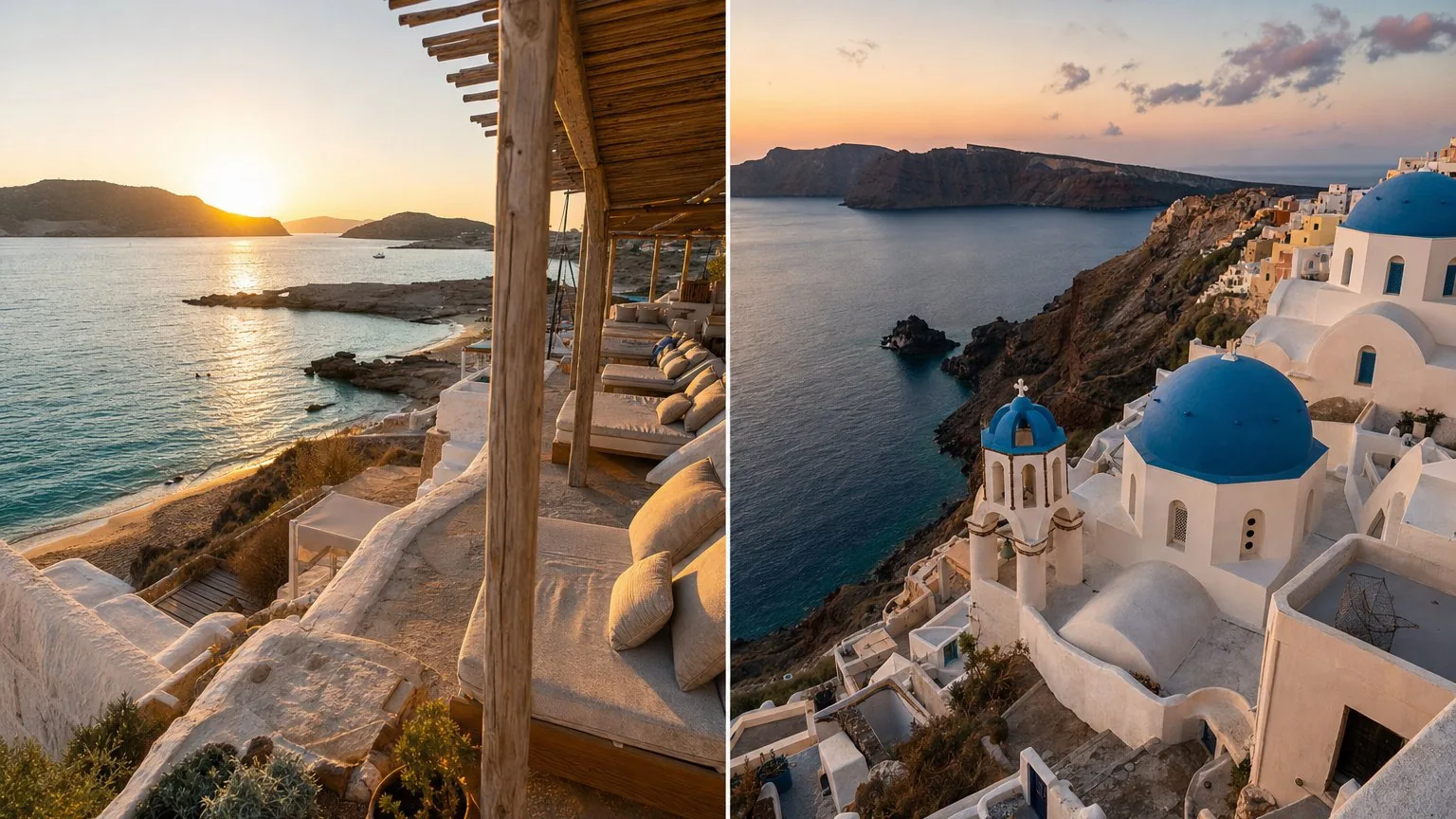
Mykonos is a beach island with a very good town attached. The sand is soft and swimmable, the water is calm on the south coast, and the beaches are organised in the Greek sense: loungers, service, music, a bill at the end. Paradise and Super Paradise are the loud ones; Agios Sostis and the north coast are where you go when you have had enough of that.
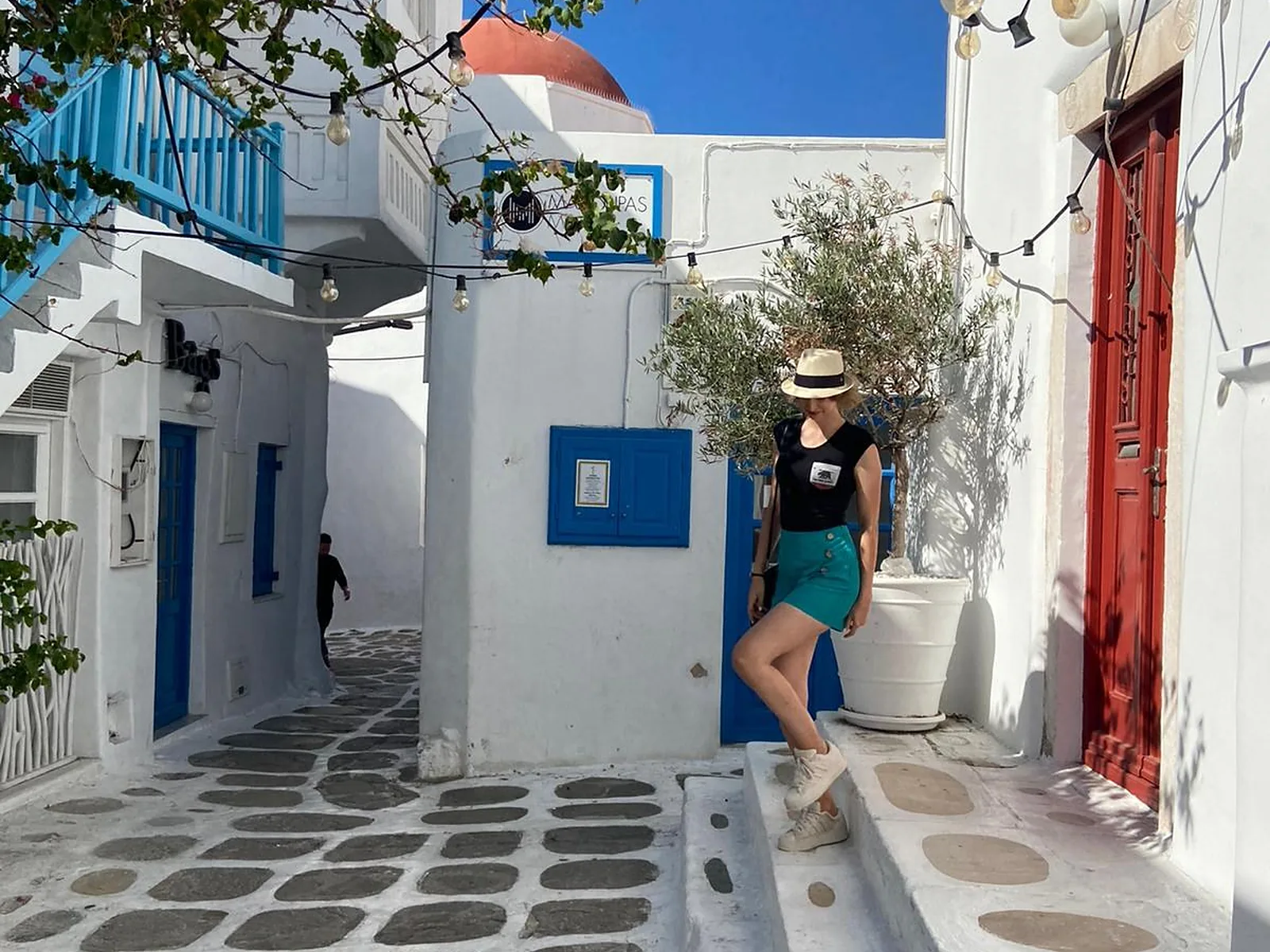
Chora, the main town, is the other half of the appeal — whitewashed lanes deliberately built to confuse, the windmills above the waterfront, and Little Venice, where the buildings meet the sea. It is genuinely lovely at six in the evening and genuinely crowded at eight.
The nightlife is the island's identity and it is not a euphemism: clubs run until sunrise, beach clubs charge accordingly, and minimum spends at the better-known ones will be the largest single line in your budget. If that is what you came for, Mykonos does it better than anywhere else in the Cyclades. If it is not, you are paying a premium for someone else's holiday.
What Santorini Is Actually Like
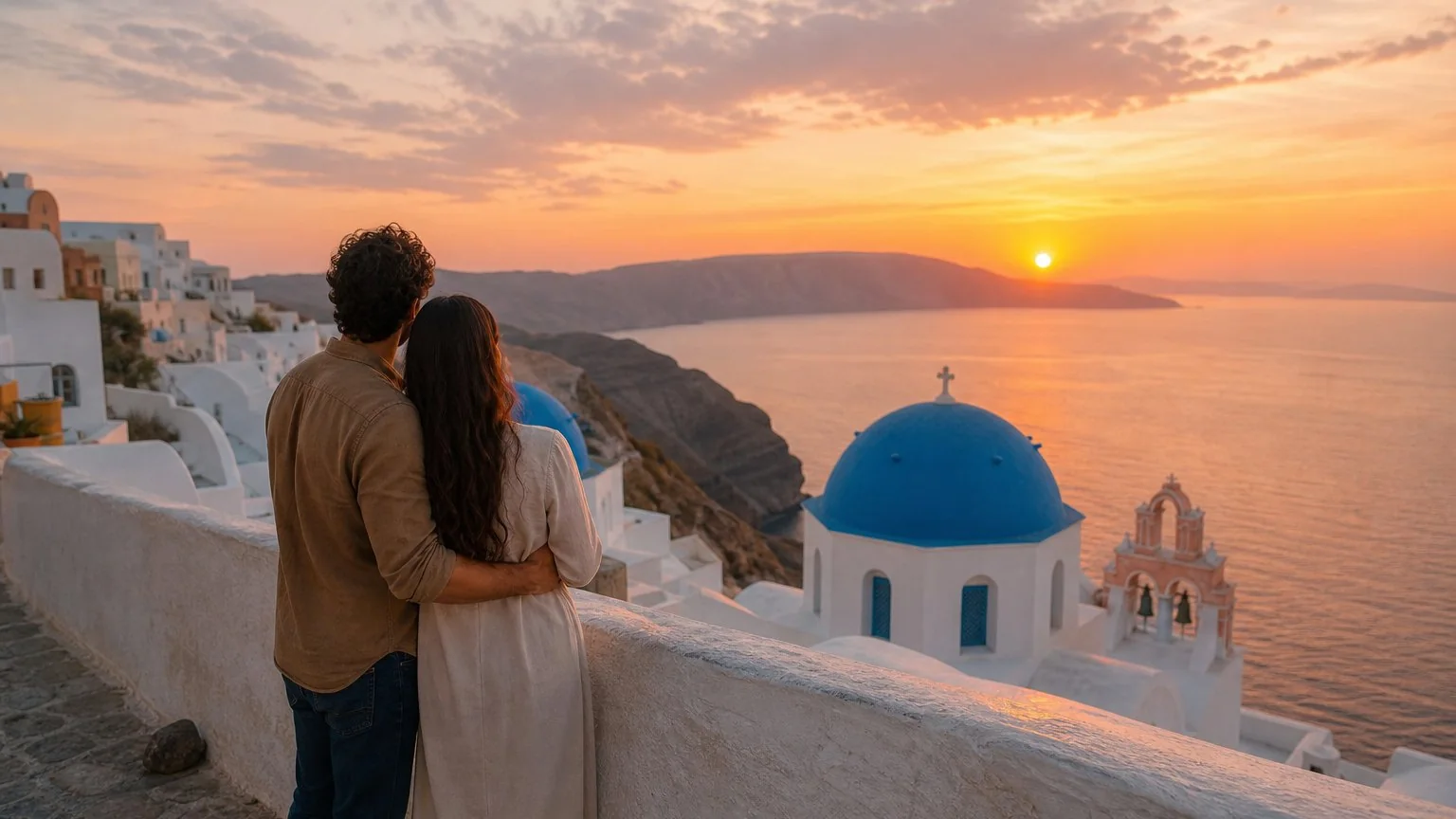
Santorini's draw is geological. The island is the rim of a flooded volcanic crater, and the villages sit on the edge of it, which is why the views are unlike anywhere else and why the whole place is built on stairs. Fira is the working capital, busier and better connected; Oia is the postcard, smaller, prettier and considerably more crowded at sunset.
The walk between them along the caldera rim takes two to three hours and is the single best thing to do on the island — though it is a proper hike in the sun, not a stroll, and it is worth starting it early rather than timing it for sunset. Akrotiri, the Bronze Age settlement buried by the eruption, is the other thing that genuinely rewards a morning.
The beaches are the honest weakness. Perissa and Kamari are black volcanic sand, dramatic to look at and punishing underfoot in August, and they sit well away from the caldera villages where you will probably be sleeping. If a beach holiday is the point of the trip, this is the wrong island.
Getting There, and Getting Around
From Athens, both are short hops: about 40 to 45 minutes to Mykonos and 45 minutes to an hour to Santorini, on Aegean and Sky Express, with Ryanair also flying to Santorini. Santorini is much the better served of the two — roughly 15 to 20 departures a day in season against Mykonos's 6 to 9 — and it keeps more of that service outside July and August, so a shoulder-season trip is easier to arrange around Santorini than around Mykonos.
On Santorini, the airport is about 7 km from Fira. The public bus is €2.20 and takes 10 to 20 minutes, running roughly hourly from 06:00 to 22:00; a taxi is a fixed, non-metered fare of about €30 by day and €35 overnight; a pre-booked private transfer is €32 to €42 per vehicle rather than per person.
The cable car between Fira and the Old Port costs €10 one way on the price list the operator published in April 2026, with a €5 reduced fare, €5 for luggage and free travel for certain categories — unchanged from 2025. It exists mainly because the Old Port has no road: cruise passengers are tendered ashore and the only ways up the 220-metre cliff are the cable car, a mule or the stairs. If you are arriving by plane or ferry rather than cruise ship, you may never need it.
Common Mistakes
Reading rental averages as hotel prices. The US$769 and US$353 figures describe short-term rentals. A mid-range hotel on either island is a different market, and the gap between the islands may not be the same size there.
Planning a day trip between them. The southbound schedule looks generous and the northbound one does not. Check the return sailings before you build a day around the outbound.
Booking the ferry for the wrong half of the year. The direct crossing is seasonal. A January itinerary with a Mykonos–Santorini ferry leg in it will not survive contact with a timetable.
Choosing Mykonos for the caldera photograph, or Santorini for a beach week. Each island is bad at the other's speciality, and both are too expensive to spend on the wrong one.
Giving each island two nights to fit both in. Five nights across two islands is three usable days once the crossing is subtracted.
Before You Book
- Decide which island the trip is actually for — the cost gap makes a wrong guess expensive.
- If you are doing both, check the northbound ferry times, not just the southbound ones.
- Confirm the crossing runs at all for your dates: the direct route is seasonal.
- Budget three nights each, and pick which island gets the fourth before you book flights.
- Book accommodation early for Mykonos, where the nightly rate leaves little room for a late decision.
- On Santorini, decide between Fira and Oia deliberately — one is connected, the other is the view.
Where you sleep matters more on these two islands than on most. Fira and Oia are twenty minutes and a world apart, and a Mykonos beach base is a different holiday from a room in Chora.
Fira or Oia? Chora or the Beach?
On both islands the base decides the trip: what you can walk to, what you have to taxi to, and what you end up paying for it. Score your hotel's location in two minutes, free, no email required.
Score your hotel's location in 2 minutes →Frequently Asked Questions
Which is cheaper, Mykonos or Santorini?
Santorini, clearly. Short-term rentals averaged US$353 a night there against US$769 on Mykonos through August 2026 — Mykonos is about 2.2 times more expensive. The gap is narrowing, though: Mykonos rates fell almost 19% year on year against Santorini's 6.5%. Mykonos can also be the more expensive island once you are there, particularly if beach clubs are part of the trip, but the 2.2 times gap is a short-term rental figure, not a whole-trip one.
How long is the ferry from Mykonos to Santorini?
About 2 hours 10 minutes on the fastest boats in season, and closer to three hours on slower or multi-stop sailings. By late October the quickest crossing had slipped to around 2 hours 45. A one-way economy seat ran €93.70 to €96.70 with SeaJets in late September 2026, with Golden Star advertising from €79.
Can I day-trip between Mykonos and Santorini?
You can book it, but it does not work. The return schedule is the problem: on a late-September day there were five sailings south and only two back, the last at 13:15. Arriving at noon leaves about an hour and a quarter before you must re-board, and the port is 25 minutes from Fira. In late October the margin was 45 minutes. If you want both islands, sleep on both.
Which island is better for nightlife?
Mykonos, and it is not close. Clubs run until sunrise and the beach clubs are a scene in their own right, with minimum spends to match. Santorini's evenings are dinner with a view rather than a night out — which some people much prefer, but it is a different thing.
Which island has better beaches?
Mykonos. Its south-coast beaches are soft sand, calm water and properly organised, and they are close to where you will be staying. Santorini's are black volcanic sand and shingle, striking to look at, hot underfoot in summer, and a drive from the caldera villages. Pick Santorini for the views, not for a beach week.
How many nights do I need on each island?
Three each is the working answer, and six or seven in total if you are doing both, since the crossing eats a day. Give the fourth night to Santorini on a first Greek trip — Fira, Oia, Akrotiri and a caldera boat fill it — or to Mykonos if nightlife is the point, because the island starts late and you lose your first evening to arriving.
Which is better for a first trip to Greece?
Santorini, for most people. Its highlights are compact and easy to plan around, it is the better connected of the two in shoulder season, and it delivers the thing most first-time visitors have pictured. Mykonos is the better first trip only if you are going for beaches and nightlife rather than scenery.
Is the Mykonos to Santorini ferry year-round?
No. The direct crossing runs roughly from late March to the first days of November. Outside that there is no direct sailing, and you would connect through Paros, Naxos or Syros, or fly via Athens. Build any winter itinerary around that rather than assuming a boat.
Sources and References
- AirDNA, Mykonos and Santorini short-term rental market overviews, updated 16 September 2026, covering data through August 2026. airdna.co
- SeaJets, route search and live sailing inventory for Mykonos–Santorini, checked 20 September 2026. seajets.com
- Golden Star Ferries, Mykonos to Santorini route and fares. goldenstarferries.com
- Santorini Cable Car, price list published April 2026, and timetable. santorinicablecar.gr and scc.gr
- KTEL Santorini, official fare table and airport route timetable, last updated 19 May 2026. ktel-santorini.gr
- Fraport Greece, traffic figures, year to date August 2026. fraport-greece.com
- Aegean Airlines and Sky Express route information, with schedule aggregators used for typical flight durations. aegeanair.com, skyexpress.gr
Part of Destinations & Itineraries.