The Best Christmas Markets in Europe: The Ones Worth Travelling For
Trying to pick between the best Christmas markets in Europe for a December trip usually means wading through vague listicles. Three markets actually publish the data you need to plan properly:…

Most Christmas market guides rank the same six cities, as though the only question were which square has the prettiest tree. The question that actually decides your trip is narrower: which market, on which dates, and can you reach the good ones once you are there. Get those wrong and you arrive in a famous city three days after its market has packed up.
This guide covers the markets worth building a trip around, with official 2026 dates, and gives Alsace the space it deserves rather than treating Strasbourg as the whole story. It also answers the question nobody puts on the front page: which markets are still standing after Christmas Day.
FROM CYRIELLE
A very biased disclosure: I'm from Colmar, so Christmas in Alsace has basically been in my DNA since before I could pronounce vin chaud. I've been walking these markets since I was a child, and yes, I am fully aware that this makes me incapable of being completely neutral about them. But I'll try. What I can tell you is that Christmas here is much bigger than Strasbourg: some of the most magical markets are in tiny wine villages you can cross on foot in twenty minutes.
Quick Answer
For a first European Christmas market trip, Nuremberg is the classic and Alsace is the richest single region, with Colmar as the best base. Vienna gives you the grandest city setting, Salzburg the most genuinely local traditions, and Prague and Tallinn the longest seasons. If you are travelling after Christmas Day, your options narrow sharply: Nuremberg, Dresden and Strasbourg all finish on 24 December, while Prague, Tallinn, Salzburg and Colmar keep going.
Key Takeaways
- Most famous markets end on 24 December. Nuremberg, Dresden and Chicago all close on Christmas Eve, and Dresden shuts at 14:00.
- Alsace is a region, not a city. Colmar runs six markets to 29 December 2026; nine other villages nearby run their own.
- The Alsace village shuttles run 27 November to 20 December 2026 only, so a car-free village trip has to happen before 21 December.
- The small village markets are not daily. Kaysersberg opens on four weekends; Ribeauvillé's medieval market runs on four days total.
- Strasbourg had not published its 2026 dates when this was written, so confirm them before booking anything non-refundable.
- Vienna's atmospheric markets (Spittelberg, Art Advent, Am Hof, Freyung) all close on 23 December, well before the city's flagship squares do.
In This Article
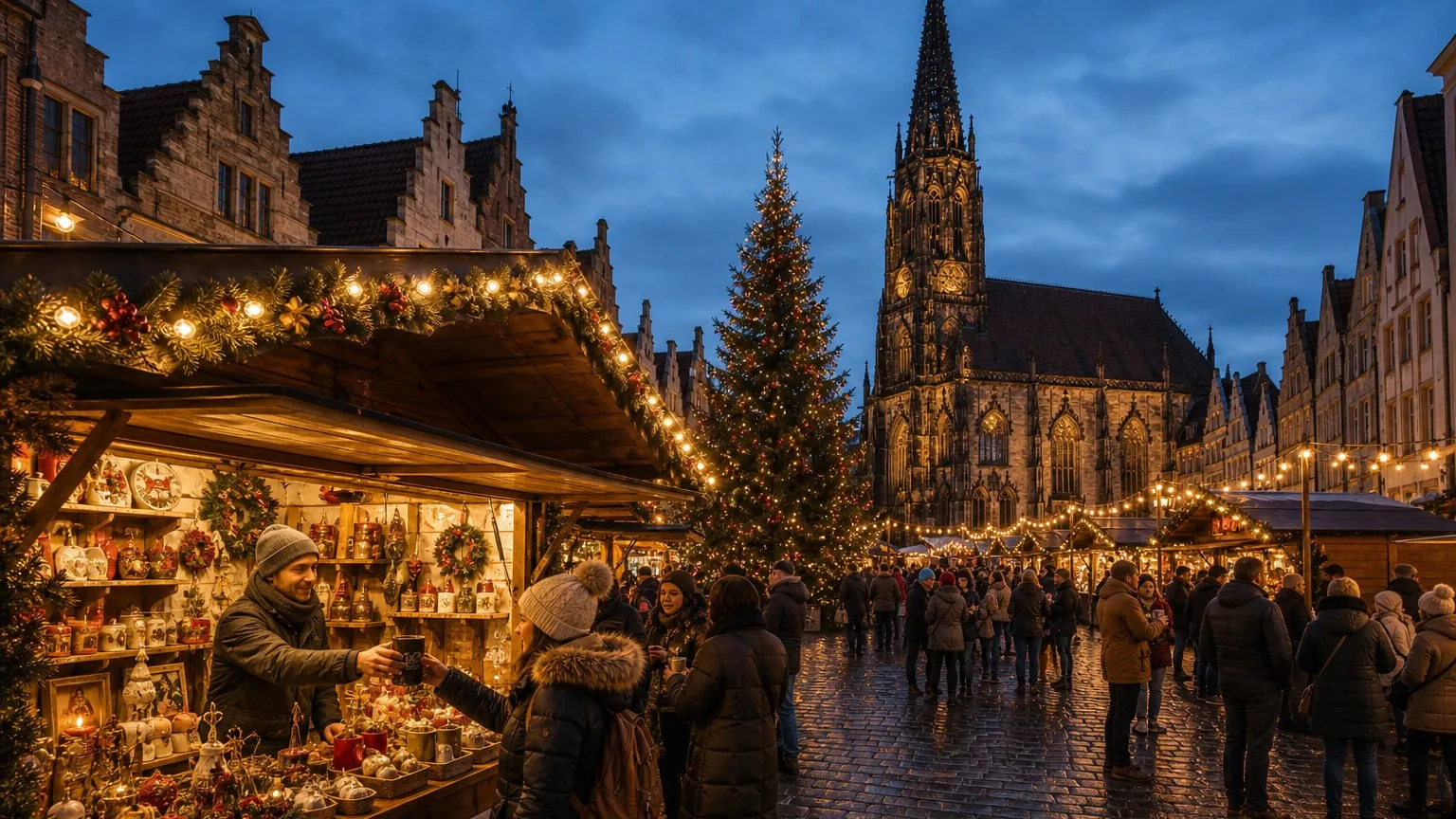
What makes a market worth travelling for
Stall counts and opening hours are easy to compare, which is why so many guides are built on them, and close to useless for deciding where to go: a market with 180 chalets in a car park is worse than thirty in a medieval courtyard. What separates a market worth flying for from a pleasant local afternoon is the setting, whether the stalls sell things made nearby, the food, the programming, and how much friction stands between you and the good parts.
It also helps to know which kind of Christmas destination you are choosing, because comparing them directly is how people end up disappointed:
- A flagship market. One central market that is the reason you came: Nuremberg, Dresden.
- A multi-market city. Several markets with different characters, so the day is a circuit: Vienna, Strasbourg, Colmar.
- A Christmas region. A cluster of towns and villages where the trip is the region rather than any single square. In Europe this essentially means Alsace.
- A festive city that happens to have a market. The city at Christmas is the draw and the market is one item on the list. New York and Tokyo belong here, which is why neither made this guide.
Which Christmas market fits your trip
There is no single best Christmas market in Europe, and any guide that names one is picking a fight rather than helping you. There is reliably a best market for a particular kind of trip. Find the row that sounds like yours.
| If you want… | Go here | Why | Main catch |
|---|---|---|---|
| A classic first Christmas market | Nuremberg | The German archetype, dense and traditional, easy to plan around | Ends 24 December, and it is busy every single day |
| The best whole Christmas region | Alsace, based in Colmar | Six markets in one town and eight more villages within an hour | Needs three days minimum to be worth it |
| Craft and continuity | Dresden | Germany's oldest market, 592nd edition, Saxon woodwork and Stollen | Closes 14:00 on Christmas Eve, the earliest finish here |
| Grand-city Christmas | Vienna | Palace settings and a dozen markets with different characters | The atmospheric ones close 23 December |
| Local tradition you cannot stage | Salzburg | Krampus and Perchten runs, Advent singing, tower brass | The best events fall on specific dates |
| A long festive city break | Prague | Runs to 6 January and stays open until 22:00, so dinner at the market works | Old Town Square is the most crowded square in this guide |
| Medieval winter, and New Year | Tallinn | An entirely medieval old town, open on 31 December | The northernmost market here, and it is genuinely cold |
| A fairytale village | Riquewihr | Walled medieval wine village, market runs daily through Advent | Closes 20 December; very crowded at weekends |
| Snowy North American Christmas | Québec City | Walled old town, six market sites, genuine German market | Thursday to Sunday only for most of the season; ends 23 December |
Travelling after Christmas? Choose carefully
This is the most common planning mistake in Christmas travel, and it is entirely avoidable. People book the quiet week between Christmas and New Year, then arrive to find the market they came for was dismantled on Christmas Eve. The German tradition is that a Christmas market is an Advent market: it prepares for Christmas, so it ends when Christmas begins. The Austrian and Czech patterns are different, and the Alsatian one different again.
| Market | Last day, 2026 season | If you travel 27–30 December |
|---|---|---|
| Nuremberg Christkindlesmarkt | 24 December | Gone |
| Dresden Striezelmarkt | 24 December, closes 14:00 | Gone |
| Strasbourg | 24 December in recent years | Gone, though the city lights stay up |
| Québec City German Market | 23 December | Gone |
| Vienna Spittelberg, Art Advent, Am Hof, Freyung | 23 December | Gone |
| Vienna Rathausplatz, Stephansplatz | 26 December | Gone, but the Rathausplatz ice rink runs to 6 January |
| Colmar, six markets | 29 December | Open |
| Eguisheim and Turckheim | 30 December | Open |
| Munster | 31 December, daily from 21 December | Open |
| Vienna Belvedere | 31 December | Open |
| Salzburg Christkindlmarkt | 1 January | Open |
| Colmar Gourmet Market | 3 January | Open |
| Prague, Tallinn, Vienna Schönbrunn and Riesenradplatz | 6 January | Open |
If your dates are after Christmas, the famous names are the wrong list. Prague, Tallinn, Salzburg and Colmar are the right one.
One important caveat for Alsace specifically: Colmar's own markets run to 29 December, but the shuttle buses that connect Colmar to the wine villages stop on 20 December. A post-Christmas trip to Alsace is a Colmar trip, not a village-hopping trip, unless you have a car.
Alsace: best for the full Christmas-region experience
Ask most people to name the Alsace Christmas market and they will say Strasbourg, which is a bit like naming one vineyard in Burgundy. Alsace at Christmas is a region of markets: Colmar runs six, and within about forty minutes there are markets at Riquewihr, Kaysersberg, Ribeauvillé and Eguisheim among others, each with its own character and, crucially, its own calendar. That is the argument for Alsace over a single famous city — three days gives you a grand city market, a compact one you can do properly after dark, and two or three villages small enough to walk across in twenty minutes.
It is also the one entry here you should treat as a region rather than a destination, so pick your base and your villages deliberately:
| If you want… | Choose | The catch |
|---|---|---|
| The best base, and the most complete experience | Colmar | Needs an evening, not an afternoon |
| Big classic city atmosphere | Strasbourg | 2026 dates were still unpublished at the time of writing |
| A fairytale village | Riquewihr | Ends 20 December; packed at weekends |
| A genuine artisan market | Kaysersberg | Four weekends only, Friday to Sunday |
| The most unusual event | Ribeauvillé | Four days in the whole season |
| Tiny-village charm, and after Christmas | Eguisheim | Small; go for the village, not the stall count |
Colmar: six markets, and the one that stays open longest
Colmar's markets run from 23 November to 29 December 2026, with around 180 chalets across the old town. General hours are Monday to Thursday 11:00 to 19:00 and Friday to Sunday 10:00 to 20:00, with 24 December shortened to 11:00 to 17:00 and both 25 and 26 December running 10:00 to 20:00.
The six are genuinely different from each other, which is the point:
- Place des Dominicains — around sixty chalets beneath the Dominican church, lit at night. The most photographed of the six, and deservedly.
- Place de l'Ancienne Douane — about fifty chalets around the Schwendi fountain, along both banks of the Lauch. The prettiest setting.
- Place Jeanne d'Arc — the food one: foie gras, charcuterie, wine, schnapps and bredalas, the regional Christmas biscuits.
- Koïfhus — artists and craftspeople inside the Renaissance customs house.
- The Gourmet Market on rue de la Montagne Verte, plus the fair and Ferris wheel on Place Rapp — the ones that outlast everything else.
That Gourmet Market is worth knowing about on its own. It stays open until 3 January, daily 11:00 to 22:00. When every other market in the region has gone, it and the Ferris wheel are still running.
The old town is pedestrianised from 25 November to 29 December, and a free shuttle runs between the Bleylé car park and the Théâtre Municipal every thirteen minutes on weekdays.
Colmar is not a two-hour stop on the way to somewhere else. The town changes completely when the lights come on, and the daytime version is the lesser one.
A coach tour delivers people at 11:00 and collects them at 15:00, and they see a pretty town with wooden huts in it. Stay for the evening and you are somewhere else entirely.
Strasbourg: the biggest, and the one to double-check
Strasbourg has called itself the Capital of Christmas since 1570 and runs eight separate markets across the Grande Île, with roughly 300 chalets between them. The Christkindelsmärik on Place Broglie is the original, Place Kléber holds the Great Christmas Tree, and La Petite France is the most atmospheric of them.
One honest caveat, and it matters if you book early. At the time of writing the City of Strasbourg had not published its 2026 dates: its official Christmas site still showed the 2025 edition and said the programme was still being finalised. Several third-party sites were confidently quoting "26 November to 24 December" for 2026 — those are last year's dates. Strasbourg has opened in the final days of November and closed on 24 December in every recent year, so that shape is a reasonable assumption, but confirm it on the city's own site before booking anything you cannot change.
The villages, and when each is actually open
The wine villages are what make Alsace a region rather than a city break, and the thing to plan around is not their character but their calendars, which differ wildly.
Riquewihr is a walled medieval wine village that survived the war almost untouched, and in December it is the closest thing in Alsace to a film set. Its market runs 27 November to 20 December 2026, daily. You will see it described as the village that inspired Beauty and the Beast. Treat that carefully: Disney has never officially named a single model, and France's own tourism board documents Alsace broadly as the visual inspiration, pointing to villages including Eguisheim, Kaysersberg and Turckheim. Riquewihr and Colmar are the ones most often compared with Belle's hometown in travel writing. It is a fair comparison and a fun one. It is not a documented fact about one village.
Kaysersberg is where I would send someone who wanted to understand what an Alsatian Christmas market was before these became destinations: deliberately small, self-described as artisanal, with real local producers selling cheese, foie gras, terrines, gingerbread and wine in the Cour de l'Arsenal. The critical detail is that it does not run daily. In 2026 it opens on four weekends only — 27–29 November, 4–6, 11–13 and 18–20 December, Friday to Sunday, 10:00 to 20:00. Turn up on a Tuesday and there is no market at all, which catches people out every year.
Ribeauvillé is not a chalet market with a theme bolted on. It is a medieval Christmas: costumed beggars, peasants, dancers and street performers through the village, spit-roasted wild boar served with cervoise, and stalls selling Advent wreaths, hand-made nativity scenes and candles, with no admission charge. It runs on four days in the entire season: 5, 6, 12 and 13 December 2026. If your dates include one of those weekends it is the most distinctive thing in this guide; if not, there is no version of it to catch. There is a park-and-ride at Cordon-Schmidt in Bergheim, and the Line 16 bus runs from Colmar year-round.
Eguisheim is built in concentric rings around a central castle, so the whole village curves. Its market runs 27 November to 30 December 2026, one of the longest in the region and one of the few still open after Christmas. Go for the village rather than the stall count; the market is simply the reason it is lit.
Also nearby, and worth knowing for one reason each: Turckheim, Bergheim and Neuf-Brisach all run their own short markets, and Munster keeps going daily from 21 to 31 December, which makes it the last Alsatian village market standing.
My advice: Do not do Alsace as "Strasbourg, plus a quick day trip to Colmar". That is the standard itinerary and it misses the actual point of the region. The villages are not a bonus round after the cities; for a lot of people, including me, they are the best part. Build the trip around Colmar as a base and treat Strasbourg as the day trip, rather than the other way round.
Getting around Alsace without a car
You do not need a car for Alsace at Christmas, and this is the part most guides get wrong. Colmar runs Christmas Shuttles from the train station to Kaysersberg, Riquewihr, Ribeauvillé, Eguisheim, Turckheim, Munster and Neuf-Brisach.
- Lines 1 and 2 run the loop Colmar–Kaysersberg–Riquewihr–Ribeauvillé, one in each direction.
- Line 3 runs to Eguisheim.
- Line 4 runs to Turckheim and Munster.
- Line 5 runs to Neuf-Brisach, on 12 and 13 December only.
A ticket is valid all day for unlimited rides, at around €17 per person, which makes a two or three village day genuinely easy. Under-12s travel free, though you still have to book them a free ticket.
Three things will catch you out. The shuttles run 27 November to 20 December 2026 only — they stop nine days before Colmar's own markets do. Tickets are sold online only, so you cannot turn up at the stop and pay. And numbers are capped per operating day, with sales opening at 12:00 CET on 12 November 2026. The operator says demand is high and asks people to book ahead, which for a capped, online-only service is worth taking literally.
After 20 December the regular bus network still runs; Line 16 from Colmar to Ribeauvillé is the most useful, and it operates all year.
My advice: Check the exact operating days before you book anything around the small markets. Kaysersberg runs on four weekends, Ribeauvillé on four days, Neuf-Brisach on three, and Bergheim on two. People book a week in Alsace, plan the villages loosely, and discover on arrival that the two they most wanted to see are not open while they are there. Pick your village days first, then book the hotel.
A short Alsace route that works
Three days is the sweet spot: two is enough for the cities but not the region.
- Two days. Day one in Strasbourg, covering the Grande Île markets on foot. Day two in Colmar, arriving at lunchtime and deliberately staying through the evening.
- Three days. Add a village day: Kaysersberg in the morning when it is quietest, then Riquewihr in the afternoon, both on the shuttle loop from Colmar. Keep the Colmar evening.
- Four days. Add Eguisheim, which is closest, or swap the village day for Ribeauvillé if your dates land on 5, 6, 12 or 13 December — that one is worth reorganising a trip around.
Whatever you do, do not attempt four villages in one winter afternoon. It gets dark before 17:00, December traffic between the villages is slow, and these markets are small enough that the pleasure is in lingering. Two in a day is comfortable; three is a route march.

Nuremberg: the archetype
If you have a mental image of a German Christmas market, it is probably Nuremberg. The Christkindlesmarkt runs 27 November to 24 December 2026, daily 10:00 to 21:00, opening with the Christkind's prologue from the Frauenkirche balcony at 17:30 on 27 November.
It is dense, traditional and rigorously controlled: the stalls are red-and-white cloth rather than generic wooden huts, and what can be sold is restricted, which is why it has kept its character where other markets have drifted into mass-produced goods. The most recent official figures, for the 2025 edition, give 168 sales stands and more than two million visitors in 2024. The city also publishes what people spend — roughly €46 per market day for international visitors and €29 for regional ones — which is worth having for Nuremberg and says nothing useful about Tallinn or Colmar. The catch is the crowds: it is busy every day it is open.
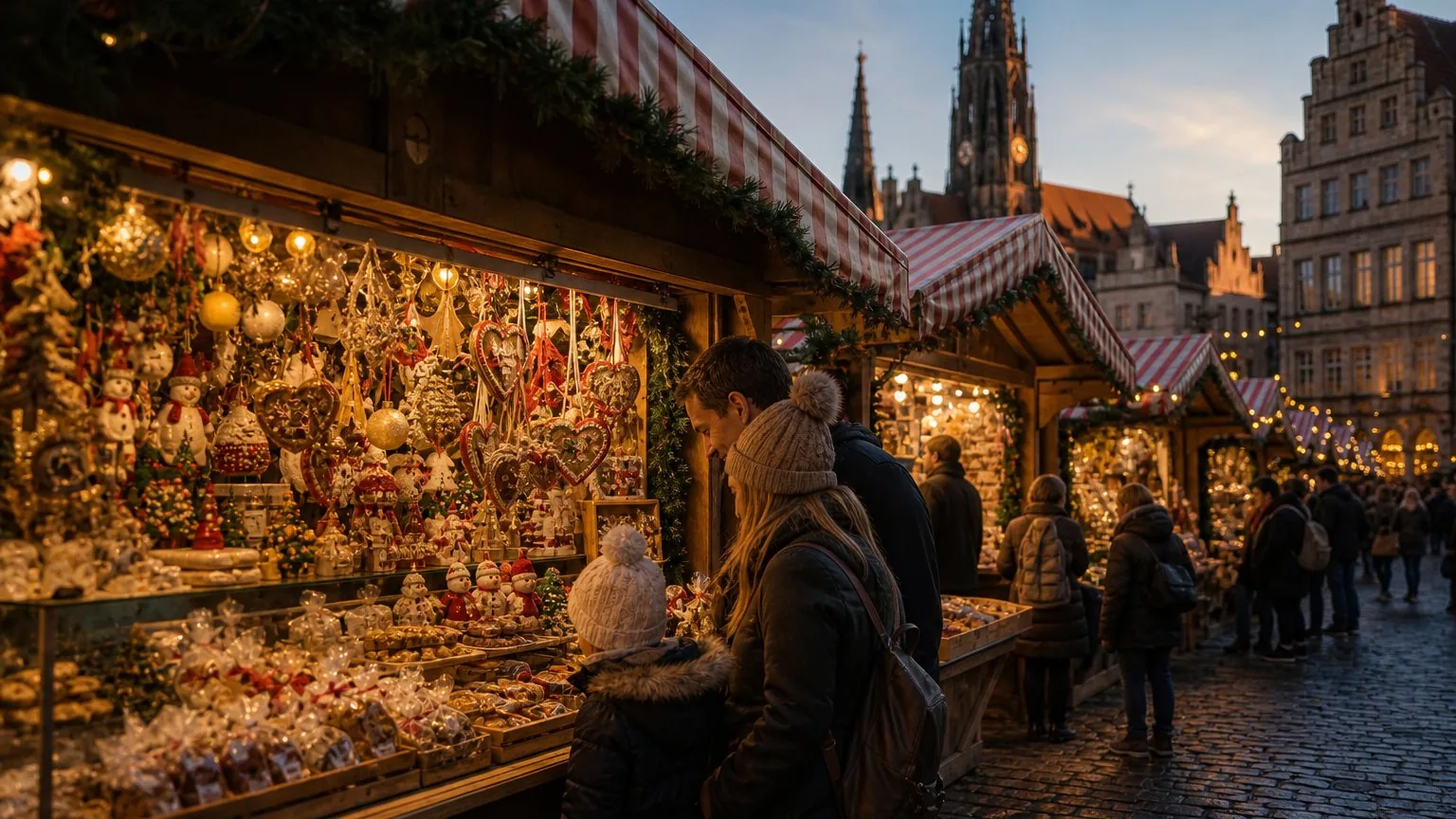
Dresden: the oldest
The Striezelmarkt on Dresden's Altmarkt runs 25 November to 24 December 2026, and 2026 is its 592nd edition, which makes it Germany's oldest Christmas market by a wide margin. More than 200 traders work it, daily 10:00 to 21:00.
Dresden is the specialist choice: Saxon craft traditions, Erzgebirge woodwork from the mining villages, and Stollen taken extremely seriously. Pick it over Nuremberg if craft and continuity interest you more than scale. The catch is that it closes at 14:00 on Christmas Eve, the least forgiving finish of any market here.
Vienna: a dozen markets, two calendars
Vienna is not one market but a network, and understanding its shape is what makes the trip work. The flagship Christkindlmarkt on Rathausplatz runs 13 November to 26 December 2026, daily 10:00 to 22:00; Schönbrunn, in the palace forecourt, and the Riesenradplatz winter market both run to 6 January, and Belvedere to 31 December.
But the markets Viennese people actually recommend are on the other calendar. Spittelberg, threaded through the Biedermeier lanes, Art Advent on Karlsplatz, which juries its stallholders and is the best for genuine craft, Am Hof and Freyung all close on 23 December. Vienna before Christmas and Vienna after Christmas are two different trips, and the later one is thinner.
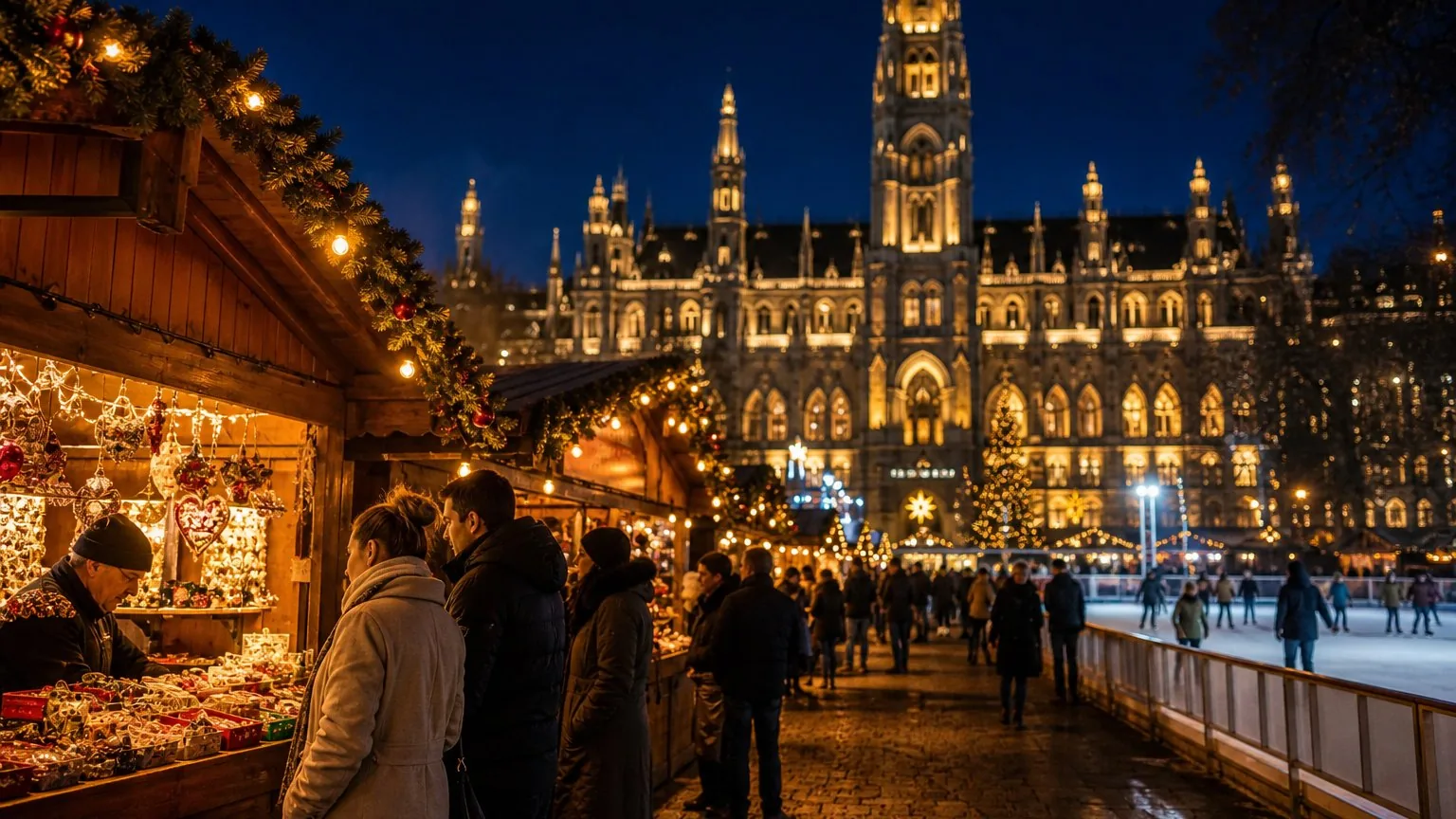
Salzburg: the one with the traditions still attached
Salzburg's Christkindlmarkt sits on Domplatz and Residenzplatz beneath the cathedral and the fortress, and runs 19 November 2026 to 1 January 2027 — one of the few still open for New Year. Access is free and the site is barrier-free.
What sets it apart is a programme of living Alpine traditions on fixed dates rather than a general festive atmosphere. Advent singing runs Tuesdays from 18:00, and Turmblasen, brass played from the tower, Thursdays and Saturdays through December. Two events are unlike anything else in this guide: the Krampus run on Saturday 5 December at about 19:00, and the Perchten run on Monday 21 December at 19:00, the first of the Rauhnächte. Neither is a staged tourist show. The catch is that the best of it is date-specific, so check the programme before fixing your nights.
Prague: the long festive city break
Prague's two main markets, on Old Town Square and Wenceslas Square, both run 28 November 2026 to 6 January 2027, daily 10:00 to 22:00. That 22:00 close is the latest in this guide and it changes the evening: in Prague, dinner at the market is a realistic plan rather than a snack beforehand. Old Town Square with the astronomical clock and Týn church behind the stalls is one of the great European Christmas scenes, and a season running well past New Year makes Prague the most flexible city here for awkward dates. The catch is that Old Town Square is also the most crowded square in this guide.
Tallinn: compact medieval winter
Tallinn's market occupies the Town Hall Square inside the medieval old town and runs 20 November 2026 to 6 January 2027, daily 10:00 to 20:00. The square claims the world's first public Christmas tree, recorded in 1441.
Its real advantage is coherence: the old town is small, walkable and entirely medieval, so the market does not feel like an installation dropped into a modern city. It is also open on 31 December, and the square is where the city sees in the New Year. The catch is the cold — this is the northernmost market here, and January in Tallinn is serious.
Beyond Europe
Europe is where this tradition lives, so this section is short and selective rather than a geography quota. Two destinations earn a place.
Québec City
The German Christmas Market in Old Québec runs 19 November to 23 December 2026, free to enter, across six sites including City Hall Square, Place D'Youville and Place d'Armes. The catch is the calendar: it opens Thursday to Sunday only for most of the season, adding Monday 21 to Wednesday 23 December at the end.
This is the strongest non-European entry by a distance, and not because it imitates Europe well. Old Québec is a walled UNESCO town with genuine seventeenth and eighteenth-century streets and a reliable chance of actual snow, which is more than most European markets can promise. The result is a German market in a French-speaking North American city that feels like neither.
Also worth knowing: Chicago's Christkindlmarket on Daley Plaza is the best traditional German-style market in the United States, free to enter, with German vendors and the familiar mug-deposit system. Its 2026 dates could not be confirmed from first-party sources for this guide, so check the official site before planning around it.
Money, hours and what to expect on the ground
Every market here is free to walk into, which does not make the trip cheap, and the cost is not where people look for it. Food and mulled wine are a modest daily expense; accommodation in December is the largest line in the budget by far, and the good central options in Colmar, Salzburg and Strasbourg go months ahead. Be wary, too, of any Europe-wide daily spending figure: prices in Tallinn and Prague are materially lower than in Vienna and Salzburg, and a single average across them tells you nothing you can plan with.
Two practical points apply almost everywhere. Drinks are usually served in a deposit mug: you pay a couple of euros extra and get it back when you return it. And markets close exactly when they say they do — Colmar states this explicitly — so the last half hour is for buying, not browsing.
Families, couples and tight budgets
With children, Nuremberg first, for its dedicated children's market; Vienna second, because if one market is overwhelming you can walk to a calmer one. One warning: Salzburg's Krampus run on 5 December is genuinely frightening for small children, by design.
As a couple, pick a small place over a grand one. Colmar and Eguisheim after dark do more for an evening than any amount of imperial architecture, because you can actually hear each other.
On a budget, free admission is a red herring. Tallinn and Prague are the genuinely affordable trips here, on food, drink and beds alike, and their long seasons let you travel in the cheaper weeks of early December or after New Year. Alsace on the second and third weekends of December is the most expensive thing in this guide.
Before You Book
- Check the market's last day before booking flights. Several finish on 24 December, and Dresden closes at 14:00.
- Confirm dates on the organiser's own site, not a third-party listing. Strasbourg's 2026 dates were still unpublished at the time of writing.
- For Alsace, check the individual village days first — Kaysersberg and Ribeauvillé both run on limited dates.
- If you want the Alsace village shuttles, note they end on 20 December, tickets are online only and capped per day, and sales open 12 November 2026.
- Plan at least one evening in Colmar or Strasbourg after the lights come on.
- Book accommodation early. It will cost more than everything else combined.
Is your hotel actually walkable to the market?
In December you will walk it in the dark, in the cold, twice a day.
Frequently Asked Questions
What is the best Christmas market in Europe for a first trip?
Nuremberg, if you want the classic German market, because it is the archetype and the easiest to plan around: 27 November to 24 December 2026, daily 10:00 to 21:00. If you would rather have variety than a single famous square, base yourself in Colmar and use Alsace as a region instead.
Is Alsace worth visiting for Christmas markets?
More than anywhere else in Europe, if you have three days. Colmar alone runs six markets to 29 December 2026, and within about forty minutes there are markets at Riquewihr, Kaysersberg, Ribeauvillé, Eguisheim, Turckheim, Bergheim, Munster and Neuf-Brisach.
Is Colmar or Strasbourg better at Christmas?
Strasbourg is bigger, with eight markets and around 300 chalets across the Grande Île. Colmar is more concentrated, better after dark, and a far better base for the villages. If you can only do one day, do Strasbourg; if you can stay a night, stay in Colmar.
Which small Alsace Christmas market is best?
Kaysersberg for genuine artisan producers, on four weekends only. Ribeauvillé if your dates fall on 5, 6, 12 or 13 December 2026, because its medieval market is unlike anything else in the region. Eguisheim if you want the village itself to be the attraction.
Are Christmas markets open after Christmas Day?
Some, but fewer than people expect. Nuremberg, Dresden and Strasbourg all end on 24 December, and most of Vienna's atmospheric markets end on 23 December. Still open between Christmas and New Year: Colmar to 29 December, Eguisheim and Turckheim to 30 December, Munster and Vienna's Belvedere to 31 December, Salzburg to 1 January, and Prague, Tallinn and Vienna's Schönbrunn and Riesenradplatz markets to 6 January.
When do European Christmas markets usually open?
Most open in the second half of November. In 2026: Vienna's Schönbrunn and Stephansplatz on 6 November, Salzburg on 19 November, Tallinn on 20 November, Colmar on 23 November, Dresden on 25 November, Nuremberg on 27 November and Prague on 28 November. They are tied to Advent rather than a fixed date, so they shift slightly each year.
Which Christmas markets are easiest without a car?
All the city markets here are walkable from a central station, and Alsace is easier car-free than its reputation suggests: Colmar runs Christmas Shuttles from the train station to seven villages on an all-day hop-on ticket. The catch is that they run 27 November to 20 December 2026 only, tickets are online-only and capped per day, and sales open at 12:00 CET on 12 November 2026.
Further Reading
Sources and References
- La Magie de Noël à Colmar (Colmar Tourist Office). Dates, opening hours, the six markets and the Christmas Shuttles. https://www.noel-colmar.com/en/
- La Magie de Noël à Colmar. Christmas Shuttles: routes, fares, operating dates and ticketing. https://www.noel-colmar.com/en/christmas-shuttles
- La Magie de Noël à Colmar. Riquewihr, Kaysersberg and Ribeauvillé market pages. https://www.noel-colmar.com/en/ribeauville-riquewihr
- Noël à Strasbourg, City of Strasbourg. The eight markets of the Grande Île; 2026 dates noted as not yet finalised. https://noel.strasbourg.eu/en/markets
- Nürnberger Christkindlesmarkt, City of Nuremberg. 2026 dates and hours; 2025 Dates and Facts factsheet. https://www.christkindlesmarkt.de/en/
- Dresdner Striezelmarkt, City of Dresden. 2026 dates, hours and edition number. https://striezelmarkt.dresden.de/en/
- WienTourismus. Vienna's Christmas markets, 2026 dates and opening hours. https://www.wien.info/en/now-on/christmas/christmas-markets-342664
- Salzburger Christkindlmarkt. Wichtige Termine 2026: dates, hours and event programme. https://christkindlmarkt.co.at/en/wichtige-termine/
- Prague City Tourism. Old Town Square and Wenceslas Square Christmas markets. https://prague.eu/en/christmas-markets/
- Tallinn Christmas Market, official site. 2026–27 dates and hours. https://christmasmarket.ee/en/
- Destination Québec cité. German Christmas Market: 2026 dates, sites and hours. https://www.quebec-cite.com/en/what-to-do-quebec-city/events/quebec-city-german-christmas-market

Part of Europe Itineraries, in Destinations & Itineraries.


