A Realistic Europe Backpacking Itinerary for First-Timers
You have booked flights before, but never a Europe backpacking trip that spans more than one country, and the number of open browser tabs is starting to feel like a symptom. A workable Europe backpacking itinerary for first-timers

By Cyrielle · Travel planner & private-aviation professional · Updated 16 August 2026 · 20 min read
You have booked flights before, but never a Europe backpacking trip that spans more than one country, and the number of open browser tabs is starting to feel like a symptom. A workable Europe backpacking itinerary for first-timers starts with one decision most people skip: pick a single region instead of chasing a greatest-hits list across the whole continent. Do that, and everything else, route, budget, pacing, gets easier.
This guide lays out a realistic 12-day Europe backpacking route through four cities, honest travel times between them, how the plan changes for couples, and how to adapt it on a tighter budget. It also covers the entry-requirement paperwork worth sorting before you book a single flight, and the mistakes that turn a relaxed first-time itinerary into a sightseeing sprint. If this is genuinely your first trip to the continent, our first-time Europe itinerary guide covers the broader planning framework this route builds on.
Quick Answer
A realistic Europe backpacking itinerary for first-timers covers one region, not the whole continent: three to five stops, a minimum of two nights each, spread across 10 to 14 days and linked by direct trains. A 12-day route through Amsterdam, Berlin, Prague and Vienna is a proven structure that balances real sightseeing time with the rest a longer trip needs.
Key Takeaways
- Limit a first-time Europe backpacking itinerary to three to five stops with at least two nights each, rather than a country-a-day checklist.
- 10 to 14 days is the realistic sweet spot for a first multi-country trip; seven days works for one region, and three weeks or a month suits a longer route.
- Direct intercity trains connect most major backpacker hubs, but several routes now require paid seat reservations even with a rail pass.
- ETIAS travel authorisation for non-EU visitors is not yet in operation as of August 2026, so check the current timeline before booking flights.
- For couples, a Europe backpacking itinerary generally works better with fewer stops and longer stays than the solo-backpacker pace.
- On a budget, a Europe backpacking itinerary saves more by cutting the number of destinations than by cutting quality within each one.
In This Article
- How many days do you need?
- Which region should you cover?
- A realistic 12-day itinerary
- Getting between cities
- Where to stay
- Budgeting for the trip
- Adapting for couples
- Entry requirements to sort first
- Common planning mistakes
- FAQ

How Many Days Do You Need for a Europe Backpacking Itinerary?
Ten to fourteen days is the realistic minimum for a first Europe backpacking itinerary that covers more than one country without feeling rushed. According to Rick Steves’ guidebooks and the Lonely Planet trip-planning framework, both converge on the same structural point: budget three to five stops with a minimum of two nights each, and build in one genuinely unscheduled day.
Shorter trips work too. A week suits a single country or a compact route, such as Paris, Amsterdam and Brussels, connected by short train hops. Three weeks or a month opens up six to ten stops across two or three countries, provided you keep travel days to roughly one for every two or three days spent actually staying somewhere.
The trap is not which cities you choose. It is how many location changes you force into the days available. A ten-day trip with six stops means four to five travel days consumed by transfers, security and check-in logistics, leaving barely any unhurried time anywhere.
A spreadsheet with fourteen cities on it is not an itinerary, it is a cry for help.
Travellers building an itinerary for one week only need a single region; our realistic 7-day Europe itinerary covers that tighter framework. With three weeks or a full month, the same structure widens, which our 3-week Europe itinerary and one-month Europe itinerary guides break down in full.
Which Region Should Your First Europe Backpacking Trip Cover?
Three route structures work for a first Europe backpacking itinerary, and each suits a different traveller. None of them is universally best, so weigh the trade-offs before you commit to a map.
Option one: the Western Europe classic route. Amsterdam, Paris, and Brussels or Bruges, linked by fast, frequent trains. Big-name sights and easy logistics, but the highest prices per night and the most crowded attractions in summer.
Option two: the Central Europe backpacker route. Amsterdam, Berlin, Prague, and Vienna. Lower accommodation and food costs than Western Europe, a strong hostel culture, and direct trains between every stop, though you cross more languages and currencies.
Option three: a single-country deep dive. Spain, Italy, or Portugal alone, moving between two or three regions within one country. Fewer logistics headaches, no currency changes, and more time in fewer places, though it gives a narrower first taste of the continent.
| Route option | Best for | Verdict |
|---|---|---|
| Western Europe classic route | First-timers wanting famous sights and easy trains | Great introduction, but pricier and busier in peak season |
| Central Europe backpacker route | Budget-conscious first-timers and hostel-goers | Best value for money and hostel culture |
| Single-country deep dive | Couples or slower travellers wanting fewer transitions | Most relaxed pace, narrower geographic spread |
Fewer stops, longer stays: the one rule that saves every first-time Europe itinerary from itself.
The Central Europe backpacker route gets the detailed treatment below, because it offers the clearest value for money for first-time backpackers, but the same day-count and pacing logic applies whichever option you pick.
One thing first-timers on a UK-inclusive route consistently miss: crossing from Britain into the Schengen area is a real international border, not a formality, so your Schengen day-count only starts once you reach the continent (European Commission).
A Realistic 12-Day Europe Backpacking Itinerary
This route runs Amsterdam to Berlin to Prague to Vienna, four stops connected by direct daytime trains: three nights each in Amsterdam, Berlin and Prague, and two nights in Vienna, eleven nights in total across the twelve days. It gives real time in each city rather than a photo stop between platforms.
| Day | City | Focus |
|---|---|---|
| Day 1 | Amsterdam | Arrive, canal ring walk |
| Day 2 | Amsterdam | Anne Frank House, Jordaan |
| Day 3 | Amsterdam | Museumkwartier |
| Day 4 | Amsterdam | Morning free, train to Berlin |
| Day 5 | Berlin | East Side Gallery, Museum Island |
| Day 6 | Berlin | Reichstag dome, Kreuzberg |
| Day 7 | Berlin | Half day, train to Prague |
| Day 8 | Prague | Old Town Square, Astronomical Clock, Charles Bridge |
| Day 9 | Prague | Prague Castle, Lesser Town |
| Day 10 | Prague | Slower morning, train to Vienna |
| Day 11 | Vienna | Ringstrasse, St Stephen’s Cathedral |
| Day 12 | Vienna | Kunsthistorisches Museum or Schönbrunn Palace, buffer day, fly home |
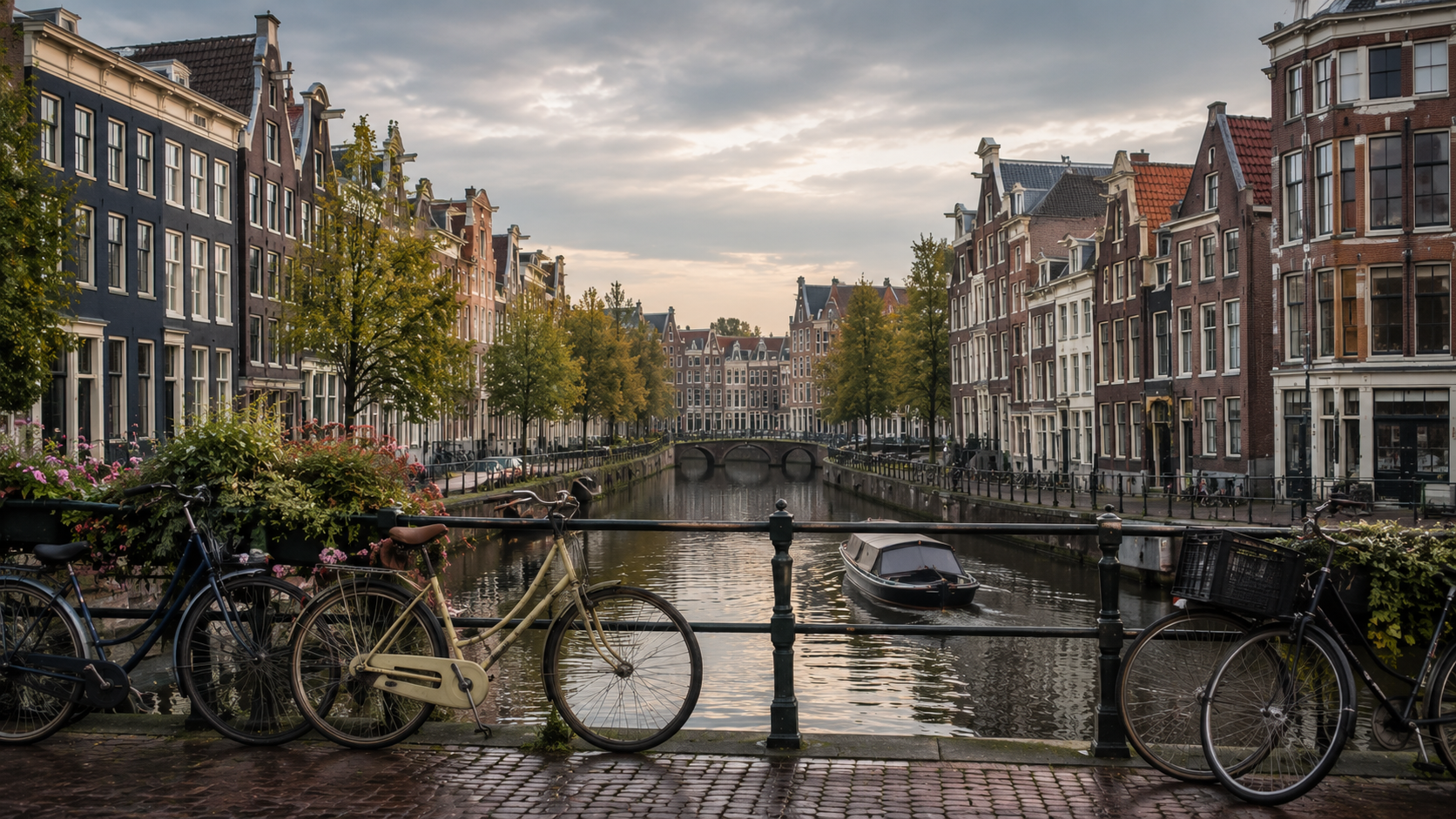
Amsterdam: your first three nights
Fly into Amsterdam and spend the arrival afternoon walking the canal ring to get your bearings; jet lag makes a packed first schedule a bad idea. The following morning is for the Anne Frank House, booked ahead since tickets release on a rolling basis, with the Jordaan neighbourhood filling the afternoon. Round out the stop with a half-day in the Museumkwartier before an afternoon train to Berlin.
Berlin: three nights of a slower pace
Berlin rewards more time than most first-timers give it. The East Side Gallery and Museum Island fill the first full day, the Reichstag dome and a neighbourhood like Kreuzberg cover the second, and a half-day before the train to Prague leaves room for a proper lunch rather than a station sandwich.
Prague: three nights in the old town
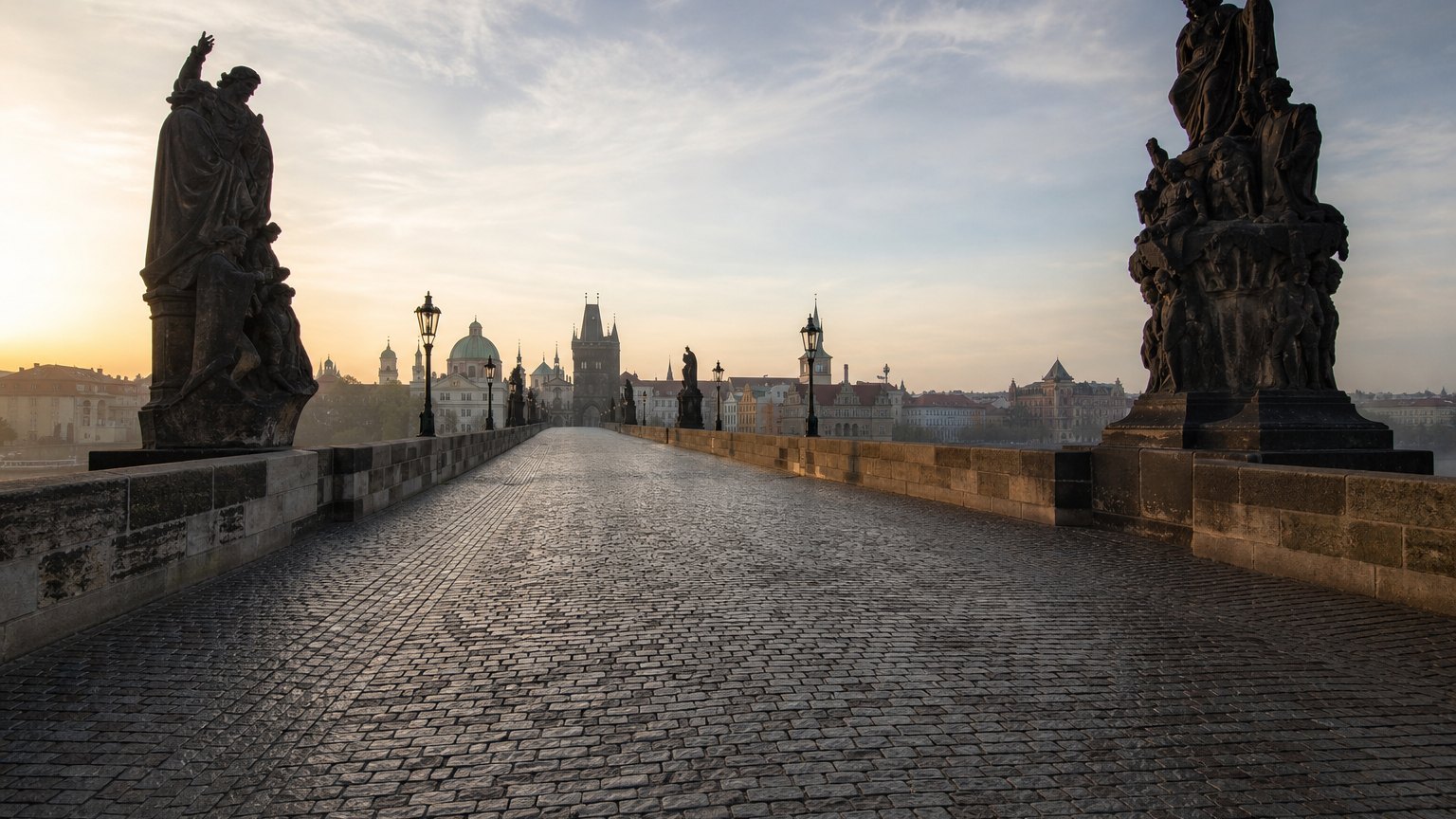
Prague’s Old Town is compact enough to see on foot in a day, so use the extra time well. Old Town Square, the Astronomical Clock, and Charles Bridge at a quieter hour take up the first full day, Prague Castle and the Lesser Town take the second, and a slower morning before an afternoon train to Vienna closes the stop.
Vienna: completing the route
Vienna completes the route with a change of pace: grand architecture, coffee houses, and a genuinely walkable centre. The Ringstrasse and St Stephen’s Cathedral cover the first day, a museum day at the Kunsthistorisches Museum or Schönbrunn Palace covers the second, and a buffer day sits before flying home or continuing onward.
Notice the pattern: every stop gets one full sightseeing day, one flexible day, and a shorter arrival or departure day. That rhythm keeps a twelve-day trip from feeling like a relay race.
How Do You Get Between Cities on a Europe Backpacking Trip?
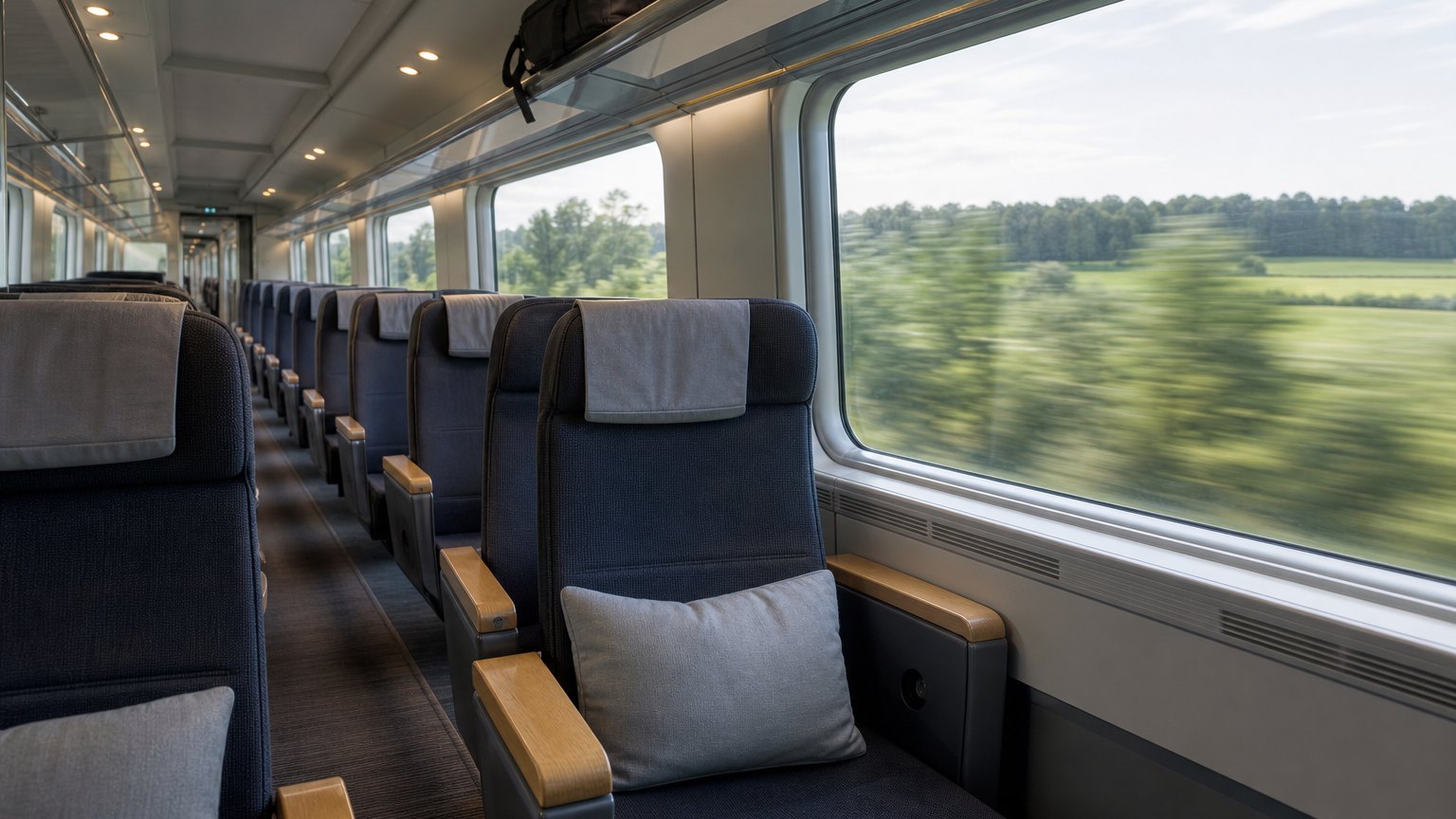
Direct intercity trains link Amsterdam, Berlin, Prague and Vienna, which is exactly why this route works so well for first-timers: no connections, no scrambling across a city for a second station. Whether you need a rail pass or point-to-point tickets depends on how many journeys you are actually making.
For a four-stop trip like this one, point-to-point tickets booked a few weeks ahead are often simpler and cheaper than a multi-country rail pass, since a pass earns its cost back mainly through frequent, spontaneous journeys. On this route, seat reservations for the main daytime Amsterdam to Berlin, Berlin to Prague and Prague to Vienna trains are generally optional, though other European high-speed and night train routes elsewhere on the continent may require them, per Eurail’s own pass information.
A quiet money-saver here: the daytime Amsterdam-Berlin, Berlin-Prague and Prague-Vienna trains generally do not require a paid seat reservation, so you can travel on the day without pre-booking fees nibbling at your budget.
Budget flights are the other option, and they can be faster point-to-point, but they add airport transfer time, security queues, and baggage rules that rarely suit a backpack-only trip. Trains, for this route, are simpler and land you in the middle of each city rather than an hour outside it.
A budget flight might save two hours on paper and cost you three at the airport.
Where Should You Stay: Hostels, Budget Hotels or Something Else?
Hostels remain the default for a Europe backpacking itinerary because they are cheaper than hotels and put you within walking distance of a city centre, which matters more than an extra star rating. A private room in a hostel is a good middle ground if you want your own space without hotel prices.
Budget guesthouses and small hotels work well for couples who want more privacy, particularly in Prague and Vienna, where a comfortable double room outside the absolute city centre can still be a short tram ride from everything worth seeing.
Spend on location, not amenities. A plain room five minutes from the old town beats a stylish one that hands you a 40-minute commute twice a day, and on a backpacking budget those saved fares and minutes add up fast.
Whatever you book, check the actual walking distance to the sights and transport you will use daily, not just the neighbourhood name on the listing. A city centre hostel in some cities is a twenty-minute tram ride from anything worth seeing.
For a second opinion before you book, the free Hotel Check tool scores a listing’s location in about two minutes, no email required.

How Much Does a Europe Backpacking Itinerary on a Budget Actually Cost?
There is no single daily figure that applies everywhere, because costs swing hugely by country, season, and how many nights you spend in hostel dorms versus private rooms. What matters more than a target number is where your money actually goes on a multi-stop trip.
| Cost item | Typical range per day |
|---|---|
| Hostel dorm bed | €15 to €35 |
| Private hostel or budget hotel room (per person) | €30 to €70 |
| Street food or self-catered meals | €10 to €20 |
| Sit-down restaurant meal | €12 to €25 |
| Local public transport and museum entry | €10 to €20 |
These are lower-to-mid budget ranges for travel outside peak dates, and they shift with city, season and exchange rates. Amsterdam is the expensive outlier on this route, so treat these as a planning guide rather than a fixed budget.
Your three biggest cost levers are the number of destinations, the number of nights in each, and whether you cook some of your own meals. Cutting a stop from your route saves more than trimming spending once you are there, because every extra city adds a travel day, a fresh deposit, and another round of getting your bearings.
Central Europe stops, Prague and Vienna in particular, tend to run noticeably cheaper than Amsterdam or other Western European capitals for food, drink, and hostel beds, which is part of why the Central Europe route suits a budget-conscious Europe backpacking itinerary better than a Western Europe one.
The most underused backpacker move is the overnight train: on a long leg it can save both a hotel night and a daytime travel day at once. It is not glamorous sleep, but it is one of the few honest ways to add a city without adding cost.
Cut a city before you cut a coffee: fewer stops save more than fewer treats.
Hostel kitchens, tip-based walking tours, and city tourism cards that bundle transport and museum entry are the practical levers worth using daily, rather than skipping meals or attractions altogether. Readers who want the spreadsheets and checklists behind a trip like this can find budget-planning guides in our shop, though the free route above works without buying anything.
How Does a Europe Backpacking Itinerary for Couples Change?
For couples, a Europe backpacking itinerary generally works better with fewer stops and longer stays than the classic solo-backpacker pace built around hostel bars and constant movement. The same 12-day route works well as written, but trimming to three stops with longer stays in each, rather than four stops with three nights, buys a genuinely lazy morning in each city.
Accommodation is the other real difference. A private room, whether in a hostel or a small guesthouse, is worth the extra cost for most couples over a shared dorm, especially after a long travel day. Prague and Vienna both have plenty of well-located budget doubles that do not require a hotel budget.
Couples consistently underestimate how much one unscheduled morning improves everything after it. Deliberate downtime is not wasted time; it is what keeps the tenth church from feeling like the tenth church.
Pace matters more than sights for couples. Splitting a day, one person’s museum morning against a shared afternoon walk, keeps both people happy without turning the trip into a negotiation.

What Entry Requirements Do First-Timers Need to Sort Before Booking Flights?
Three things need checking before you book flights for a first-time Europe backpacking trip: passport validity, your visa-exemption status, and the entry-system rules for non-EU visitors to the Schengen Area, including ETIAS and the EU’s Entry/Exit System (EES).
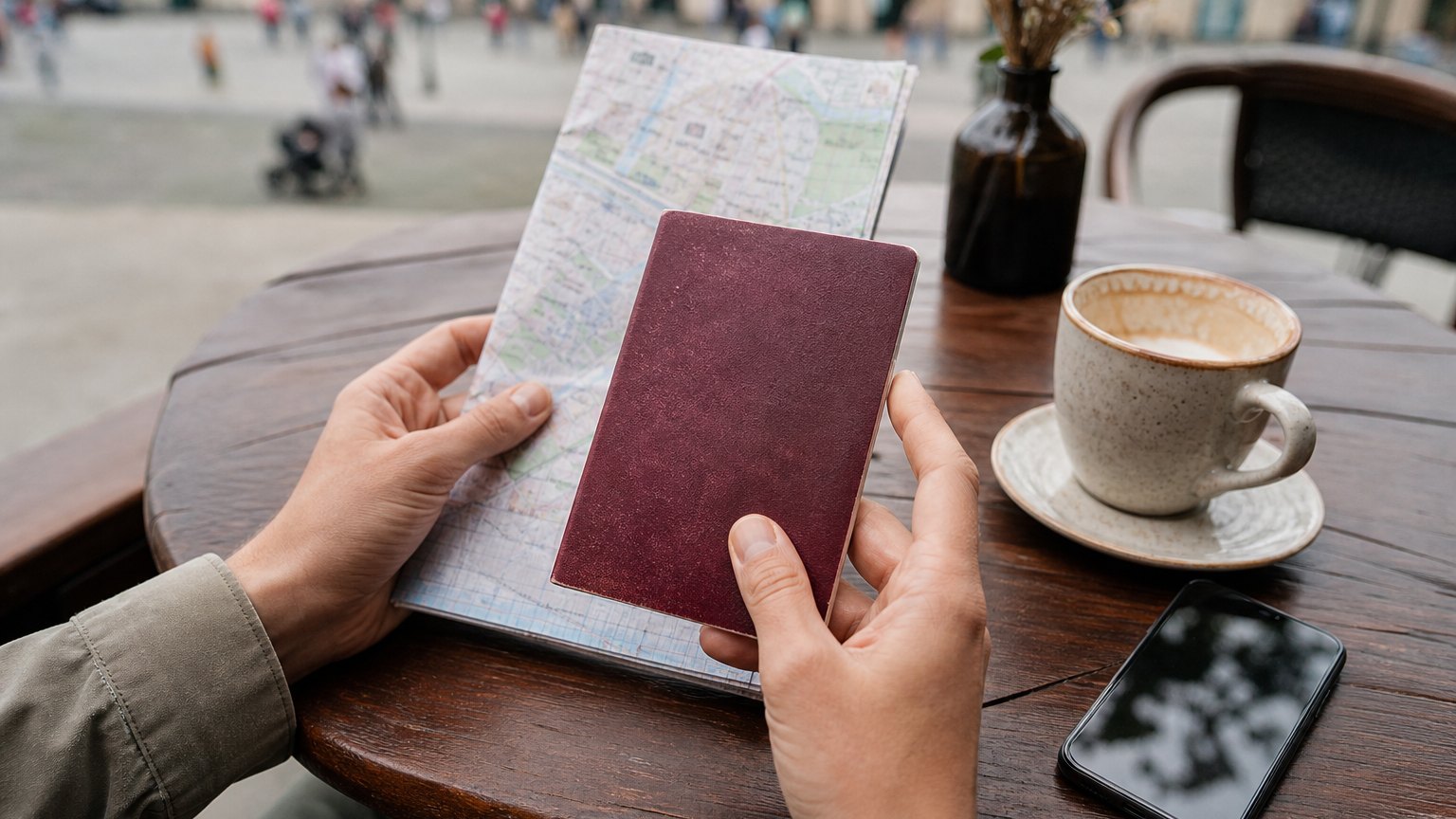
Passport validity rules vary by country, so check the specific requirement against your passport’s expiry date well before booking, according to UK Foreign, Commonwealth and Development Office travel advice for your route.
On paperwork: ETIAS is not yet in operation as of August 2026, so there is nothing to buy yet, and any site selling it is a scam. The EU’s Entry/Exit System (EES) is live and simply records your entry and exit at the border. Check the official EU portal before you travel.
The Schengen Area’s ninety-days-in-any-hundred-and-eighty-days rule limits how long non-EU/EEA visitors can stay across all Schengen countries combined, not per country. A twelve-day trip sits comfortably within that limit, but it matters far more for a three-week or one-month route.
The 90-days-in-180 rule counts your cumulative days across all Schengen countries in a rolling window, not per country, so several trips in one half-year add up. A single backpacking trip barely dents it, but frequent travellers should keep count (European Commission).
Currency is a smaller but real logistics point on this route: euros work in Amsterdam, Berlin and Vienna, but the Czech koruna is Prague’s currency, so budget a small cash buffer for the changeover.
What’s the Most Common Mistake in a First-Timer Europe Backpacking Itinerary?
Building a route around a list of countries rather than a manageable travel radius is the most common mistake. Rick Steves’ guidebooks and Lonely Planet’s planning framework both flag the same pattern: London, Paris, Rome, Barcelona and Amsterdam in ten days looks achievable on a map, but it converts a trip into four or five travel days of transfers, security queues and check-in logistics, leaving little unhurried time anywhere.
Skipping the unscheduled day comes a close second. A trip with zero slack breaks the moment one train is delayed or one museum queue runs long, and the rest of the schedule scrambles to catch up.
Nobody looks back on a trip fondly remembering the platform they sprinted across in Berlin.
Before You Book
- Have you limited the route to three to five stops with at least two nights each.
- Does the trip include at least one genuinely unscheduled day.
- Have you checked passport validity and the current ETIAS and EES requirements for your Schengen entry.
- Does your route stay within the ninety-days-in-a-hundred-and-eighty-days Schengen limit.
- Have you checked whether your chosen trains require paid seat reservations.
- Have you scored your planned hotel or hostel’s actual location, not just its neighbourhood name.
Frequently Asked Questions: Europe Backpacking Itinerary
How many days do you need for a first Europe backpacking trip?
Ten to fourteen days is realistic for a first multi-country trip. Seven days suits one region or a compact route; three weeks or a month lets you add more stops without adding travel fatigue, provided you keep the same pacing rules.
What is the best Europe backpacking itinerary for couples?
A three-stop, four-nights-each version of a Central Europe route, such as Amsterdam, Prague and Vienna, tends to suit couples better than a busier four-stop trip. Fewer transitions and private rooms matter more than extra sights.
How much does a Europe backpacking itinerary on a budget cost per day?
No single figure holds across the continent, since costs vary by country, season and accommodation type. Central European stops like Prague and Vienna generally cost less than Western European capitals for food and hostel beds.
Do you need a rail pass for a Europe backpacking trip?
Not always. For a four-stop route like the one above, point-to-point tickets booked ahead are often cheaper than a multi-country pass, which pays off mainly for frequent or spontaneous journeys, per Eurail’s own pass guidance.
Is it better to backpack Europe by train or by budget flights?
Trains usually win for a multi-stop European route because they land you in the city centre, need no airport transfer, and carry a backpack without extra fees. Budget flights can be faster point-to-point but add hidden time at the airport.
What is ETIAS, and is it in effect for backpackers yet?
ETIAS is a planned travel authorisation for non-EU and non-EEA visitors entering the Schengen Area, but it was not yet in operation as of August 2026. The EU’s Entry/Exit System (EES) is fully operational at participating external Schengen border crossings, having completed its rollout on 10 April 2026. Check the European Commission’s ETIAS page for the current timeline before booking flights.
How many countries should a first-time Europe backpacking itinerary include?
Two to three countries across three to five stops works best for a ten to fourteen day trip. More countries usually means more travel days and less real time in any one place.
What’s the biggest mistake first-time Europe backpackers make?
Building a route around a list of countries rather than a manageable travel radius causes the most damage. A greatest-hits itinerary across five countries in ten days converts a holiday into a series of transfers, per Rick Steves’ guidebooks and Lonely Planet’s planning framework.
Not sure your hostel or hotel is in the right spot?
A cheap bed in the wrong part of town costs you more in transit time than it saves in cash. Score any listing’s actual location before you book.
Score your hotel’s location in 2 minutes →
Further Reading
[★ Guide
First-Time Europe Itinerary
The foundational planning framework this itinerary builds on.](/first-time-europe-itinerary/)
[Shorter Trip
Realistic 7-Day Europe Itinerary](/realistic-7-day-europe-itinerary/)[Two Weeks
Realistic 2-Week Europe Itinerary](/realistic-2-week-europe-itinerary/)[Longer Trip
3-Week Europe Itinerary](/3-week-europe-itinerary/)[Extended Trip
One-Month Europe Itinerary](/one-month-europe-itinerary/)[Free Tool
Hotel Location Check](/travel-tools/)
Sources and References
- Rick Steves. Guidebooks and trip-planning advice. ricksteves.com.
- Lonely Planet. Trip-planning framework. lonelyplanet.com.
- UK Foreign, Commonwealth and Development Office. Foreign travel advice. gov.uk.
- European Commission. ETIAS travel information. travel-europe.europa.eu.
- European Commission. Schengen Area. home-affairs.ec.europa.eu.
- Eurail. Official pass and reservation information. eurail.com.