Best Time to Go on Safari: A Season by Season Guide
Ask five safari veterans for the best time to go on safari and you'll get five different answers, and all five will be right. There is no single best month: it depends on whether you want thinned-out…
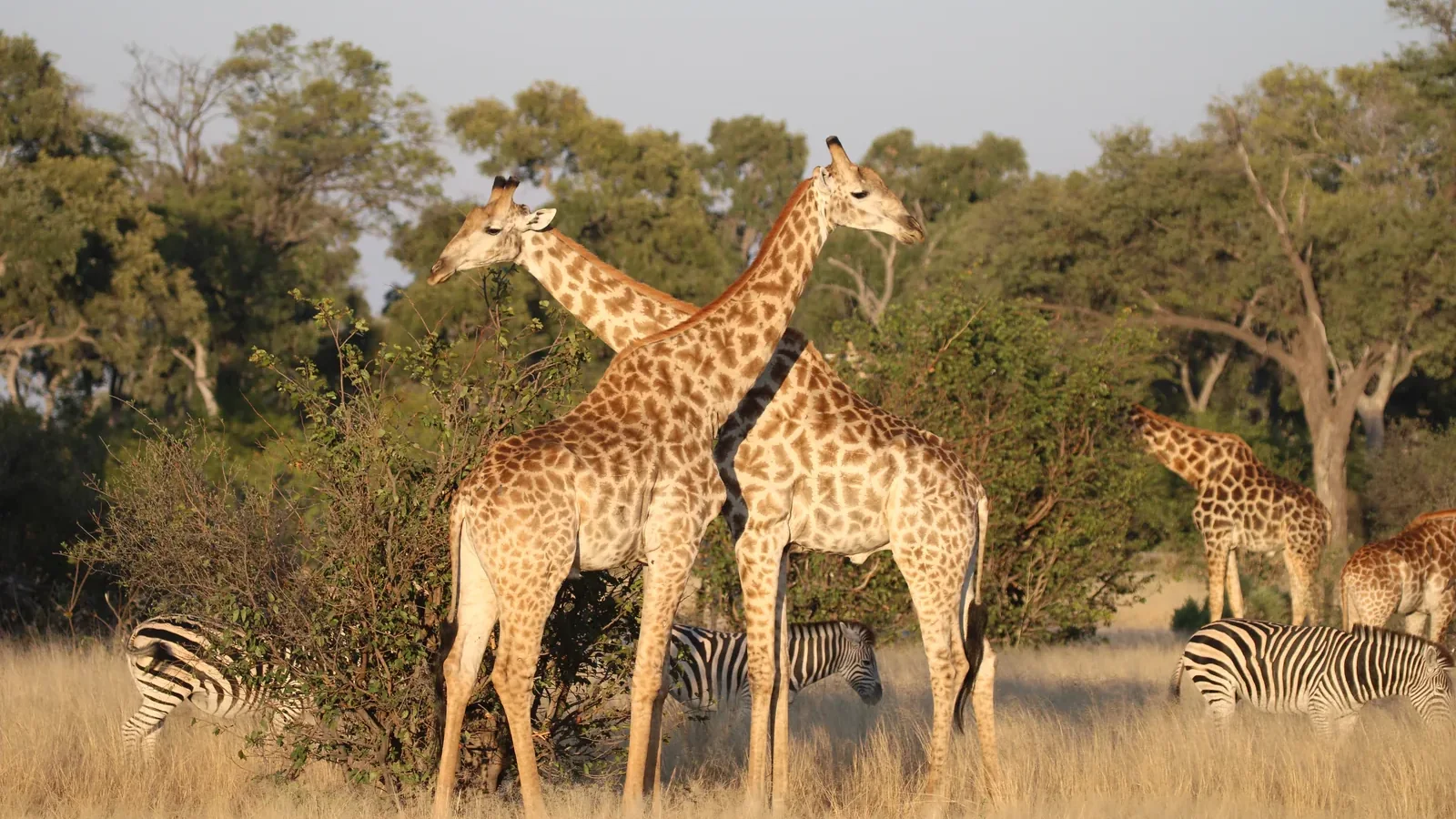
Ask five safari veterans for the best time to go on safari and you'll get five different answers, and all five will be right. There is no single best month. It depends on whether you want thinned-out bush and easy sightings, a shot at a Great Migration river crossing, newborn animals and dramatic light, or the lowest price you can find. Kruger, the Serengeti and the Okavango Delta each run on their own seasonal clock, so treating all of Africa as one blanket "June to October" destination is where most planning goes wrong.
This guide is built to answer one question rather than describe twelve months: what kind of safari do you want, and which window gives you the best trade-off for it?
Quick Answer
There is no single best time to go on safari. For the easiest general wildlife viewing, the dry winter months of roughly June to September work across Kruger and much of southern Africa. For the Great Migration, the month only matters alongside the region: late January to March for calving on the southern Serengeti plains, July to October in the north for river crossing opportunities. For the Okavango in flood, June to August. The green season, roughly November to April, trades guaranteed sightings for newborns, birds, lower rates and far fewer vehicles.
Not sure when your safari should be?
The "best" month depends on what you actually want to see. Answer six quick questions and I'll narrow the calendar to the window that fits you.
Key Takeaways
- There is no universal best month. The right window depends on your single top priority: visibility, a specific event, budget or logistics.
- Dry season, roughly May to October in southern Africa, concentrates wildlife around the remaining water and thins the vegetation you are looking through.
- For the migration, the sector matters as much as the month. "The Serengeti in August" is not a plan.
- The Okavango's flood arrives during Botswana's dry season, because the water falls in Angola months earlier and hundreds of kilometres away.
- Green season is a different safari, not an inferior one, but thicker bush, heat, insects and access limits are real.
- Dry season costs more almost everywhere. How much more varies by camp and country far more than by the month itself.
In This Article
- Safari Timing by What You Actually Want
- Find Your Best Safari Season
- Why There's No Single Best Time for Safari
- The Great Migration: The Month Is Only Half the Answer
- Kruger: Dry Does Not Mean Warm
- The Okavango Delta: The Flood Arrives in the Dry Season
- Dry Season vs Green Season: The Honest Trade-Off
- First Safari, or Fifth?
- What the Season Does to the Price
- FAQ
Safari Timing by What You Actually Want
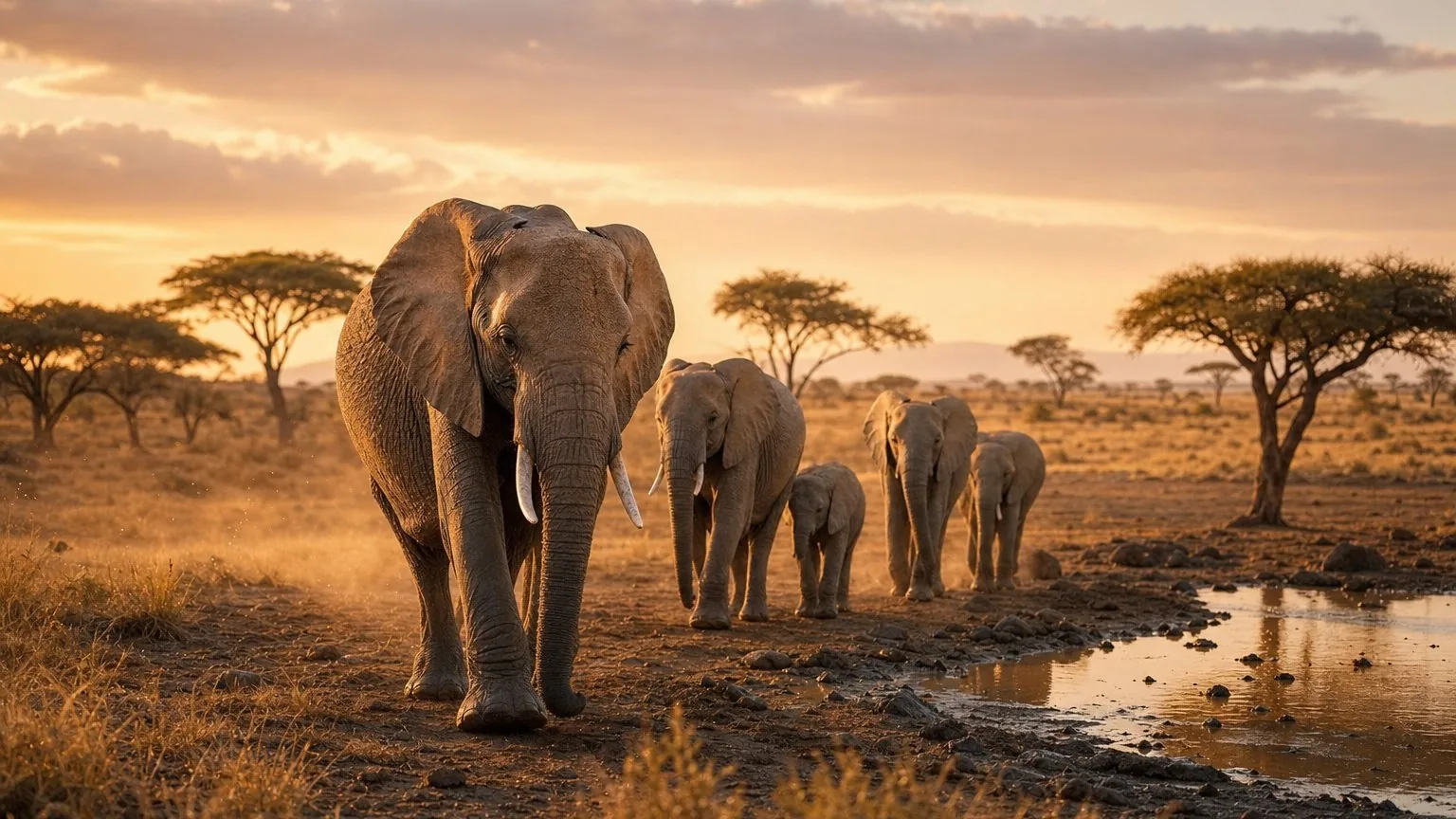
Start from the experience rather than the calendar. Name the one thing you would be disappointed to miss, and the window follows from it.
| Your priority | Strong window | Where | Main trade-off |
|---|---|---|---|
| Easiest general wildlife viewing | June to September | Kruger and much of southern Africa | Higher rates, busier roads, cold dawns |
| Serengeti calving and predator action | Late January to March | Southern Serengeti, Ndutu area | Green-season conditions: rain, long grass, softer roads |
| Mara River crossing opportunities | July to October | Northern Serengeti and the Mara ecosystem | Crowded, expensive, and never guaranteed |
| Okavango in flood, mokoro and water days | June to August | Okavango Delta | Botswana's peak rates; land game viewing peaks differently |
| Green landscapes and photography | November to April | Destination-specific | Thicker bush, dispersed animals, rain |
| Lower prices and fewer vehicles | Shoulder weeks, or green season | Destination-specific | Conditions are less predictable |
Those windows are approximate on purpose. They are not universal across Africa, and any guide that gives you a continent-wide calendar to the week is selling you certainty that the weather does not supply.
Find Your Best Safari Season
Six questions. No email, no live weather, no prediction about where the herds will be — just the windows this article already sets out, sorted against what you said matters.
Answer the questions and the options sort themselves.
Windows, not dates. Rainfall and grazing move the herds every year, so no tool can promise a river crossing on a given week.
Why There's No Single Best Time for Safari
Picking safari dates means weighing four things against each other: how easily you will see animals, whether you are chasing a specific event, what you are willing to pay and share the sighting with, and how you physically get there. Chasing one magic month rarely works as well as deciding which of those four you are optimising for.
Visibility rewards the dry season, and the mechanism is simple. Vegetation thins, seasonal pans dry up, and animals have to come to the water that is left. SANParks, which manages Kruger, describes the winter months as traditionally the best game viewing for exactly that reason. TANAPA, which manages the Serengeti, frames its dry season the same way and its green season as the time for lush landscapes and migrant birds.
Logistics decide more of this than people expect, because they decide whether a window is available to you at all. A self-drive Kruger trip can run in almost any month; you control the vehicle and the start time, and a wet road is an inconvenience rather than a cancellation. A fly-in trip to the Okavango or the remoter Serengeti sectors runs on light aircraft and unsurfaced airstrips, and in the wettest weeks some of those close, along with the camps they serve. That is why the green season is a straightforward choice in one country and a conversation with your operator in another. Before you fall in love with a month, check that the camps you want are open in it.
A dry season safari is a safer bet. A green season safari is a better story, told to fewer people who were actually there to hear it.
The Great Migration: The Month Is Only Half the Answer
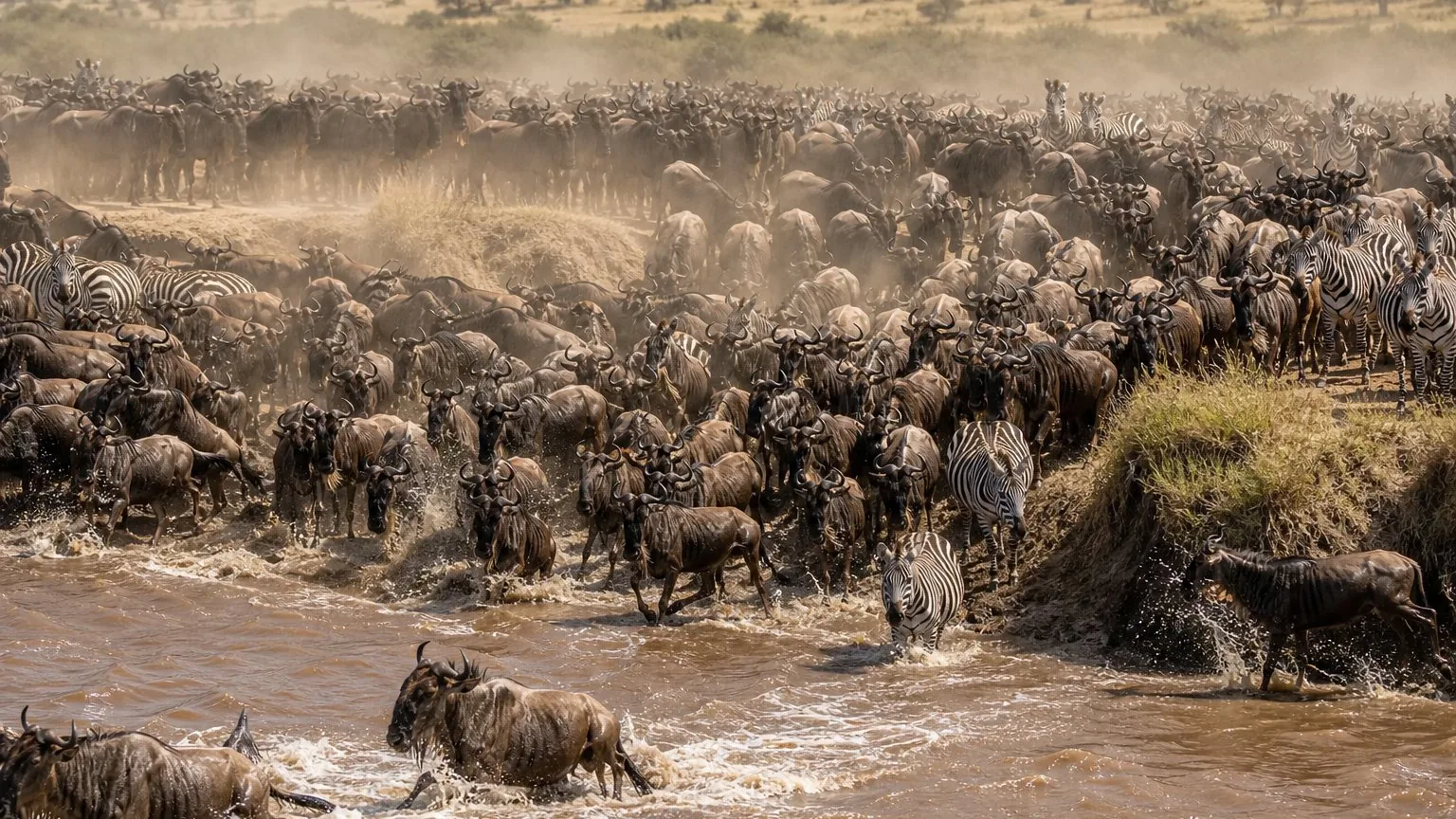
The migration is not an event on a date. It is a continuous circuit through a very large ecosystem, and the herds are somewhere in it all year. What changes is which part of the Serengeti they are in.
| Window | Region | What to expect |
|---|---|---|
| Late January to March | Southern plains, Ndutu area | Calving, enormous concentrations of newborn wildebeest, and the predators that follow them |
| June to July | Western corridor and Grumeti | Herds moving north, Grumeti river crossings possible |
| July to October | Northern sectors and the Mara ecosystem | Mara River crossing opportunities, never guaranteed on a fixed date |
Commercial guides often narrow the crossing window to one reliable month, usually August or September. Keep it wider. Rainfall and grazing move the herds every year, and a crossing is a natural event that happens when the animals decide it does.
The other half of the plan is how many nights you give it. Count nights in wildlife areas as full safari cycles rather than calendar days: a two-night camp stay usually yields one complete dawn-to-dusk day once the arrival and departure transfers are taken out, and no booking page does that subtraction for you. Three nights in the right sector is a genuinely different proposition from three nights spread across three camps in a week.
My advice: do not book "the Serengeti in August" and assume the migration will come to you. The park is roughly the size of Northern Ireland, and a camp in the central sector can be a full day's drive from the northern rivers. Check which sector your camp actually sits in for your exact dates, and give it several nights rather than one. Right month, wrong region is still the wrong plan, and it is the single most common way a migration trip disappoints.
Kruger: Dry Does Not Mean Warm
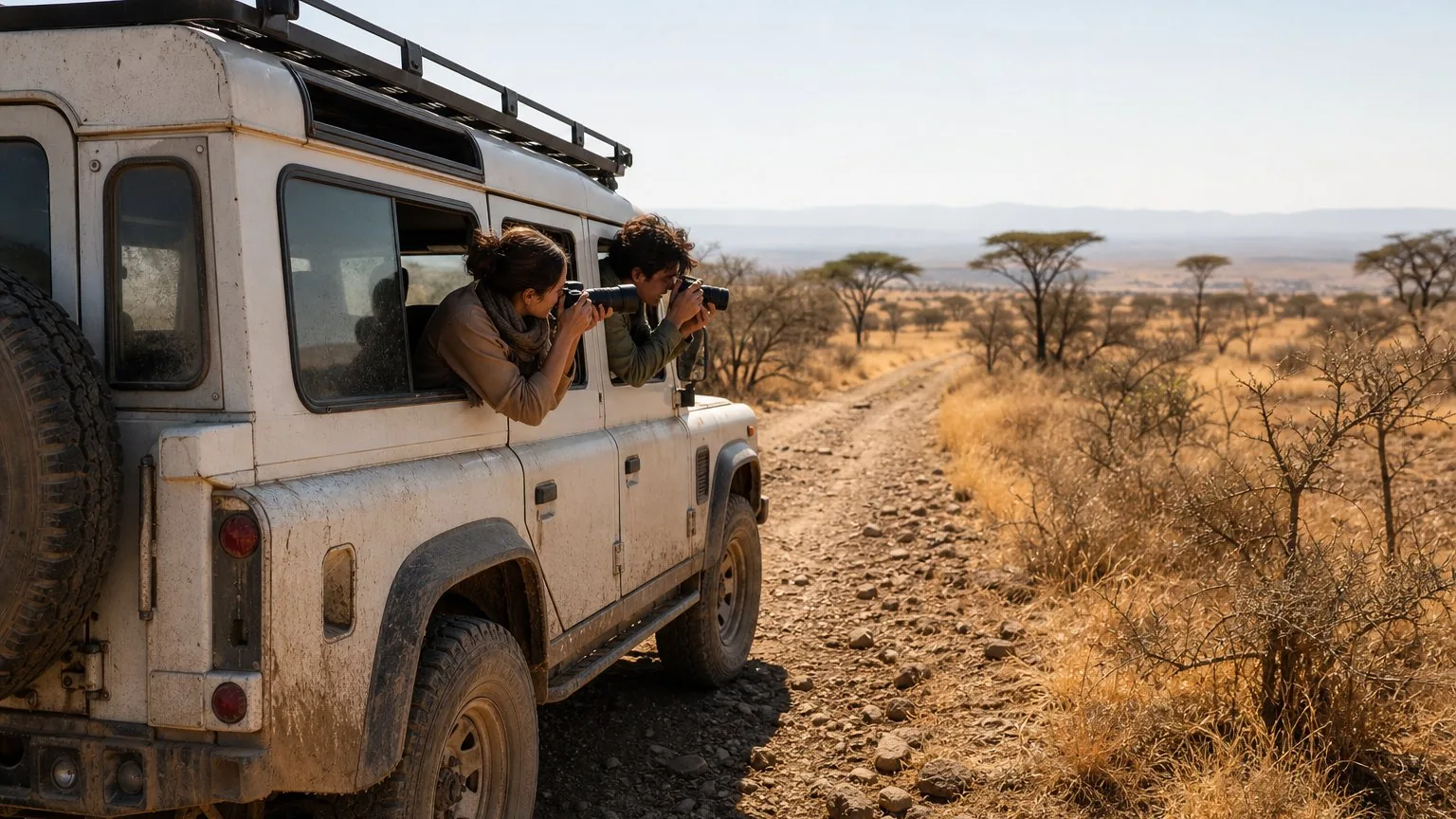
Kruger's dry winter earns its peak-season pricing honestly. Thinning bush and dropping water levels push animals toward the rivers and waterholes that still hold. SANParks puts Kruger's dry season at April to September and says traditionally the best game viewing is in the winter, as the vegetation becomes sparse and water is restricted to rivers and water holes. Its rainy season starts around October, and SANParks is candid about what that costs you: the increased foliage does make animals harder to see.
Kruger also gives independent travellers something almost nothing else on this list does: you can drive yourself. Tarred and maintained gravel roads, your own vehicle, your own start time. That changes the cost of a safari more than any month does.
Here is the part first-timers consistently get wrong, and it is worth a sentence of real numbers. Dry does not mean warm. Southern African winter nights are cold, and game drives leave before sunrise. At the Kruger gateway a July dawn averages around 7 °C against an afternoon of 22 °C, according to the climate normals national weather services publish through the WMO's World Weather Information Service. Seven degrees in an open vehicle doing 40 km/h, an hour before the sun does anything useful, is not the seven degrees on your phone. SANParks says plainly that visitors going on night drives will need warm clothing. Our guide to what to wear on safari covers the layering in detail; the point here is that the coldest mornings of your trip will be in the season you chose because it was dry.
The Okavango Delta: The Flood Arrives in the Dry Season
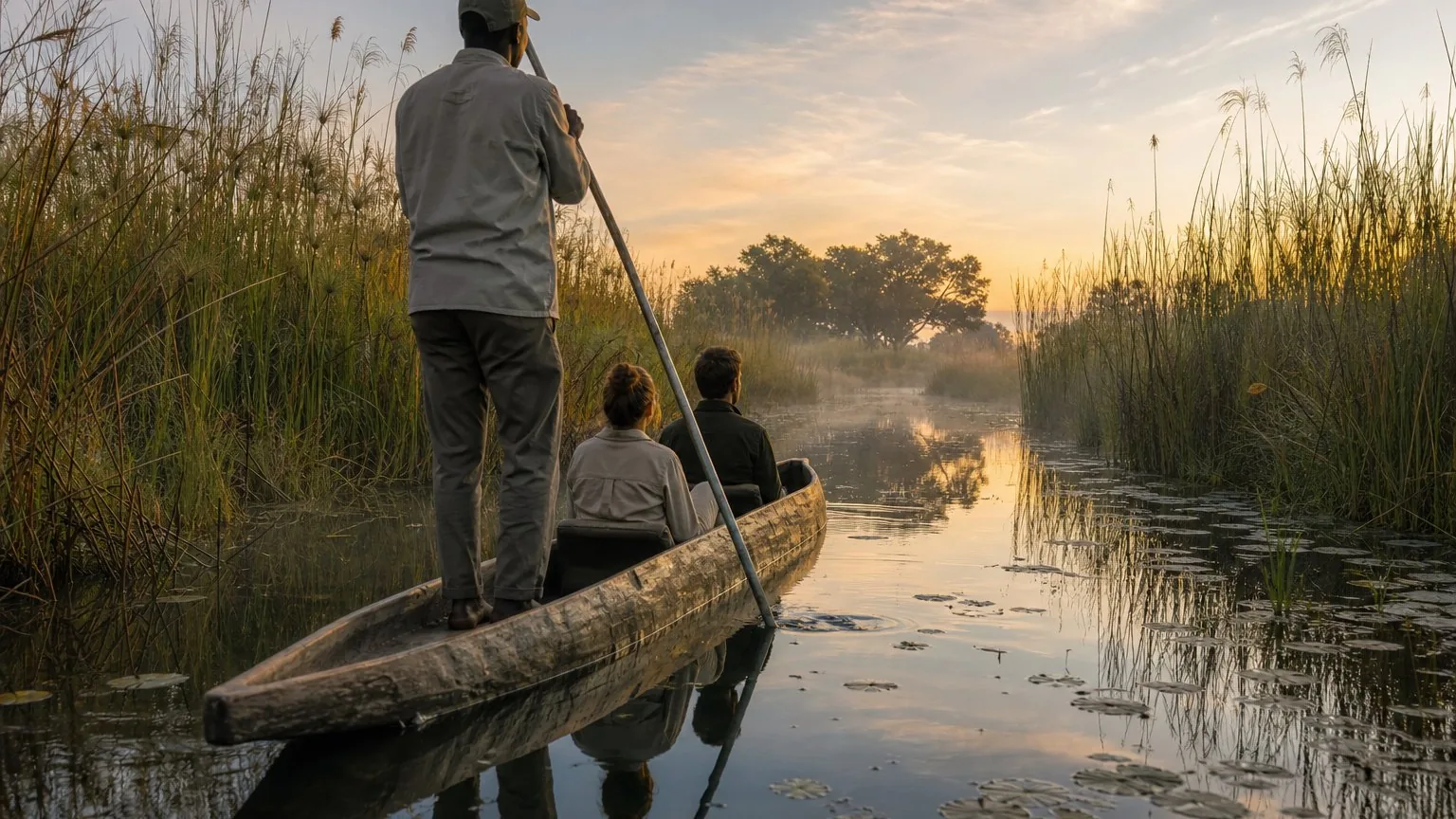
Botswana's flood calendar runs months behind its rain calendar, and this is the single most counter-intuitive thing about timing a Delta trip. The water that fills the Okavango does not fall on the Okavango. It falls in the Angolan highlands, travels more than a thousand kilometres, and arrives in Botswana around May, peaking through roughly June to August, while the surrounding country is at its driest. The Delta is at its fullest in winter.
No government authority publishes a month-by-month flood forecast we could verify, so treat those months as specialist guidance rather than an official figure, and confirm the current year with your camp. The flood varies: some years it arrives early and strong, some years it barely reaches the lower channels.
The trap is assuming high water is simply the best time. It is the best time for a particular kind of day. If you want mokoro channels, water-level birding and the Delta as a waterway, the flood peak is your window. If you want maximum land-based game viewing, water that spreads across the floodplain also spreads the animals across it, and a lower-water month may serve you better. These two priorities do not peak in the same way, and a camp selling "peak season" is not always telling you which one it means. Ask the camp directly which of the two its location favours at your dates.
Dry Season vs Green Season: The Honest Trade-Off
Neither season is better. They trade different things, and knowing which trade you are making is the whole point of choosing dates deliberately.
| Season | Best for | Verdict |
|---|---|---|
| Dry season, roughly May to October | First-timers, big game viewing, easier roads, river crossing attempts | The reliable choice, and the most expensive and crowded |
| Green season, roughly November to April | Calving and newborns, birding, photographic light, lower rates | A different safari, for travellers who do not need every sighting |
The green season deserves its defenders, but it also deserves an honest list of what you are accepting. Depending on the destination: the bush is thicker, so an animal thirty metres away can be invisible. Animals disperse, because water is everywhere and they no longer have to come to you. It can be hot and humid in a way that makes midday useless. There are more insects. Roads turn heavy after rain, some tracks close, and a few camps shut entirely for the wettest weeks. None of that makes it the wrong choice. It makes it a choice you should make on purpose rather than because it was cheaper.
First Safari, or Fifth?
This distinction changes the answer more than most month-by-month guides admit. If it is your first safari and what you want is to see plenty of animals without gambling on conditions, the dry-season windows are the safer starting point: better visibility, more predictable roads, and the shortest gap between what you hoped for and what you got. If you have done it before, the calculation inverts. Calving, birding, the flood cycle, green-season photographic light and the quieter shoulder weeks are all more interesting precisely because they are more specific, and you already know what a good sighting feels like, so you are not measuring the trip against a first impression. Neither rule is absolute, and plenty of first safaris in February have been wonderful.
My advice: if this is your first safari and your priority is simply to see plenty of wildlife, start with the easier dry-season windows rather than trying to optimise for calving, crossings and a flood peak at once. The specialist seasons keep. Trying to catch a rare event on a first trip usually costs you the ordinary sightings that make people fall in love with it.
What the Season Does to the Price
Season moves price in a predictable direction and an unpredictable amount. Peak months, broadly the dry season and the migration windows, cost more almost everywhere. Shoulder weeks and the green season are usually cheaper, sometimes dramatically so. But how much you actually save depends far more on the camp, the country and your exact dates than on the month in the abstract, and two quotes at the same nightly rate can be two completely different holidays once you read what each includes.
Compare inclusions before you compare headline prices: park fees, transfers, internal flights, drinks, laundry and how many people share your vehicle. We keep the full picture in our African safari cost breakdown, including where the tiers actually differ.
Before You Book
- Have you named your single top priority: easiest viewing, a specific event, budget or the kind of day you want?
- Does the window you have chosen match that priority in the region you are going to, not just the country?
- If migration is the goal, do you know which sector your camp sits in for your dates, and have you given it more than one night?
- If the Okavango is the goal, have you asked the camp whether its location favours water days or land game drives at your dates?
- Have you packed for the dawn temperature rather than the afternoon one?
- Have you compared two quotes on what they include, not on nightly price?
- Have you confirmed seasonal camp closures and light-aircraft schedules if you are travelling in the green season?
Frequently Asked Questions: Best Time to Go on Safari
What is the best month for a first African safari?
There is no single month, but for a first trip the dry-season window of roughly June to September in Kruger and much of southern Africa is the safest starting point. Visibility is at its best, roads are easy and conditions are predictable. Expect higher rates and cold early mornings.
Is dry season always the best time for safari?
No. It gives you the best odds on visibility and concentration, which is why it is the usual recommendation for a first safari. The green season gives you newborns, migrant birds, better light and lower rates, with thicker bush and less predictable access in exchange. Both SANParks and TANAPA describe this as a trade-off rather than one season being worse.
When is the Great Migration?
All year. The herds move through the Serengeti ecosystem continuously, so the useful question is where they are, not whether they are migrating. Broadly: the southern plains from late January to March, the western corridor around June and July, and the northern sectors from July to October.
When is wildebeest calving season?
Roughly late January to March on the southern Serengeti plains around Ndutu, with the heaviest concentration of births in February. It is green-season weather, so expect rain and long grass alongside the newborns and the predator activity that follows them.
When is the best time for the Okavango Delta?
It depends which Delta you want. For high water, mokoro channels and the Delta as a waterway, the flood peak of roughly June to August. For maximum land-based game viewing, a lower-water month can work better, because a full floodplain spreads animals out. Confirm the current year's flood with your camp rather than assuming an average year.
Is green season worth it?
Yes, if you understand what you are buying. It is a different safari: dramatic skies, newborns, exceptional birding, far fewer vehicles and lower rates. It is also thicker bush, more dispersed animals, heat, humidity, insects and roads that can turn heavy. Worth it for a second safari, or for anyone who would rather have the place to themselves than tick every species.
What is the cheapest safari season?
Generally the green season, with the shoulder weeks at either end of the dry season close behind. The saving varies far more by camp and country than by month, and some camps close outright in the wettest weeks, so check availability before assuming a low-season rate exists at the place you want.
How far ahead should I book a peak-season safari?
Earlier than feels necessary, because the constraint is beds rather than flights. Small camps in the northern Serengeti and the Okavango have very few rooms, and the best-placed ones for a given window fill first. If your dates are fixed around a school holiday or a specific migration sector, treat availability rather than price as the thing that decides your trip.
Further Reading
Sources and References
- South African National Parks (SANParks), the management authority for Kruger National Park. "Kruger National Park" and its climate pages. sanparks.org.
- Tanzania National Parks Authority (TANAPA), the management authority for the Serengeti. "Serengeti National Park." tanzaniaparks.go.tz.
- World Meteorological Organization, World Weather Information Service: climate normals supplied by national weather services. worldweather.wmo.int.
- Okavango flood timing: specialist Delta sources, not a government authority. No public body publishes a month-by-month flood forecast, so these months are indicative and should be confirmed with the camp.
Part of Safari.