What to Wear on Safari: The Complete Outfit Guide
Breathable layers, neutral colours, comfortable shoes and one warm layer for the dawn drive: a general safari clothing guide for East and Southern Africa, from someone who has packed for both.
You do not need a brand-new khaki wardrobe to go on safari. For most game drives the winning formula is simple: breathable layers, neutral colours, comfortable closed shoes and one warm layer you will be very grateful for at half past five in the morning. The rest of this guide is the detail, but you probably own most of it already.
Quick Answer
Wear a breathable top, lightweight long trousers, a fleece or light insulated layer you can take off as the day warms, and a light windproof or rain layer in cooler or wetter seasons. Add closed, comfortable shoes, a hat and sunglasses, and keep colours neutral: olive, tan, khaki, stone. No specialist safari clothing is needed; ordinary travel and hiking clothes in the right colours do the job.
Key Takeaways
- You probably already own most of the right clothes; a safari wardrobe is a sensible travel drawer, not a shopping list.
- Layers matter more than any single garment: a July dawn at the Kruger gateway averages 7 °C and the same afternoon 22 °C.
- Neutral colours are practical because dust hides on them; blue and black are worth avoiding where tsetse flies live.
- Comfortable closed shoes are enough for vehicle-based safaris; boots earn their place only on real walking safaris.
- Long sleeves and trousers do double duty against sun and insects, with sunscreen and repellent on what is left exposed.
- Destination and month decide the temperatures, so pack for your safari, not for "Africa" as one climate.
In This Article
- What safari clothing actually means
- You probably already own most of it
- The easiest outfit formula: dress in layers
- What to wear by situation
- Best colours to wear on safari
- Fabrics that work
- Safari shoes
- Sun and insect protection
- A simple 7-day clothing capsule
- For women: the practical bits
- Common mistakes
- FAQ
What Safari Clothing Actually Means
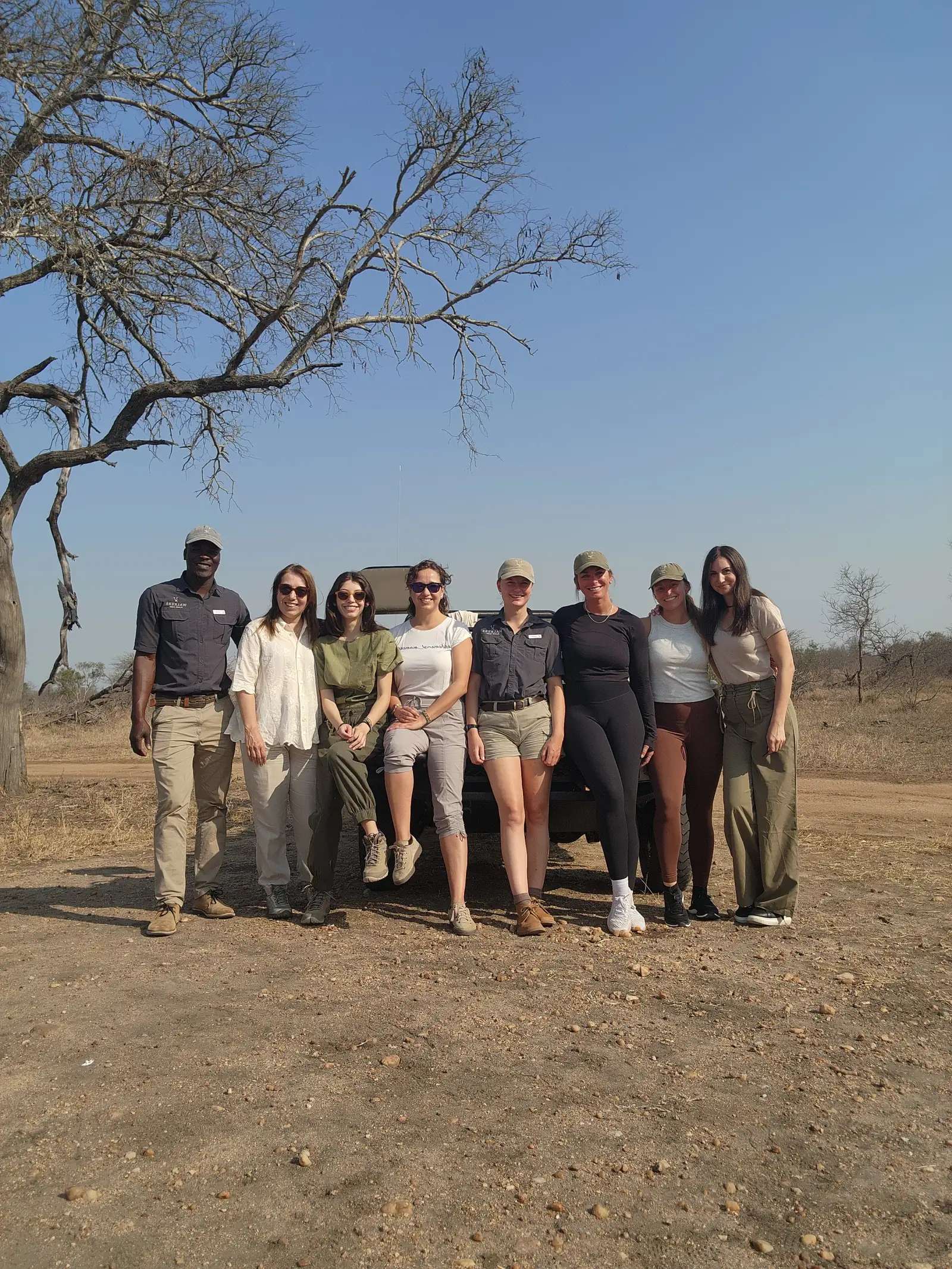
Safari clothing is practical clothing for long hours in an open vehicle, a few walks, dusty transfers and relaxed evenings at camp. It is not a costume. The reason it looks the way it does, all khaki and olive and long sleeves, is that those things happen to work: dust hides, sun stays off your arms, and nothing snags when you climb in and out of a Land Cruiser.
What you wear follows how you will travel. On a vehicle-based safari, which is most first safaris across Kenya, Tanzania, South Africa, Botswana and Namibia, comfort and sun protection matter most. A walking safari raises the stakes on footwear and insect protection. Decide that first; for everything that comes before packing, see our guide on how to plan your first African safari.
You Probably Already Own Most of What You Need
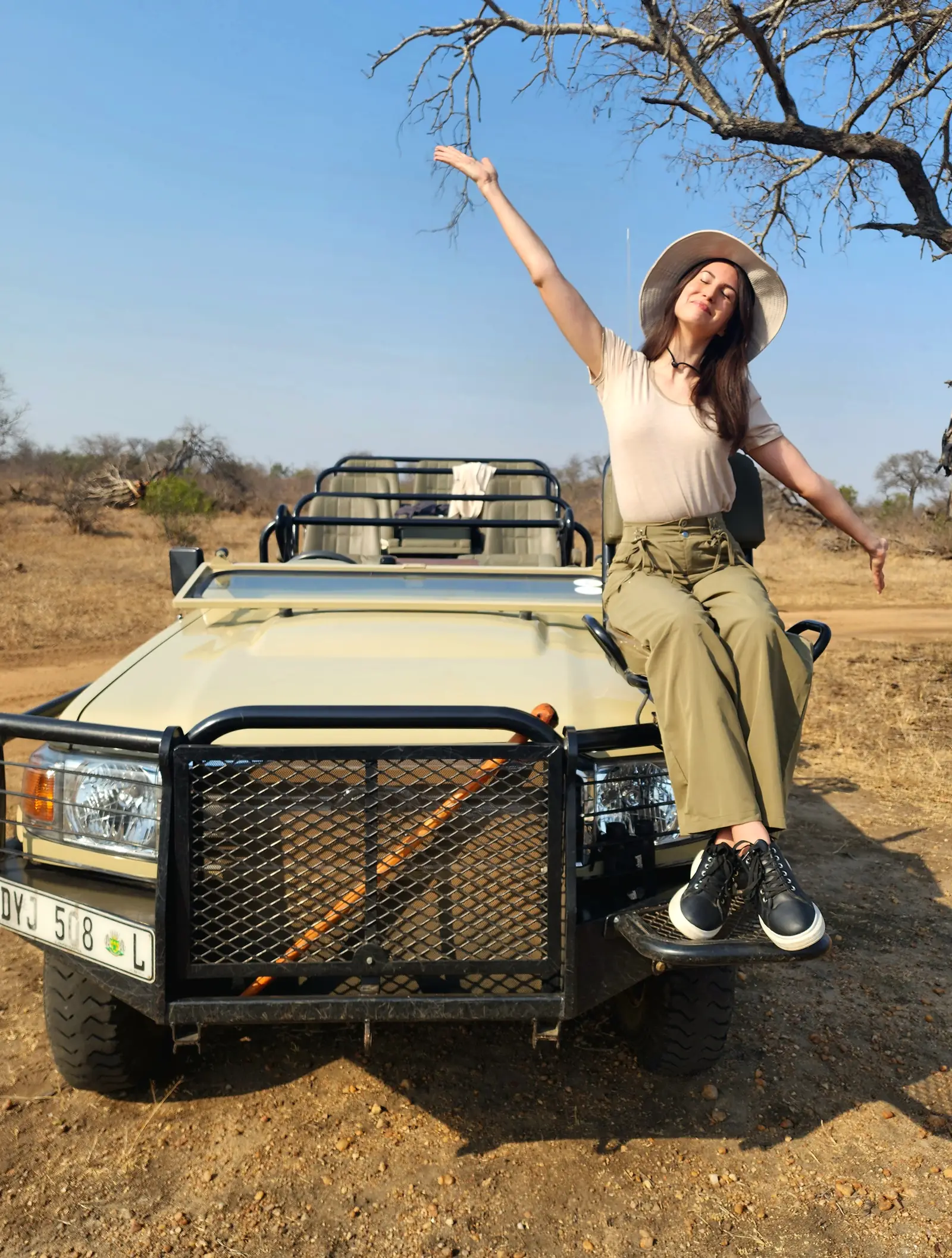
Open your wardrobe before you open a shopping app. A couple of breathable shirts, lightweight trousers, a fleece, a light jacket and the trainers or walking shoes you already trust cover most of a week on safari. The colours may need a rethink; the garments usually do not.
What you do not need: a full khaki wardrobe, five safari-branded shirts with more pockets than you have things to put in them, or heavy boots for a trip where you will spend most of the day sitting down. A safari wardrobe should look like a sensible travel drawer, not a casting call for Out of Africa.
Repeating outfits is completely normal. Most camps and lodges offer laundry, often included or inexpensive, and nobody on your vehicle is keeping count.
The Easiest Safari Outfit Formula: Dress in Layers
The single most useful thing to understand about safari clothing is that one day covers two climates. Game drives leave before sunrise, when an open vehicle at speed can feel far colder than the forecast, and return through a midday that can be properly hot.
The size of that swing is the whole argument for layers, and it is wider than most first-timers expect. These are the average daily low and high for three first-safari areas, from the national meteorological services:
| Where | Cool dry season | Warmest month |
|---|---|---|
| Maasai Mara (Narok, Kenya) | July: 9 °C at dawn, 22 °C by afternoon | February: 9 °C and 27 °C |
| Okavango Delta (Maun, Botswana) | July: 8 °C and 26 °C | October: 19 °C and 35 °C |
| Kruger (Nelspruit, South Africa) | July: 7 °C and 22 °C | January: 18 °C and 28 °C |
Chobe, further north in Botswana, reads within a degree or two of Maun. Those are averages of the daily minimum and maximum, published as climate normals by the national weather services, so any given morning can sit either side of them. The dawn figure is the one that decides your packing: seven degrees in a moving open vehicle, an hour before the sun does anything useful, is a different seven degrees from the one on your phone. And an October morning in the Okavango starts at nineteen, so the fleece you need in July is dead weight in the hot months.
Northern Tanzania sits high enough to break the pattern: dawn on the Ngorongoro rim is cold in every month of the year, and the parks there have no published station normal in that series, so the Tanzania Meteorological Authority is the place to check your own month before you pack.
So the formula is removable layers, not a fixed uniform: a breathable base you will still be wearing at lunch, a fleece or light insulated layer for the first hours, and a light windproof or rain shell when the season calls for it. You put everything on at dawn, shed the shell as the sun clears the horizon, lose the fleece by mid-morning, and want it back at a shaded waterhole or on the drive home after sunset.
Many camps keep blankets and hot-water bottles in the vehicle for cold mornings. It is a lovely habit and not one to count on; bring the fleece anyway.
My advice: one fleece is more useful than five safari shirts. If you buy a single thing for the trip, make it a warm layer that packs small, because the cold dawn drive is the surprise nobody warns first-timers about.
What to Wear by Situation
If you only read one part of this guide, read this table. It covers almost every moment of a safari day.
| Situation | What to wear |
|---|---|
| Cold dawn game drive | Breathable top, fleece or light insulated layer, light windproof layer, long trousers, closed shoes, a warm hat if it is winter |
| Warm daytime game drive | Breathable long-sleeve or short-sleeve shirt, lightweight long trousers, sun hat, sunglasses |
| Very hot afternoon | Breathable short or long sleeves, lightweight trousers, or shorts where the vehicle is closed and insects are few |
| Walking safari | Long trousers, long sleeves, closed walking shoes or light boots, neutral colours throughout |
| Camp lunch or the pool | Normal casual summer clothing; swimwear if there is a pool |
| Lodge dinner | Casual and comfortable, with a warm layer for the walk back; almost nowhere expects you to dress up |
| Green or rainy season | Quick-drying clothing, a lightweight rain shell, shoes you do not mind getting muddy |
Best Colours to Wear on Safari
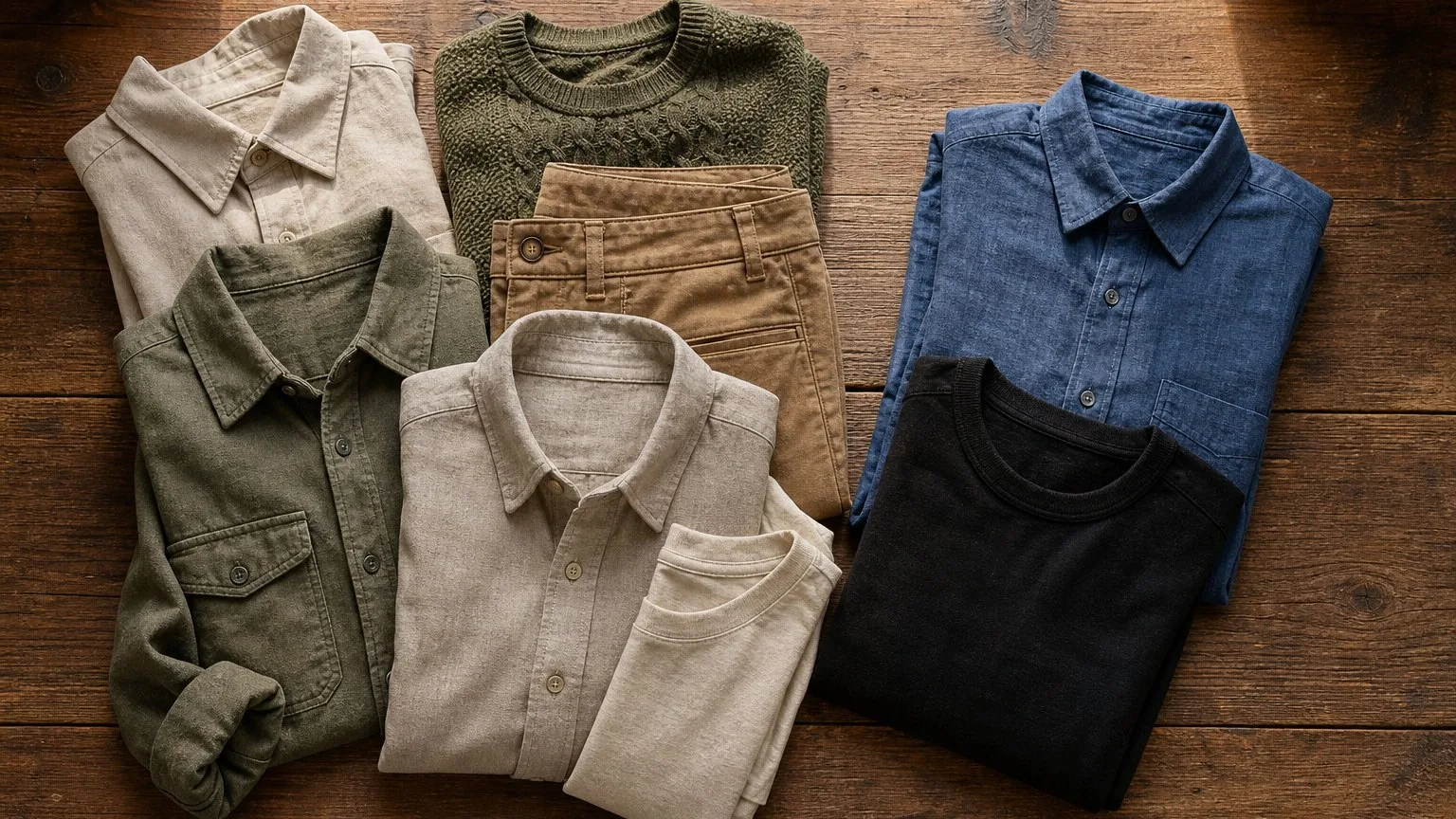
Olive, tan, khaki, stone, beige and muted greens and browns are the safari colours for two practical reasons. Dust shows on them far less than on black or white, which matters when you are spending the day on dirt roads with the windows open. And neutral colours are simply easy: everything goes with everything, so a small capsule of clothes works for a week.
The one piece of real science is separate from that. In areas where tsetse flies live, parts of East and Southern Africa including much of Tanzania, Zambia and Zimbabwe, blue and black are best avoided, because research on why biting flies are attracted to blue objects shows tsetse and several other biting flies home in on those colours. That applies most when you are out of the vehicle; inside a closed vehicle it matters less. You do not need to disappear into the landscape like a military exercise. Neutral colours are practical, and in tsetse areas blue and black are worth leaving at home.
What not to wear: military-style camouflage. Rules and local sensitivities vary by country, operator guidance in Tanzania and elsewhere commonly discourages it, and it is an unnecessary complication for a hat. Leave anything camouflage-printed at home and the question never comes up.
Nobody has ever regretted packing beige, but plenty of travellers have regretted the one blue shirt they brought just in case.
Fabrics That Work
Lightweight, breathable, quick to dry, and comfortable to sit in for several hours: that is the whole brief. Trousers with a little stretch and a soft waistband earn their keep on a bumpy six-hour drive in a way no technical label ever will.
Cotton is not the villain it is sometimes made out to be. Light cotton is fine in dry conditions and around camp, and a soft cotton shirt is many people's favourite thing to wear at dinner. Where you will sweat, in humid green-season heat or on a walking safari, quick-drying synthetics or merino are more practical because they dry between the morning and afternoon drives. You do not need a drawer of technical hiking fabrics; you need clothes you can sit in all day and rinse in a sink.
Safari Shoes
For a vehicle-based safari, comfortable closed shoes are enough: trainers or walking shoes you already own, worn with socks against dust and the odd ankle-height insect. You will walk from the tent to the vehicle, around camp and perhaps to a sundowner spot, and that is about it. Ankle-support hiking boots are unnecessary on a vehicle-only trip and are heavy in a soft bag.
For a walking safari, sturdier closed shoes or lightweight boots make sense depending on the terrain and what your operator asks for. Either way, do not buy brand-new boots right before the trip. A walking safari is not the place to discover that a new pair gives you blisters. At camp, sandals or slides are a relief in the heat and useful for the walk to the pool.
Sun and Insect Protection, Briefly
Long sleeves and long trousers do most of this work by themselves: they keep sun off your arms and legs and give biting insects less to aim at. Add a broad-brimmed hat and sunglasses, then cover what is left exposed. The Skin Cancer Foundation recommends broad-spectrum SPF 30 or higher for prolonged outdoor exposure, which describes a day of game drives exactly. If you are buying sun clothing rather than wearing what you own, UPF is the number on the label: 30 to 49 is very good protection and 50+ is excellent, with a UPF 50 fabric letting through a fiftieth of the ultraviolet that reaches it. A tightly woven long-sleeved shirt you already have is doing much of that job unrated.
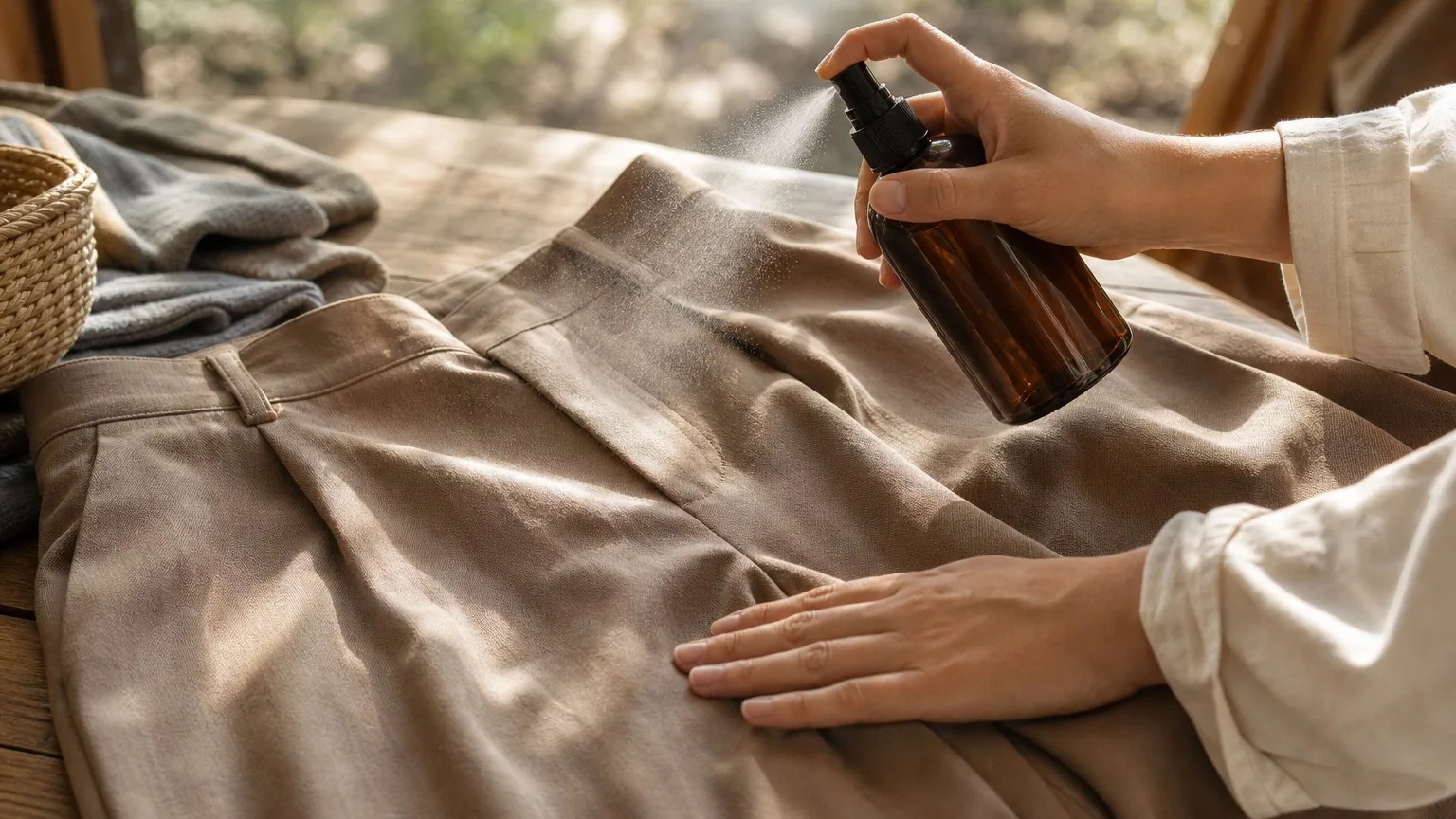
For insects, use a topical repellent on exposed skin; the CDC's guidance lists DEET, picaridin, IR3535 and oil of lemon eucalyptus as registered options, and for a full day around 20 to 30 per cent DEET or the equivalent is plenty. Apply sunscreen first and repellent second. Permethrin-treated clothing is optional and genuinely useful in insect-heavy areas or on walking safaris; treat the fabric before you travel or buy garments pre-treated, and never apply permethrin to skin, as the CDC Yellow Book makes clear. Clothing is only one part of malaria prevention; follow your travel clinic's advice on the rest.
A Simple 7-Day Safari Clothing Capsule
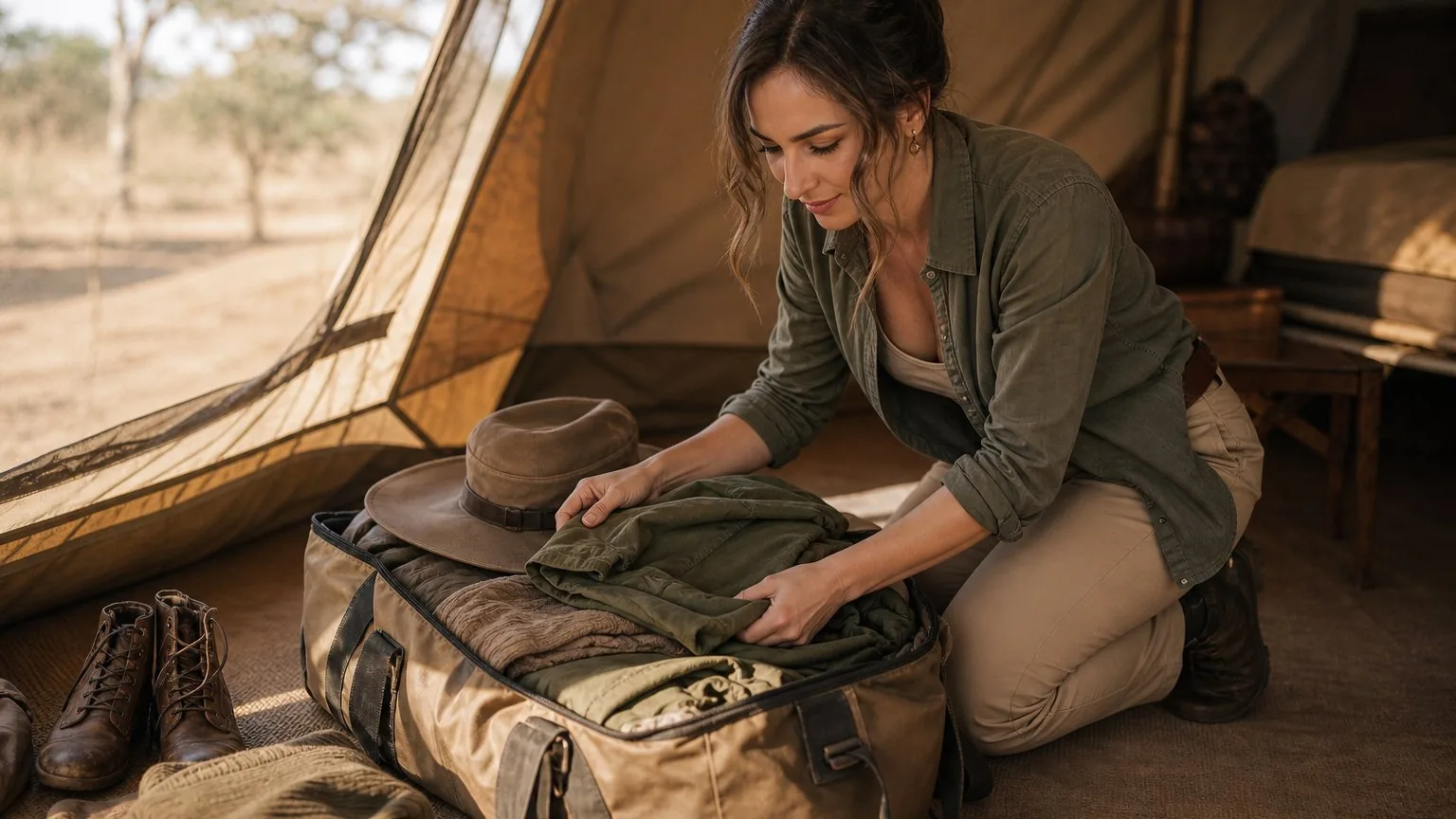
This is clothes only; camera gear, medicines, documents and toiletries belong in a packing list of their own. For a week on safari, most people are comfortable with:
- 2 to 3 breathable tops, long or short sleeved, in neutral colours
- 2 pairs of lightweight long trousers, one you would happily walk in
- 1 fleece or light insulated layer
- 1 light windproof or rain shell, depending on season
- 1 sun hat, plus a warm hat in Southern African winter
- 1 pair of comfortable closed shoes, already broken in
- 1 pair of camp sandals or slides
- Sleepwear, underwear and socks for four or five days, with laundry in between
- Optional: shorts or one casual outfit for camp afternoons and dinners
If your safari includes bush flights, the smallest allowance on the itinerary decides the bag, and it is smaller than most people picture. Safarilink holds its safari routes in Kenya to 15 kg per person including hand baggage, in soft bags, because the luggage pods on those aircraft are narrow and awkwardly shaped. Coastal, flying the Tanzanian circuit, sets the same 15 kg including carry-on. Limits change by carrier, country and route, so check the airlines on your own booking rather than assuming a number, and pack to the smallest one. The capsule above, with toiletries and a camera, sits inside 15 kg without much thought; a hard suitcase is the part that causes trouble.
My advice: pack for four days and plan on laundry. Every camp I have stayed in offered it, most turned it round in a day, and a bag half the size is a better companion on every transfer.
For Women: The Practical Bits
A few things that no packing list mentions and every woman on a game drive works out by the second morning. Wear a comfortable bra or a sports bra: the roads are rough, and hours of corrugations are not the moment for underwire. Choose trousers you can sit in for four hours at a stretch, with a waistband that does not dig. Dresses and skirts are lovely at camp and awkward for climbing in and out of a high vehicle, so keep them for evenings. A hair tie or clip is essential in an open vehicle at speed. Lodge evenings are casual almost everywhere; nobody dresses for dinner in the bush.
A jumpsuit can look wonderful at camp and become a deeply personal mistake at the first bush bathroom stop. Separates, always.
Common Safari Outfit Mistakes
Buying an entire safari wardrobe. One warm layer and the right colours cover most of what a shop will try to sell you.
Packing for midday and forgetting dawn. The cold start is the mistake first-timers make most, and the easiest to avoid with one fleece.
Wearing brand-new boots. Or any boots at all on a vehicle-only trip. Broken-in closed shoes are what you need.
Bringing too many clothes. Laundry exists, outfits repeat, and light-aircraft bag limits are real.
Blue and black in tsetse country. A muted navy is still blue to a fly.
Assuming one climate. A Botswana winter dawn and a Kenyan coast afternoon need different clothes; check your destination and month.
Before You Pack
- Is this trip mostly vehicle-based, or does it include walking safaris?
- Have you checked typical dawn and midday temperatures for your destination and month?
- Do you have one warm layer and one wind or rain layer?
- Are your shoes closed, comfortable and already broken in?
- Have you left blue, black and camouflage items at home?
- Do you know the smallest luggage limit on your itinerary?
Already sorted your safari outfit? Check your lodge next.
Run your accommodation through the free tool before you book, to make sure it is well placed for game drives and transfers.
Frequently Asked Questions: What to Wear on Safari
Do I need special safari clothes?
No. Breathable tops, lightweight trousers, a fleece, a light jacket and comfortable closed shoes in neutral colours are all a safari asks for, and most people already own them. Safari-branded clothing is a convenience, not a requirement.
What colours should I wear on safari?
Olive, tan, khaki, stone and other muted earth tones. They hide dust and mix easily. In tsetse areas, avoid blue and black, which attract the flies. Bright colours are not a danger to you or the wildlife; they are just impractical.
Can I wear shorts on safari?
Yes, at camp, by the pool and on hot afternoons in a closed vehicle. Long trousers are better on open-vehicle drives, for walking safaris, and at dawn and dusk when insects are most active and the air is coolest.
What shoes should I wear on safari?
Comfortable closed trainers or walking shoes for vehicle-based safaris, sturdier shoes or light boots for a walking safari, and sandals for camp. Whatever you choose, wear it in before you travel.
What should I wear on a cold morning game drive?
A breathable top, a fleece or light insulated layer, a windproof outer layer, long trousers and closed shoes, plus a warm hat in Southern African winter. Peel the layers off as the morning warms; you will want them back at sunset.
Can I wear camouflage on safari?
Best not. Rules and sensitivities around military-style camouflage vary by country, and operators in Tanzania and elsewhere commonly ask guests to avoid it. Leaving it at home costs nothing.
What should women wear on safari?
The same layers as anyone else, with a comfortable or sports bra for rough roads, trousers you can sit in for hours, a hair tie for the wind, and dresses saved for camp evenings, which are casual almost everywhere.
Sources and References
- CDC. Avoid Bug Bites. Travelers' Health. wwwnc.cdc.gov
- CDC. Yellow Book: Mosquitoes, Ticks, and Other Arthropods. cdc.gov
- Skin Cancer Foundation. Sunscreen Guidance. skincancer.org
- PMC. Why Are Biting Flies Attracted to Blue Objects? pmc.ncbi.nlm.nih.gov
- Kenya Wildlife Service. Safari packing FAQ. kws.go.ke
- WMO World Weather Information Service. Climate normals for Narok, Maun and Nelspruit, supplied by the Kenya Meteorological Department, Botswana Meteorological Services and the South African Weather Service. worldweather.wmo.int
- Tanzania Meteorological Authority. meteo.go.tz
- Safarilink. Baggage allowance. flysafarilink.com
- Coastal. Luggage policy. coastal.co.tz
- Skin Cancer Foundation. Sun-protective clothing and the UPF rating. skincancer.org