Amalfi Coast Itinerary: A First-Timer's Guide to Getting It Right
An Amalfi Coast itinerary has one puzzle to solve before any other: there's no single easy way in, and the towns you want sit along a cliff road and a patchwork of seasonal ferries rather than a tidy…

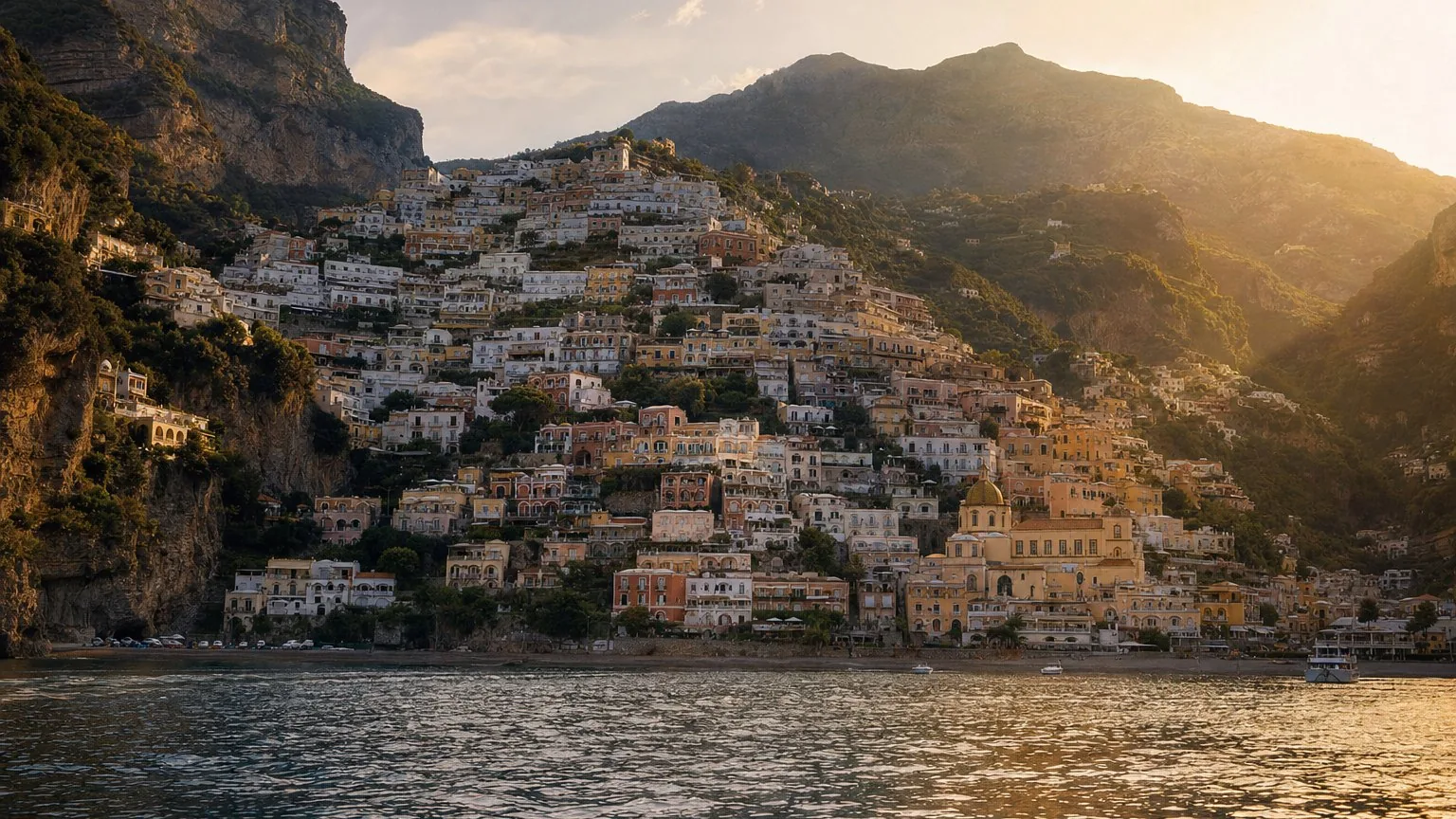
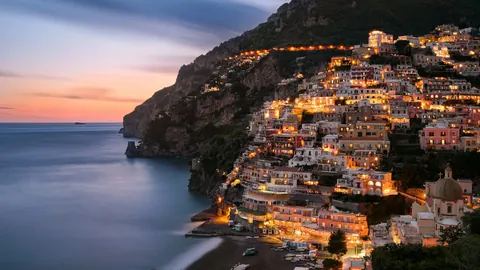
Photo: Positano at dusk by Sebastian Leonhardt, via Unsplash, Unsplash License
An Amalfi Coast itinerary has one puzzle to solve before any other: there is no tidy way in, and the towns you want sit along a cliff road and a patchwork of seasonal ferries rather than a rail line. Sorrento, Salerno, Amalfi and Positano each work as a base, and each solves a different problem. Choosing between them is the decision that shapes everything else.
This guide is built around that choice, and around the two things that quietly decide how much of the coast you actually see: how the ferries run, and how many steps sit between your hotel door and the water.
Quick Answer
Three days is enough for the main highlights if you keep the geography tight — one base, two or three towns, no island day. Five days is the sweet spot for most first-timers: the same coast at a workable pace, plus Capri or Pompeii. Seven gives you room for both and a day that goes nowhere. Pick your base by where most of your days will be: Sorrento for Naples, Pompeii and Capri; Salerno for rail and budget; Amalfi for the coast itself; Positano for the view, if you can manage the steps.
Not sure where to base yourself?
Sorrento, Salerno, Amalfi and Positano solve very different problems. Answer six quick questions and I'll narrow it down.
Key Takeaways
- Sorrento is not on the Amalfi Coast. It sits on the other side of the same peninsula, facing the Bay of Naples — which is exactly why it is the easiest arrival and the longest commute east.
- The coast proper runs Positano to Vietri sul Mare. Salerno is the eastern gateway, not a cliffside village.
- Distance in metres means very little here. A ten-minute walk can be several hundred steps, and many booking pages do not make that clear.
- Ferry frequency, not kilometres, decides how many towns fit into a day. Build coastal days backwards from the last sailing.
- Ferries are weather-dependent. Never put a fragile last boat in front of a train or a flight.
- Amalfi's tourist tax is municipal and seasonal, charged 1 April to 2 November. A 50% reduction after the fourth night exists in the regulation, but which accommodation it covers is no longer clear from the published text — ask your property.
In This Article
What Counts as the Amalfi Coast, and Why It Decides Your Base
Most itineraries treat Sorrento, Positano, Amalfi and Salerno as four towns on one coast. They are not, and the difference is the single most useful thing to understand before you book.
The Amalfi Coast proper is the southern side of the Sorrentine Peninsula, in the province of Salerno. UNESCO lists it as the Costiera Amalfitana, 11,231 hectares across fifteen municipalities, running broadly from Positano in the west to Vietri sul Mare in the east, with Praiano, Amalfi, Atrani, Ravello, Minori, Maiori, Cetara and the inland villages between them.
Sorrento is on the northern side of the same peninsula, facing the Bay of Naples, in the province of Naples. It is not on the Amalfi Coast — but it is one of the most practical bases for first-time visitors, because it connects easily to Naples, Pompeii and Capri. Salerno sits at the eastern end and works as the rail-and-ferry gateway rather than a resort-style coast base.
Between the two sides run the Lattari Mountains, which UNESCO describes as the natural border dividing the Gulf of Naples from the Gulf of Salerno. That ridge is why a short line on a map becomes a long transfer in practice: to get from Sorrento to Positano you go over the peninsula or around it by sea. Nothing goes through it.
Best Base by Trip Shape
There is no best base, only a best base for the shape of your trip. The question is not which town is loveliest. It is where most of your days will actually be.
| Base | Best for | Main trade-off |
|---|---|---|
| Sorrento | Naples and Pompeii access, Capri crossings, easier arrival and luggage, rail logistics | Not actually on the Amalfi Coast; more commute if most days are Positano, Amalfi or Ravello |
| Salerno | High-speed rail, eastern-coast ferries, lower cost | City feel rather than resort atmosphere; eastern edge rather than central coast |
| Amalfi | Central coast access, Positano, Ravello and the eastern villages, fewest long daily transfers | Busy with day-trippers through the middle of the day; rooms cost more than Salerno |
| Positano | Scenery, a special-occasion stay, being in the destination rather than commuting to it | The most expensive, the most vertical, and the hardest with luggage |
My advice: choose the base according to where most of your actual days are, not which town photographs best. Write down the four or five things you genuinely intend to do, mark where each one happens, and pick the base with the least travel between them. A trip built around Pompeii and Capri and a trip built around Ravello and Praiano want opposite ends of this coast.
Which brings up the trade-off nobody puts in a comparison table. Sorrento is not automatically the budget winner. It usually costs less than Positano and makes arrival, Naples and Pompeii dramatically easier — but if most of your days are east on the coast, you pay part of that saving back in travel time, twice a day, on days you were meant to be on holiday. On a three-day trip that can be most of the trip.
Which Amalfi Coast Base Fits Your Trip?
Six questions. Sorrento, Salerno, Amalfi and Positano solve genuinely different problems, and the right one depends on where your days actually are — not which town photographs best.
Answer the questions and the options sort themselves.
This sorts the four bases against what you said. It reads no live timetable and predicts nothing: check your own dates against the operators before booking.
Getting There, and Getting Along the Coast
Every itinerary funnels through Naples or Salerno, because no high-speed line reaches the coast itself. From Naples, the Circumvesuviana regional railway runs to Sorrento via Pompeii in about an hour to an hour and twenty. From Salerno, the coastal ferries leave from the port. Frecciarossa services connect Rome to Naples in a little over an hour, and run to Salerno as well.
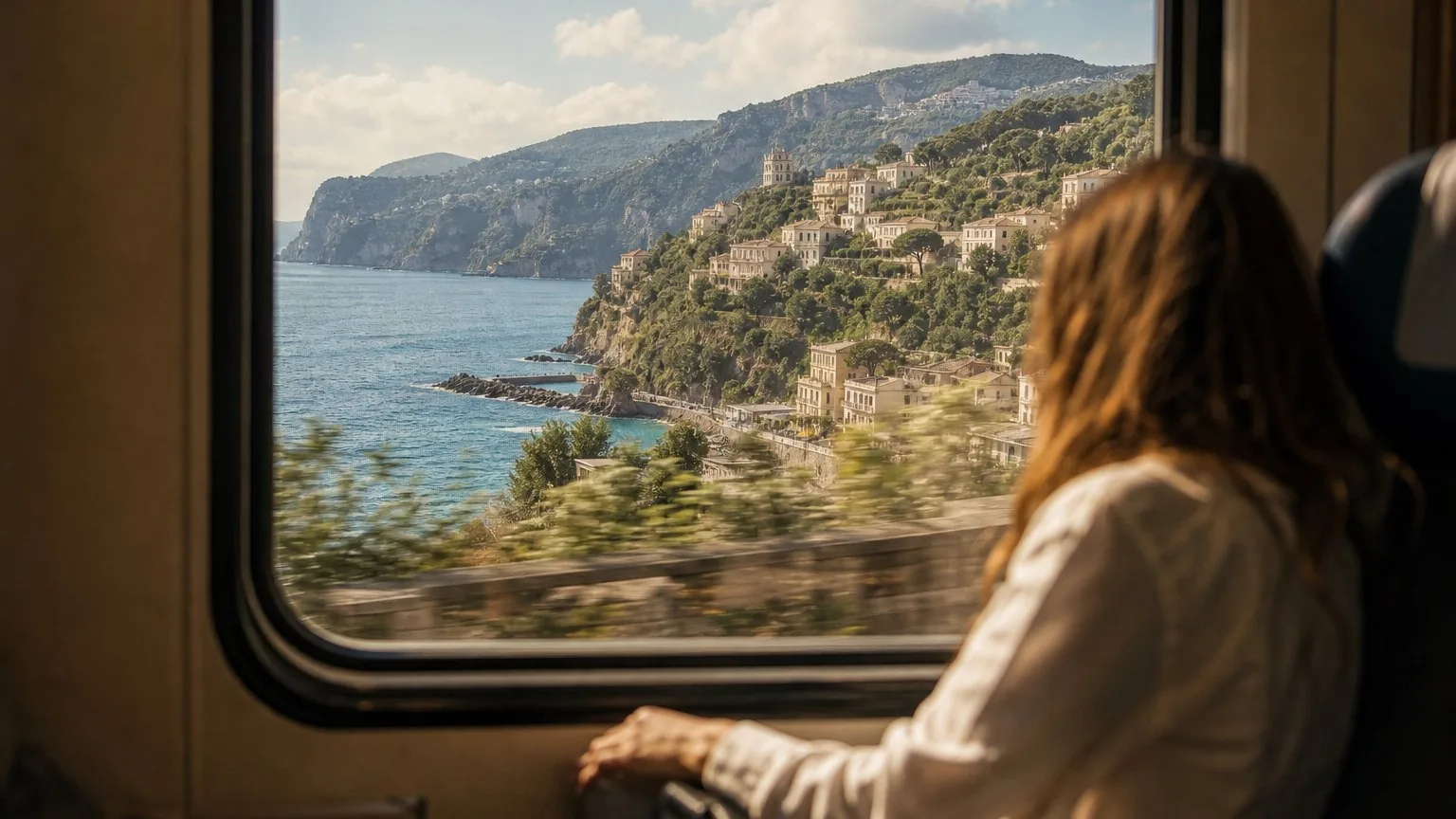
In season, Sorrento has direct ferries to Positano and Amalfi as well as Capri: NLG runs fast services from Sorrento's Marina Piccola to all three. The timetable is seasonal, with reduced or suspended sailings outside the main months, so it must be checked for your exact dates rather than assumed. Travelmar is the principal operator on the eastern stretch, linking Salerno, Amalfi, Positano, Minori and Maiori, and Salerno has the most departures of any port on the coast.
The coast looks compact on a map, but ferry frequency — not kilometres — usually decides how many towns fit into a day.
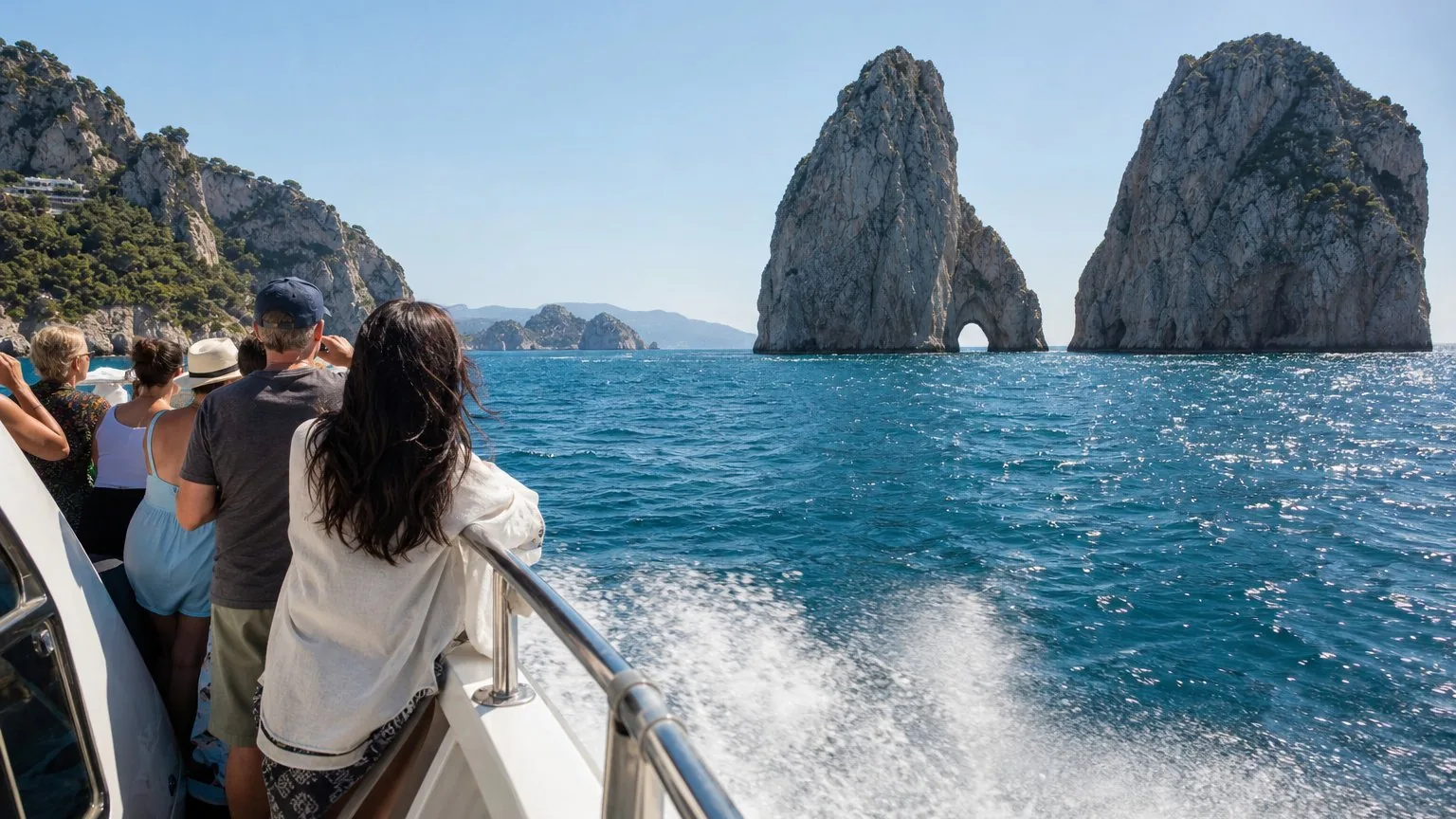
So build coastal days backwards. Find the return sailing you need, then the last one after it, then the road fallback if both go wrong. The Positano to Capri run, for instance, has only a handful of daily departures, which turns a casual island day into a fixed schedule. Two towns done properly beats three done at a run for a boat.
The road fallback matters because ferries are weather-dependent. Sailings are cancelled or suspended when the sea is up, and that happens outside winter too. The SITA bus along the SS163 is the year-round alternative, but it is slower and busier in summer, and incidents or peak congestion can add substantial delay. So keep some slack in a longer itinerary, and never build a tight train or flight connection on the far side of a final ferry — that is the one failure that costs money rather than an afternoon.
Stairs, Steps and Suitcases
This is the part of the Amalfi Coast that maps do not show, and it catches out more first-timers than any timetable.
These towns are built vertically. Roads sit above or below the places people actually stay, and the connection between the two is frequently a staircase. A listing that says "five minutes from the centre" can mean five minutes downhill and twenty back up. Walking directions will give you a distance and a time; they often will not tell you the step count, the gradient, whether a vehicle can reach the door, or whether the "port" end of that walk is the pier or the road above it.
My advice: before booking a hotel, check the actual walking route from the ferry port or bus stop to the door. Look at street view, count the staircases, and ask the property directly how many steps there are and whether a car or taxi can reach the entrance. A ten-minute walk can mean several hundred steps, which is a completely different transfer with a suitcase — and you will do it twice on the day you arrive and the day you leave, when you are most tired.
If someone in your party has limited mobility, or you simply travel heavy, this should outrank scenery in the base decision. Salerno and Sorrento are reachable by train and largely flat where you will be staying. Positano is a staircase with a town on it.
Three, Five or Seven Days
Three days: focused highlights. Enough for the coast's headline towns if you keep the geography tight and resist the island. Day one is arrival and your base — the transfer chain from Rome or Naples will take most of it, and pretending otherwise is how people end up eating dinner at ten. Day two is Positano and Amalfi, linked by ferry. Day three is Ravello above Amalfi, or a slow morning on the water, then departure. Capri does not fit into this without cutting something real; if the island is the point of the trip, give it a dedicated day and drop a coastal town instead.
Five days: the comfortable first visit. The same coast without the compression, plus one big addition. From Sorrento, Pompeii is a direct train and an easy half-day to full day — far easier than from Amalfi or Positano, where you would be crossing the peninsula first. From a coast base, Capri is the more natural addition. Keep one base if you can: five nights is not long enough for moving to earn back the half-day it costs.
Seven days: room to slow down. Here the one-base rule stops being automatic. One base is still the simplest: nothing to repack, no dead half-day, and the tourist tax discount for longer stays works in your favour. Two bases can be a deliberate choice rather than a mistake — a practical gateway such as Sorrento or Salerno for Pompeii, Naples and Capri, then three or four nights in Amalfi or Positano for the coast itself. What is hard to justify for a first visit is three or more: each move costs a half-day and a luggage haul, and on this terrain that is a real price.
What It Costs Beyond the Room
Four cost layers sit on top of your hotel rate, and all four change your itinerary rather than just your budget.
Ferry fares are modest per crossing but add up across a week, and they rise between seasons — the operators publish a tariff sheet each year, and a fare quoted in an old guide is usually low. Check the current PDF for your dates rather than planning around a screenshot.
Tourist tax is municipal, not coast-wide, so Amalfi's rate is not Positano's or Sorrento's. In Amalfi the Comune charges roughly €3 to €5 per person per night by accommodation category, applied seasonally rather than year-round. The 2022 resolution sets €5 in five-star hotels, €4 in four-star and €3 in three-star and other accommodation, charged from 1 April to 2 November each year. Children under ten are exempt under the Comune's own regulation. That regulation also provides a 50% reduction after the fourth night for certain accommodation categories — but the current published text refers to categories that are no longer defined in Article 4, which only says the Giunta sets the amounts. So the reduction exists and we cannot tell you which bookings it applies to. Ask your accommodation to confirm how it applies to yours.
Capri's landing tax is charged on top of your ferry fare and is higher in summer than in winter. It is per person, per landing, and it is not usually included in the headline crossing price.
Parking, if you bring a car, is expensive and scarce, and in July and August it is genuinely difficult. Rates vary by lot and by season and are not reliably published in advance, so treat any figure you read as indicative and check the signage on the day. For most first-timers the better answer is not to bring a car at all: the SS163 is narrow, slow in summer, and the towns you are driving to have nowhere to put the vehicle.
Before You Book
- Have you listed the four or five things you actually intend to do, and picked the base with the least travel between them?
- Have you checked the walking route from the port or bus stop to your hotel door, including the steps?
- If a Pompeii day matters, is your base on the Circumvesuviana side of the peninsula?
- Have you checked the current operator timetable and tariff for your exact dates, not last season's?
- Does any day depend on a last ferry, and do you know the road fallback if it does not sail?
- Have you added tourist tax and, if you are going to Capri, the landing tax?
- If you are staying more than four nights, have you asked the property whether the tourist tax reduction after night four applies to your booking?
Check the stairs before you book the view
A cliffside view is worth nothing if your hotel adds an hour of stairs and buses to every day trip.
Frequently Asked Questions: Amalfi Coast Itinerary
How many days do I need on the Amalfi Coast?
Three days covers the main towns if you keep the geography tight and skip the island. Five is the sweet spot for a first visit: the same coast at a workable pace, plus Capri or Pompeii. Seven lets you do both and still have a day that goes nowhere, which on this coast is the day people remember.
Is Sorrento actually on the Amalfi Coast?
No. Sorrento sits on the northern side of the Sorrentine Peninsula, facing the Bay of Naples, in the province of Naples. The Amalfi Coast is the southern side of that same peninsula, in the province of Salerno, running from Positano to Vietri sul Mare. Sorrento is still an excellent base — just not a coast one.
Is Sorrento or Amalfi the better base?
It depends where your days are. Sorrento wins on arrival, Naples, Pompeii and Capri, and on luggage, because you can reach it by train. Amalfi wins if most of your time is on the coast itself, because Positano, Ravello and the eastern villages are all short hops rather than a crossing of the peninsula. If your plan is split between the two, that is the case for two bases rather than one compromise.
Do I need a car?
Almost certainly not, and for a first visit a car is usually a liability. The SS163 is narrow and slow in summer, parking is scarce and expensive, and the towns are built for arriving on foot or by boat. Ferries, the SITA bus and the Circumvesuviana cover everything in this guide.
Do I need to prebook ferries?
In high summer, and on any route with only a few daily sailings, yes — book ahead. Outside peak season the coastal shuttles are usually turn-up-and-go. Either way, check the operator's current timetable for your dates: these are seasonal services and a schedule from last year may not exist this year.
Can I fit Capri into a three-day trip?
Only by giving up something real. Capri deserves a dedicated day — the crossing, the island and the return eat the whole of it, and rushing it is how people conclude Capri is overrated. On three days, either make Capri the trip and drop a coastal town, or leave it for next time.
What happens if the ferries are cancelled?
It happens, and not only in winter — sailings are suspended when the sea is up. The SITA bus along the coast road is the fallback, slower and busier but year-round. Plan for it by never placing a tight onward connection immediately after a ferry: if your flight or train depends on the last boat of the day, move the travel to the day before.
How much is the tourist tax in Amalfi?
Roughly €3 to €5 per person per night depending on accommodation category, charged seasonally rather than year-round. The 2022 resolution sets €5, €4 and €3 by hotel category, charged 1 April to 2 November. Children under ten are exempt. The regulation also provides a 50% reduction after the fourth night for certain accommodation categories, but the published text points at categories Article 4 no longer defines, so ask your property whether yours qualifies. The tax is municipal, so Amalfi's rate is not Positano's or Sorrento's — check the comune you are actually sleeping in.
Further Reading
Sources and References
- UNESCO World Heritage Centre. "Costiera Amalfitana." whc.unesco.org — the extent of the coast, its fifteen municipalities and the Lattari Mountains boundary.
- Comune di Amalfi. "Regolamento per l'applicazione dell'Imposta di Soggiorno." Rate bands and the 1 April to 2 November period read from the Giunta's resolution n. 24 of 24 February 2022; the under-ten exemption and the 50% reduction after the fourth night from the regulation. The two documents do not join up: the regulation ties the reduction to "categorie a), b), c)" of Article 4, and the published Article 4 defines no such categories. Reported as it stands rather than repaired.
- Operator timetables and tariffs — NLG, Travelmar and Alilauro — for what sails where. All are seasonal and republished each year, so the operator's current PDF is the only figure worth planning against.
- EAV (Circumvesuviana) for Naples–Pompeii–Sorrento rail times, and Trenitalia for Frecciarossa services to Naples and Salerno.
Part of Destinations & Itineraries.


