Best Time to Visit Italy: A Month by Month Guide
The best time to visit Italy for most travellers is spring (April to June) or early autumn (September and October), when temperatures sit in the comfortable high teens to low twenties and crowds are…

There is no best month to visit Italy, and the question only becomes answerable once you decide what kind of Italian trip you are taking. A month that is close to perfect for Rome can be the wrong month for the Dolomites, and a week that suits Florence in October can find half of Positano shuttered.
So this guide runs the decision in that order: pick the trip, then pick the month. What follows is a month-by-month planning table, what the seasons actually mean once you separate cities from coast from mountains, and what Italy's own tourism figures say about when the country is genuinely full.
Quick Answer
For a first trip built around cities, late April to early June and September to early October give the best balance of comfortable weather, open services and manageable crowds. July and August are hottest and busiest, and best if beaches are the point. November to March is low season for most city-and-coast itineraries — but it is high season in the ski areas, which is exactly why "the best time to visit Italy" has no single answer.
Key Takeaways
- Choose the trip type first — cities, coast, mountains or a mix — because they do not share a calendar.
- August is Italy's busiest month outright: 85.2 million overnight stays in 2025, against 79.1 million in July.
- August is also the most Italian month: 53.3% of those stays were domestic travellers. September inverts it, at 63.4% foreign.
- September is post-peak, not quiet. It is when international demand is proportionally at its highest.
- November to March is low season for cities and coast, and high season in the Alps and Dolomites.
- On Ferragosto, 15 August, state museums stay open at ordinary hours. It is shops, offices and family-run restaurants that close.
In This Article
Italy Doesn't Run on One Seasonal Clock
Italy is a long country with mountains at one end and North African latitudes at the other, and the seasons that matter are the ones attached to your itinerary rather than to the nation.
| The trip you are taking | Strongest window | What you are trading |
|---|---|---|
| Cities — Rome, Florence, Venice | Late April to early June; September to late October | Spring and early autumn are also when everyone else has the same idea |
| Coast and beach — Amalfi, Puglia, Sicily, Sardinia | Late June to early September, with the south and islands holding longer | The hottest, priciest, most crowded months, and seasonal businesses closed either side |
| Mountains — Dolomites, Alps | Two seasons: roughly late June to September for hiking, December to March for snow | Late spring and late autumn are the genuine dead months up there |
| Mixed first trip — cities plus one coastal stop | Early June or September | Warm enough for the coast, hot enough in the cities to plan around the middle of the day |
The north–south gap is the reason those windows differ. Naples in January averages 9 °C where Milan averages 2.3 °C, a difference of nearly seven degrees in a single country, and it runs the other way in autumn: the southern coast and the islands stay usable for swimming and terrace dinners weeks after the Adriatic has turned. The practical consequence is that "shoulder season" arrives earlier and leaves later the further south you go, so an October trip to Sicily and an October trip to Venice are not the same season wearing the same name.
My advice: do not decide on "Italy in May" before you have decided whether May means Rome, Amalfi or the Dolomites. In May the cities are near their best, the southern sea is still cold for most people, and the high mountain trails are not open yet. The month is not good or bad. It is good or bad for something, and picking the something first turns an unanswerable question into an easy one.
Italy Month by Month
One table rather than twelve sections. The point of it is the third column: what each month is genuinely good for, and what it costs you.
| Month | What it feels like | Best for | Watch out for |
|---|---|---|---|
| January | Coldest month nationwide; Milan averages 2.3 °C, Rome 7.2 °C | Cities without queues; ski season in full swing | Coastal resorts largely closed; short days |
| February | Still cold, variable; Carnival in Venice and elsewhere | Skiing; museums; Carnival if the dates suit | Carnival inverts Venice's low season entirely |
| March | Transitional and unreliable, warming in the south first | Cities at low-season prices; early southern touring | Genuinely changeable weather; mountains between seasons |
| April | Spring proper; Rome averages 13.8 °C with highs near 18 °C | Cities, gardens, broad touring | Easter concentrates demand wherever it falls |
| May | Warm and bright; Rome highs reach about 22.5 °C | Arguably the best all-round city month | Crowds already building; sea still cool |
| June | Summer arriving, not shoulder season any more | The best overlap of warm sea and bearable cities | Prices and crowds climbing steeply through the month |
| July | Hot and busy; Rome highs average 30.3 °C | Beaches; high-altitude hiking | Midday sightseeing becomes unpleasant |
| August | Hottest, and Italy's own holiday month | Beach holidays; the mountains as an escape | Ferragosto, peak domestic travel, closures in cities |
| September | Warm and softening; Rome averages 21.1 °C | Cities and coast together — the best single compromise | Post-peak, not quiet; the most international month of the year |
| October | Cooler and increasingly regional; rain rising | Food and wine, cities, southern coast in the first half | Shorter days; coastal services winding down |
| November | The wettest month in much of the country | Museums, cities, very low prices | Naples averages 195 mm of rain; resorts closed |
| December | Winter cities, Christmas markets, opening ski season | Markets, mountains, atmospheric cities | Holiday-period pricing and closures around the 25th |
What the Seasons Actually Mean
The usual advice compresses six months into one label called "shoulder season". Those six months are not equivalent.
April and May are the classic spring shoulder, and the closest thing Italy has to an all-purpose window for a city trip. June is not really shoulder season any more in the places most people go: it is summer arriving, with demand and prices climbing week by week. September is post-peak rather than quiet — see the numbers below. October is genuinely good for cities and food-led trips, and increasingly weather-dependent and regional: Rome averages 122 mm of rain, and by the second half the coast is closing down.
And "off season" needs its exception stated. November to March is low season for the classic city-and-coast itineraries, which is why it is cheap and calm. In the Alps and the Dolomites the same months are high season, with peak-season pricing and booked-out accommodation over Christmas and February half-terms. A guide that calls November to March Italy's quiet season is describing one Italy and ignoring another.
The friction in the transition months is not weather, it is services, and generic guides rarely mention it. May and October read beautifully on a climate table and are the months where what is actually open varies most by destination. Beach clubs, seasonal ferries, mountain lifts, refuges and a good number of family-run coastal restaurants run on their own calendars, and those calendars are set locally rather than nationally — two towns an hour apart can differ by a month. The weather in a Sardinian October is often glorious; whether the boat you were counting on is still running is a separate question with a separate answer. So in the transition months, check opening dates for the specific things your days depend on, rather than the forecast for the region.
Peak Season, in Italy's Own Numbers
Italy's national statistics institute counts overnight stays, and its figures for 2025 settle the argument better than any general impression.
August is the most touristic month of the year, with 19.1 million arrivals and 85.2 million overnight stays. July follows with 18.3 million arrivals and 79.1 million stays. September drops to 14.8 million arrivals and 52.4 million stays — a real fall, but from an extraordinary height.
The more useful number is who those people are. In August, 53.3% of overnight stays were Italian residents — 45.5 million of them. That is what makes August feel different from July: it is the month Italy goes on holiday, and the crowding moves to the coast and the mountains. July inverts it at 54.1% foreign, and September inverts it further still, at 63.4% foreign.
September is the most international month of the Italian year. Whatever you have heard about the crowds going home, they are being replaced.
My advice: book September as post-peak, not as empty Italy. It is an excellent month — warm, softer light, the sea still swimmable, the cities workable again in the middle of the day. But overnight stays only fall to about 60% of the August figure, and the share of foreign visitors is the highest of any month, which is precisely the demand that competes with you for a Rome hotel and a Florence museum slot. Treat it as a better-value version of peak, and book it like peak.
Ferragosto: What Actually Changes on 15 August
Ferragosto is a national public holiday on 15 August, and it is routinely described as the day Italy shuts. That is not what happens, and the difference matters if your trip lands on it.
What stays open: state museums, archaeological parks and cultural sites — castles, abbeys, monumental complexes, villas and gardens — open on their ordinary hours, with booking where it is normally required. The Ministry of Culture publishes this each year and is explicit that 15 August is not a free-entry day. Beach clubs, businesses in tourist areas and duty pharmacies run as usual.
What closes: most shops, supermarkets, banks and public offices, and a great many family-run restaurants in city centres — those often close for the surrounding week, not just the day. Trains and public transport run to a holiday timetable, which means fewer services rather than none.
So the real effect is not a shuttered country. It is a heavily travelling one: the peak of Italy's own holiday movement, on the busiest fortnight of its busiest month, with small towns and resort logistics least able to absorb it. Book restaurants and transport further ahead than you would otherwise, and check the Vatican Museums separately — they are not Italian state museums and set their own calendar.
Temperatures, Labelled Properly
Most Italy guides quote a single number per city per month without saying what it is. It is usually the monthly mean — the average of day and night across the whole month — and it is not the temperature you will be sightseeing in. The average daytime high is several degrees warmer, and it is the one that decides whether a July afternoon in Rome is pleasant.
| City | January mean / high | May mean / high | July mean / high | Wettest month |
|---|---|---|---|---|
| Rome | 7.2 / 11.4 °C | 17.9 / 22.5 °C | 25.2 / 30.3 °C | November, 135 mm |
| Milan | 2.3 / 6.8 °C | 17.0 / 21.8 °C | 23.8 / 28.8 °C | November, 147 mm |
| Venice | 4.4 / 7.3 °C | 17.9 / 21.3 °C | 24.3 / 27.7 °C | November, 134 mm |
| Naples | 9.0 / 11.6 °C | 17.9 / 21.1 °C | 24.8 / 28.2 °C | November, 195 mm |
These are 1991–2021 climate normals. Two things they show that a single national figure hides: Rome in July averages a daytime high above 30 °C, which is a plan-around-the-afternoon temperature rather than a sightseeing one; and November is the wettest month in all four cities, with Naples at nearly 200 mm — worth knowing if a late-autumn trip leans on the Amalfi Coast.
When You Can Actually Swim
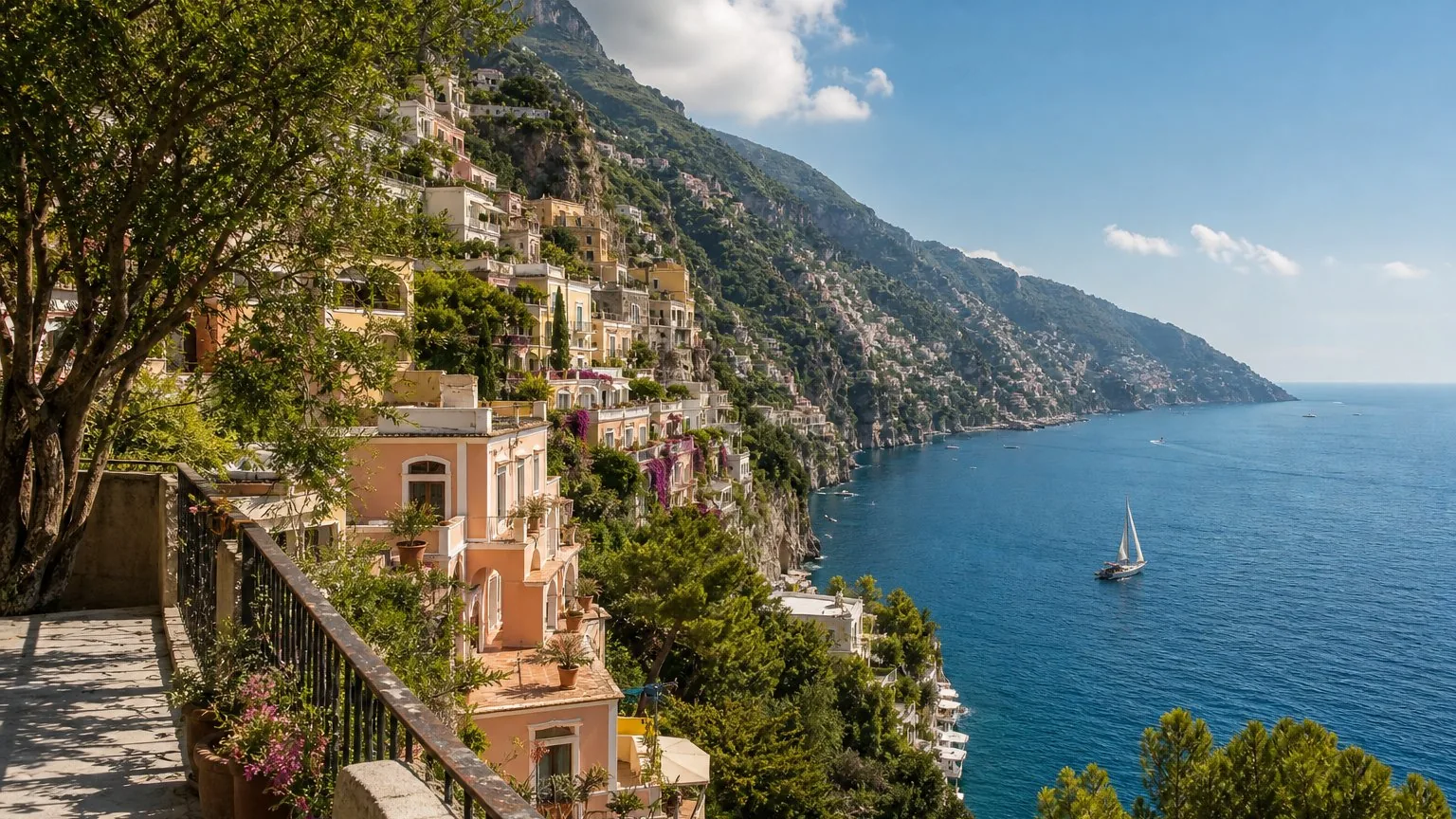
Late June through September is the broadest swimming window in Italy, and where you are matters more than which week you pick. Southern Italy and the islands warm earlier and hold comfortable water later than the northern Adriatic does, so a late-September swim that is pleasant in Sicily can be bracing in Venice.
Nobody can promise you a water temperature. What is worth planning around is the operational season rather than the thermometer: beach clubs, boat trips and seasonal ferries run to a calendar, and in many places that calendar ends well before the water gets cold. If swimming is the point of the trip, the second half of June through August is the safe bet, and September is a good bet in the south.
How Far Ahead to Book
Once your dates are fixed, book the high-speed trains. Trenitalia and Italo release cheaper fare buckets that sell out first, so booking earlier generally buys you a wider choice of both price and departure time rather than a guaranteed discount. There is no single official lead time, and any blog that gives you one to the week has invented it.
The bookings that genuinely need to be early are the capacity-limited ones: timed museum entries, the Vatican, the Uffizi, the Last Supper in Milan, and accommodation anywhere coastal in August. For a September or October trip, several weeks is comfortable for most things. For August on the coast, months.
Before You Book
- Have you decided what kind of trip this is — cities, coast, mountains or a mix — before choosing the month?
- If your dates are in August, do you know where Ferragosto falls in them?
- If you are going in November to March, is your destination a city or a resort that closes?
- Have you checked the daytime high rather than the monthly mean for the months you are considering?
- If swimming matters, is your coast southern enough for the month you picked?
- Are the capacity-limited sights booked, rather than just the flights?
The right month won't fix the wrong base
Wherever you land your dates, a poorly located hotel can undo a well-timed trip.
Frequently Asked Questions: Best Time to Visit Italy
What is the best month for a first trip to Italy?
For a city-led first trip, May or September. May gives you warm, bright weather before the summer heat; September gives you the same temperatures with a swimmable sea. Both are busy — neither is a secret — but both let you spend the middle of the day outdoors, which July and August often do not.
Is September a good month to visit Italy?
Yes, and it is not quiet. Italy recorded 52.4 million overnight stays in September 2025 against 85.2 million in August, so it is genuinely post-peak — but 63.4% of those stays were foreign visitors, the highest share of any month. The Italians have gone home; the international travellers have not.
When is Italy's peak season?
July and August, and August decisively: 85.2 million overnight stays in 2025, the most of any month, against 79.1 million in July. August is also when more than half of those stays are Italians on their own holidays, which shifts the pressure onto the coast and the mountains.
What is shoulder season, really?
April and May, and roughly late September into October. June is better understood as summer arriving than as shoulder season, and September is post-peak rather than off-peak. Treating all six months as equivalent is how people end up surprised by June prices.
Is winter a bad time to visit Italy?
Not for cities, and not at all for mountains. November to March is genuinely low season for city-and-coast itineraries, with lower prices and thin crowds, though coastal resorts largely close. In the Alps and Dolomites those same months are high season — this is the clearest case of Italy not having one national calendar.
When can I swim in Italy?
Late June through September is the broadest window, and the south and the islands hold comfortable water later than the northern Adriatic. Just as important is the operational season: beach clubs and seasonal boats run to a calendar that often ends before the sea cools.
What is Ferragosto and how does it affect travel?
A national holiday on 15 August. State museums and archaeological sites stay open on ordinary hours — the Ministry of Culture confirms this yearly, and notes it is not a free-entry day. What closes is shops, banks, offices and many family-run restaurants, sometimes for the week. Transport runs to a holiday timetable. The real effect is peak domestic travel, so book ahead and check the Vatican Museums separately.
How far ahead should I book?
Fix the capacity-limited things first: timed museum entries and August coastal accommodation, which want months rather than weeks. High-speed trains are worth booking as soon as dates are firm, because the cheaper fare buckets go first — but there is no official lead time, and a precise one quoted to the week is somebody's guess.
Further Reading
Sources and References
- ISTAT, Flussi turistici — III trimestre 2025: arrivals and overnight stays by month, and the resident/foreign split. The source for every volume figure here.
- Ministero della Cultura, annual Ferragosto release: state museums, archaeological parks and cultural sites open on ordinary hours on 15 August, booking where normally required, not a free-entry day.
- Climate-Data.org, 1991–2021 normals for Rome, Milan, Venice and Naples. Figures are given here as monthly mean and average daytime high, because the two are several degrees apart and only one of them describes an afternoon.

Part of Plan & Budget.


