Eastern Europe Itinerary: 3 Routes That Actually Make Sense
You’ve settled on an eastern europe itinerary, and now you’re staring at a map wondering whether Prague and Dubrovnik can reasonably share the same two-week trip. They can’t, not comfortably — and that single realisation is what separates
By Cyrielle · Travel planner & private-aviation professional · Updated 25 August 2026 · 12 min read
You’ve settled on an eastern europe itinerary, and now you’re staring at a map wondering whether Prague and Dubrovnik can reasonably share the same two-week trip. They can’t, not comfortably — and that single realisation is what separates a relaxed introduction to the region from a fortnight spent watching bus windows go by.
The strongest eastern europe itinerary picks one sub-region — the Golden Triangle, the Balkans, or the Baltics — and builds around it rather than chasing every capital on the continent. This guide walks through how to choose between those three routes, how long each genuinely needs, the currency and border quirks that catch first-timers out, and honest options for couples and budget travellers. If you’re planning an eastern europe itinerary for first timers, start here before you open a single booking tab.
Quick answer: Pick one sub-region rather than the whole map. The Golden Triangle (Prague, Vienna, Budapest) works in 8–12 days and suits most first-timers, with fast trains and a shared Schengen border. A Balkans route from Zagreb to Dubrovnik needs 10–14 days and more bus and ferry time. The Baltics (Tallinn to Vilnius) fit neatly into 7–9 days on a single currency.
Key takeaways
- Pick one sub-region — the Golden Triangle, the Balkans, or the Baltics — rather than combining them on a first trip.
- Rough timing: Golden Triangle 8–12 days, Balkans 10–14, Baltics 7–9.
- One route can cross three or four currencies and mix Schengen with non-Schengen borders — check both before you book.
- Capital Old Towns cost more than the “Eastern Europe is cheap” reputation suggests; the real savings live in secondary towns.
- Trains rule the Golden Triangle; buses often win across the Balkans and between the Baltic capitals.
In this article
- What “Eastern Europe” really means for planning
- The three core routes
- How many days do you need?
- Currency, borders and entry rules
- Is it cheaper than Western Europe?
- Is it safe to travel right now?
- When to go
- Eastern Europe for couples
- Common first-timer mistakes
- Rail vs bus
- Sample itineraries
- FAQ
What “Eastern Europe” Really Means for Planning
Travellers searching “eastern europe itinerary” often use the term broadly to include Central Europe, the Balkans and the Baltics, even though these are distinct geographic regions with different transport networks and border rules. Sorting out which one you actually mean comes before you open a map, because blending all three into one trip is the most common first-timer mistake.
The Central Europe core — Czechia, Austria, Hungary, Slovakia and Poland, built around Prague, Vienna, Budapest, Bratislava and Kraków — is the beginner-friendly starting point, and it’s what most “Eastern Europe itinerary” content actually describes. The Balkans — Croatia, Slovenia, Bosnia and Herzegovina, Montenegro, Serbia, Albania and North Macedonia — is coast-and-mountain country: Adriatic islands and mountain passes, not another opera house. The Baltics — Estonia, Latvia and Lithuania — form a tight, self-contained trio through Tallinn, Riga and Vilnius, rarely combined with the other two because the distances and flight connections simply don’t line up.
Trying to fit Prague, Dubrovnik and Tallinn into ten days is how a relaxing trip turns into a continental scavenger hunt.
The Three Core Routes
Once you’ve picked a sub-region, the route mostly builds itself, because each one has a shape a decade of travellers has already tested.
Golden Triangle: Prague, Vienna, Budapest
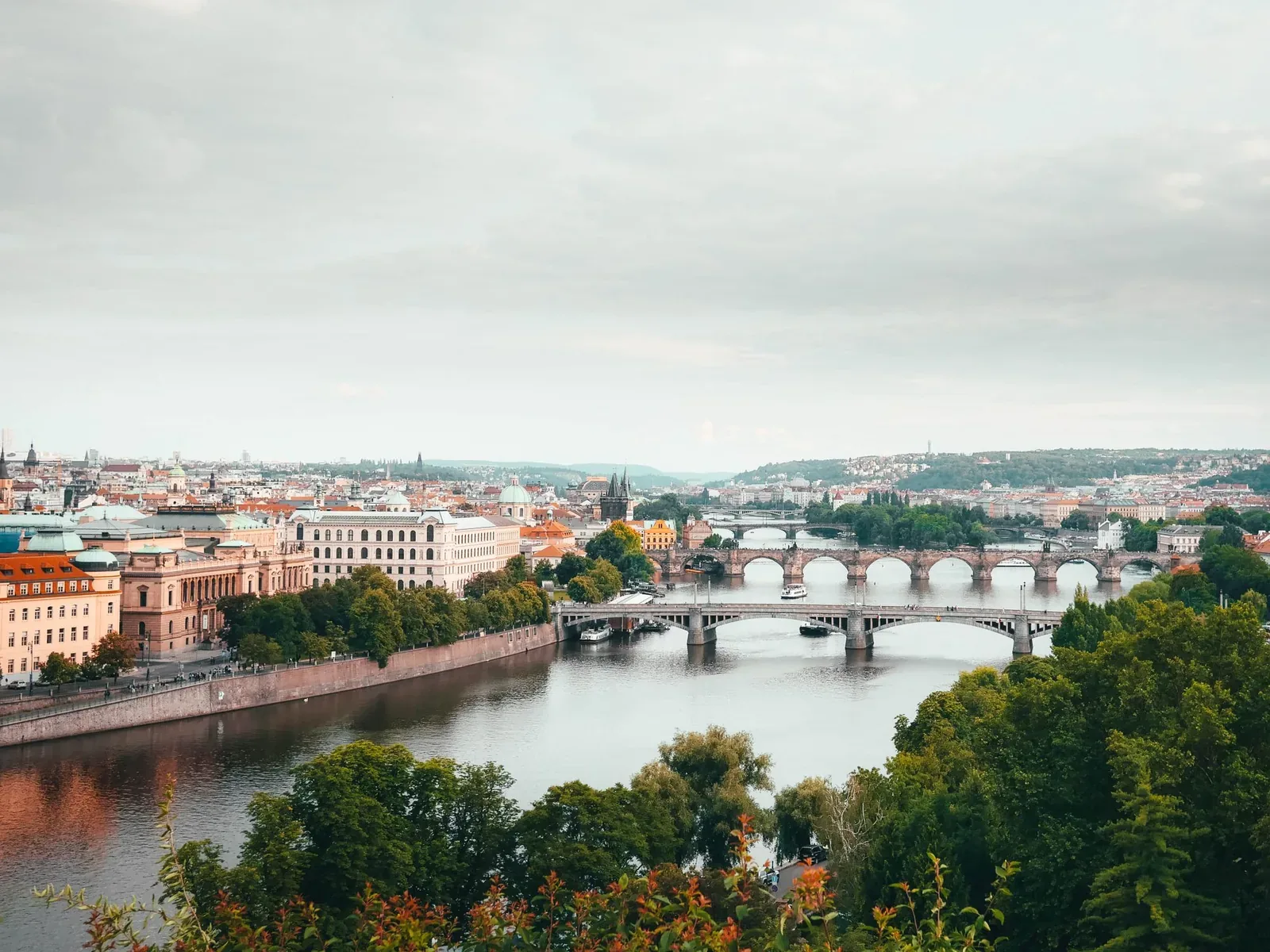
Despite the “triangle” nickname, this is a linear, open-jaw route, not a closed loop. Prague, Vienna and Budapest sit roughly three to four hours apart by train, so you fly into one city and out of another without doubling back. It’s the most repeated Central Europe route, and the easiest to plan.
- 7–8 days: Prague (3 nights), Vienna (2), Budapest (2–3). The standard first trip.
- 10–12 days: add Kraków (2–3 nights, including a day for Auschwitz-Birkenau) and Bratislava as a day trip from Vienna.
- 14 days: stretch to Warsaw or south to Ljubljana — though this starts blending sub-regions and adds real transit time.
The Balkans: Zagreb to Dubrovnik
The Balkans run coast and island rather than city to city, leaning on buses and ferries more than trains, since the rail network inherited from the former Yugoslavia is patchier than Central Europe’s. A 10-day Croatia-only route covers Zagreb, Plitvice Lakes, Split, a Dalmatian island such as Hvar, and Dubrovnik, whose walled Old Town is a UNESCO World Heritage Site. Stretch it to 12–14 days and you can add Kotor in Montenegro or Mostar in Bosnia and Herzegovina.
One caveat catches almost everyone: Balkan travel times run well over what the map suggests. Split to Dubrovnik looks like a quick hop, but the single coastal road realistically takes around four and a half hours or more by bus in July and August once traffic and stops are counted. Build the coast around that reality, not the straight-line distance.
The Baltics: Tallinn, Riga, Vilnius
The Baltics are the simplest of the three: a naturally linear route connected by intercity buses, which are generally more reliable than the rail links between the three capitals. All three countries use the euro, which removes the currency-juggling problem entirely. Seven to nine days covers the Hanseatic Old Towns without rushing.
| Route | Best for | Verdict |
|---|---|---|
| Golden Triangle | First-timers wanting fast trains and grand architecture | Easiest to plan — book this one first |
| Balkans | Couples and groups wanting coast, islands and scenery | Slower logistics, worth the extra days |
| Baltics | Travellers with under ten days wanting a compact, single-currency trip | Most compact, least crowded, easy to underrate |
How Many Days Do You Need?
Budget 7–10 days as a workable minimum for one sub-region, and 12–14 for a comfortable pace. That covers the Golden Triangle, the Balkans, or the Baltics without turning the trip into a string of transit days. Combining two sub-regions generally needs three weeks or more; anything shorter forces an internal flight or a long overland day that eats the time you’d actually spend somewhere.
A 10-day eastern europe itinerary fits one sub-region well — the Golden Triangle at a relaxed pace, or a Croatia-only Balkans route without the Montenegro or Bosnia add-ons. A 2-week eastern europe itinerary gives room to extend either, adding Kraków or Bratislava to the Golden Triangle, or Kotor and Mostar to the Balkans, without rushing. If you want the day-by-day mechanics of pacing a longer trip, our 2-week Europe itinerary and 3-week Europe itinerary break the rhythm down stop by stop.
Currency, Borders and Entry Rules
A single eastern europe itinerary can cross three or four currencies, and that’s the region’s most distinctive planning trap. A Golden Triangle route typically uses the Czech koruna, the euro in Austria, and the Hungarian forint, with a Kraków extension adding the Polish złoty. The Baltics are the easy exception — euro throughout.
Schengen status is mixed, so check it country by country rather than assuming. Austria, Slovakia, Czechia, Hungary, Poland and Croatia are Schengen members, while Bosnia and Herzegovina, Montenegro, Serbia, Albania and North Macedonia sit outside the Schengen Area and each set their own entry and stay rules. The right way to plan a mixed route is to track your cumulative Schengen days under the 90-days-in-180-days rule (for visa-exempt travellers), and then separately check the individual entry rules of every non-Schengen country on your route — they don’t share a single allowance. Time spent in non-Schengen countries doesn’t count against your Schengen total, but each has its own limit worth confirming. It’s also worth remembering that Schengen countries can temporarily reintroduce internal border checks, so carry your passport even on “borderless” legs. The European Commission maintains the authoritative Schengen list and rules.
Entry systems, briefly. The EU’s Entry/Exit System (EES) is operational at participating external Schengen borders, registering non-EU visitors biometrically instead of stamping passports. ETIAS, the separate travel authorisation, is not operational as of August 2026, and no applications are being collected — so there is nothing to apply for yet. Check the official EU ETIAS portal for the current status before you travel.
One route, four currencies, two border regimes. Sort a card with no foreign-transaction fees before you sort anything else.
Is Eastern Europe Cheaper Than Western Europe?
Generally yes — but unevenly enough that an eastern europe itinerary on a budget still needs real planning. Prague and Budapest’s Old Town restaurants and central hotels have crept close to Western European prices over the past decade, while secondary towns in the same countries stay markedly cheaper. Crowd-sourced indexes like Numbeo are useful for rough comparisons rather than precise budgeting, but the pattern they show is consistent: the savings live outside the capital tourist core.
The Balkans run the same pattern in reverse. Dubrovnik and Hvar in July and August can match Western Mediterranean coastal pricing — and the walled city fills with cruise-ship day-trippers by late morning — while Sarajevo, Mostar and inland towns remain among the least expensive stops on any European route.
| Route | Relative cost | Main budget pressure |
|---|---|---|
| Golden Triangle | Moderate | Central Prague/Budapest hotels and Old Town dining |
| Balkans | Low inland, high on the coast | Peak-season Dubrovnik and Hvar; inland stays stay cheap |
| Baltics | Low to moderate | Tallinn and Riga Old Towns; euro throughout |
“Eastern Europe is cheap” is a half-truth: the capital Old Towns didn’t get the memo.
Is It Safe to Travel Right Now?
The tourist routes in this guide — the Golden Triangle, the Croatian coast, the Baltic capitals — are outside Ukraine and away from any active conflict area. That said, conditions and official government advice can change, so the responsible approach is to check the current advisory for every country on your specific route before you book, and again before you fly. Poland, Slovakia, Hungary and Romania border Ukraine directly; if your route runs through their eastern regions, pay particular attention there.
Use official, country-by-country sources — the UK Foreign, Commonwealth & Development Office and the US State Department both update their advice as situations develop — rather than general reassurance from travel content. A border on a map and a border in a headline are not the same thing, but checking the current advisory takes two minutes and settles the question properly.
When to Go
Late April to early June and September to mid-October balance mild weather against the summer crowd surge in the Golden Triangle — and Prague and Vienna add a distinct December peak for their Christmas markets, unlike Western Europe’s summer-only high season. On the Balkan coast, May–June and September avoid the July–August price and crowd peak while keeping the sea warm enough to swim. In the Baltics, June to August is the narrow comfortable-weather window; longer winters give this loop a shorter season than the other two.
Eastern Europe for Couples
Couples face the same fork every first-timer does, with slightly higher stakes: an architecture-and-culture city trip, or a coast-and-scenery relaxation trip. The Golden Triangle leans city and culture; the Balkans lean beach and boat — and either makes a strong eastern europe itinerary for couples on its own. Lower accommodation and dining costs mean you can book higher-tier hotels, private tours, or Budapest’s thermal-bath culture at a price point that would only buy a mid-tier Western European experience. Splitting the difference works too: the Golden Triangle plus a short Zagreb-and-Split extension bridges both preferences in 12–14 days, at the cost of one travel day.
A city-break budget in Vienna buys a couple’s spa afternoon in Budapest — and the thermal baths don’t care that you’re on a budget.
Common First-Timer Mistakes
These show up again and again on a first eastern europe itinerary, and every one is avoidable with a little forward planning.
- Combining sub-regions that don’t connect. Pairing the Golden Triangle with the Baltics without budgeting for the flight or long overland day needed to bridge them.
- Assuming uniform low prices, then being surprised that Prague’s Old Town charges Western-capital rates.
- Underestimating Balkan journey times. Split to Dubrovnik looks short; the coastal road disagrees.
- Booking Dubrovnik or Hvar in peak July–August without accounting for both the price surge and the cruise-ship crowds inside the Old Town.
- Booking the wrong neighbourhood. A hotel that looks central on the listing but sits a tram ride from the Old Town can quietly cost you an hour a day — worth checking the exact location before you book, not after.
Rail vs Bus: Getting Between Cities
Trains win in the Golden Triangle — faster, more comfortable, and not meaningfully pricier than the bus. Buses frequently beat trains across the Balkans on both speed and comfort, since much of the inherited rail network runs slower than the road. And intercity buses are simply the standard way to move between Tallinn, Riga and Vilnius. If you’re weighing rail passes against point-to-point tickets, our Europe by train guide covers the reservation quirks in detail rather than repeating them here.
A hire car suits the Balkans best, unlocking Plitvice Lakes, smaller Dalmatian towns and the Bay of Kotor at your own pace. One catch travellers report repeatedly: check cross-border insurance and any green-card requirement before driving a rental from Croatia into Montenegro or Bosnia — some agencies restrict it or charge extra, and it’s far easier to sort at the rental desk than at the border. The Golden Triangle suits driving less: trains are faster, and parking in historic centres is a genuine headache.
Before you book
- Picked one sub-region rather than a continent-spanning city list?
- Counted your border crossings, and whether they mix Schengen and non-Schengen?
- Budgeted for capital Old Town price premiums?
- Checked current government advice for any country bordering Ukraine on your route?
- Built in at least one unscheduled day?
- Checked whether train or bus is genuinely faster for each leg?
Sample Itineraries: 10 Days and 2 Weeks
A 10-day Golden Triangle looks like: Prague (3 nights), Vienna (2), Budapest (3), with a Bratislava day trip from Vienna and a couple of unscheduled evenings. A 2-week Balkans route looks like: Zagreb (2), Plitvice Lakes (1), Split (3), Hvar (2), Dubrovnik (3) and Kotor (2) as a coastal finale. The Balkans reward a hire car far more than the Golden Triangle does, given the coastal scenery and small towns the buses simply drive past. For a first trip that eases you in more gently, our first-time Europe itinerary and Western Europe itinerary make useful companions.
Not sure your hotel is in the right area? A badly placed hotel can cost you an hour a day in avoidable transit. Score your hotel’s location in two minutes before you book — free, no email required.
Frequently Asked Questions
How many days do you need for an Eastern Europe itinerary?
Seven to ten days is a workable minimum for one sub-region, and 12–14 is comfortable. Combining two sub-regions in one trip generally needs three weeks or more to avoid a route dominated by transit days.
Is Eastern Europe cheaper than Western Europe?
Generally yes, but unevenly. Capital Old Town zones in Prague and Budapest have risen close to Western European price levels, while secondary towns and inland Balkan destinations stay markedly cheaper. Peak-season Dubrovnik and Hvar can match Western Mediterranean coastal prices.
What entry and visa rules should I check?
It depends on your route. Schengen members follow the 90-days-in-180-days rule for eligible nationalities; non-Schengen Balkan states each set their own separate rules, so check every country individually. The EU’s EES is operational at external Schengen borders, while ETIAS is not operational as of August 2026 and is not yet accepting applications — check the official EU ETIAS portal for the current status.
Golden Triangle or Balkans for first-timers?
The Golden Triangle is generally the easier first route: faster trains, no coastal price swing, and a single Schengen border. The Balkans offer better coastal scenery but more bus- and ferry-dependent logistics and a sharper peak-season price jump.
What’s the best way to travel between cities?
Train in the Golden Triangle, since it’s faster and no pricier than the bus. Bus across the Balkans, where the rail network is genuinely slower. Bus in the Baltics, where it’s the standard connector between the capitals.
What’s a good 10-day Eastern Europe itinerary?
Prague (3 nights), Vienna (2) and Budapest (3), with a Bratislava day trip and a couple of unscheduled evenings, is the standard 10-day Golden Triangle structure most first-timers use.
What’s a good 2-week Eastern Europe itinerary?
Extend the Golden Triangle with Kraków, or run the full Croatia-to-Montenegro Balkans route: Zagreb, Plitvice Lakes, Split, Hvar, Dubrovnik and Kotor. Two weeks gives either route room to breathe.
Is it safe to travel to Eastern Europe right now?
The standard tourist routes are outside Ukraine and away from any active conflict area, but conditions and official advice can change. Check the current UK FCDO or US State Department advisory for every country on your route before booking, particularly Poland, Slovakia, Hungary or Romania if you’re travelling near their eastern borders.
Further reading
FREE TOOLFree Hotel Location CheckScore any hotel’s location in two minutes before you book — free, no email required.
FIRST TRIPFirst-Time Europe ItineraryThree beginner routes for a confident first trip across Europe.
RAIL PLANNINGEurope by TrainRail passes, reservations and realistic route timings.
PLANNING2-Week Europe ItineraryA day-by-day fortnight mapped for a relaxed pace.
ALTERNATIVEWestern Europe ItineraryThe unrushed Western Europe route, if you’re comparing regions.
Sources and references
- European Commission — Home Affairs, Schengen area guidance. home-affairs.ec.europa.eu
- European Union — official EES and ETIAS portal. travel-europe.europa.eu
- UK Foreign, Commonwealth & Development Office — foreign travel advice. gov.uk/foreign-travel-advice
- US State Department — travel advisories. travel.state.gov
- UNESCO — World Heritage List, Old City of Dubrovnik. whc.unesco.org
- Numbeo — cost of living index (crowd-sourced). numbeo.com