Italy in 7 Days: Six Nights in Rome, Florence and Venice
Rome, Florence and Venice fit into a week if the route runs north once and never doubles back. This seven-day itinerary uses six nights, two train legs and no fourth base.
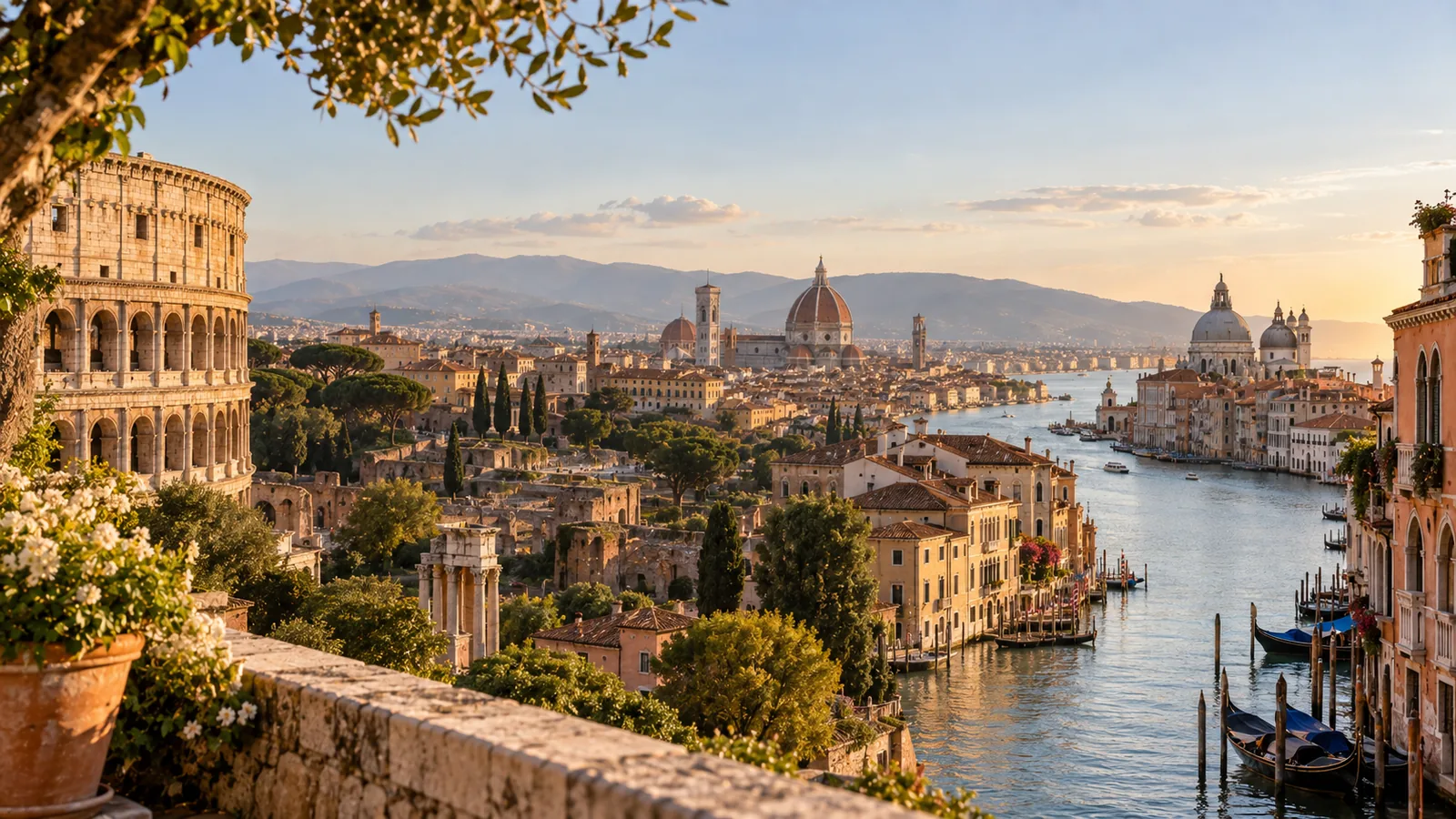
Rome, Florence and Venice fit into a week on one condition: the route runs north once and never doubles back. Both train legs are short, about an hour and a half and then about two and a quarter, but a move costs more than the timetable says: you pack, check out, cross a city, check in and find your bearings before the afternoon is yours again.
Seven calendar days means six nights. Two in each city, two moves, no fourth base. What follows is where those nights go, what the two trains cost in a dated fare check, and the three admin details worth settling before you book: city tax, Venice's access-fee status and ETIAS.
Quick Answer
Seven calendar days is six nights: two in Rome, two in Florence, two in Venice, linked by two direct high-speed trains, Rome to Florence in about 1 hour 35 minutes and Florence to Venice in about 2 hours 15. That gives one full day in each city plus your arrival afternoon and departure morning. When we checked on 19 September 2026 for early-November travel, advance second-class fares for the two legs were about €24 and €28; a rail pass costs more for two journeys. Plan roughly €80 to €140 per person per day on the ground, with hotels and trains on top. If you can find a seventh night, give it to Rome.
Key Takeaways
- Seven calendar days is six nights: two in Rome, two in Florence, two in Venice. Two moves, no fourth base, and each city gets one full day plus the afternoon you arrive and the morning you leave.
- The version with two full days in every city needs eight days, and the extra night belongs to Rome.
- Rome to Florence takes about 1 hour 35 on Frecciarossa, with roughly 48 direct departures a day in each direction plus Italo's own service. Florence to Venice is about 2 hours 15, roughly hourly, and there is no direct Intercity on that leg.
- Two advance singles beat a pass on this route: about €52 for both legs against €139 for the cheapest pass that covers them.
- The Colosseum is the one sight you cannot book months ahead. Its calendar opens roughly 30 days before the date, so set a reminder for the day yours appears.
- Venice's access fee is not running: the 2026 trial ended on 27 July and nothing is announced for 2027. ETIAS is not in operation either, and the EU has not named a start date.
In This Article
- The Best 7 Day Italy Route, Compared
- How Many Nights in Each City?
- Day-by-Day Itinerary Skeleton
- Getting Between Cities: Train Times and Frequency
- Rail Pass or Single Tickets?
- How Much to Budget Per Day
- City Tax, and Where Venice's Access Fee Stands
- Visa and ETIAS Requirements
- Common Mistakes on a 7-Day Italy Itinerary
- Frequently Asked Questions
The Best 7 Day Italy Route, Compared
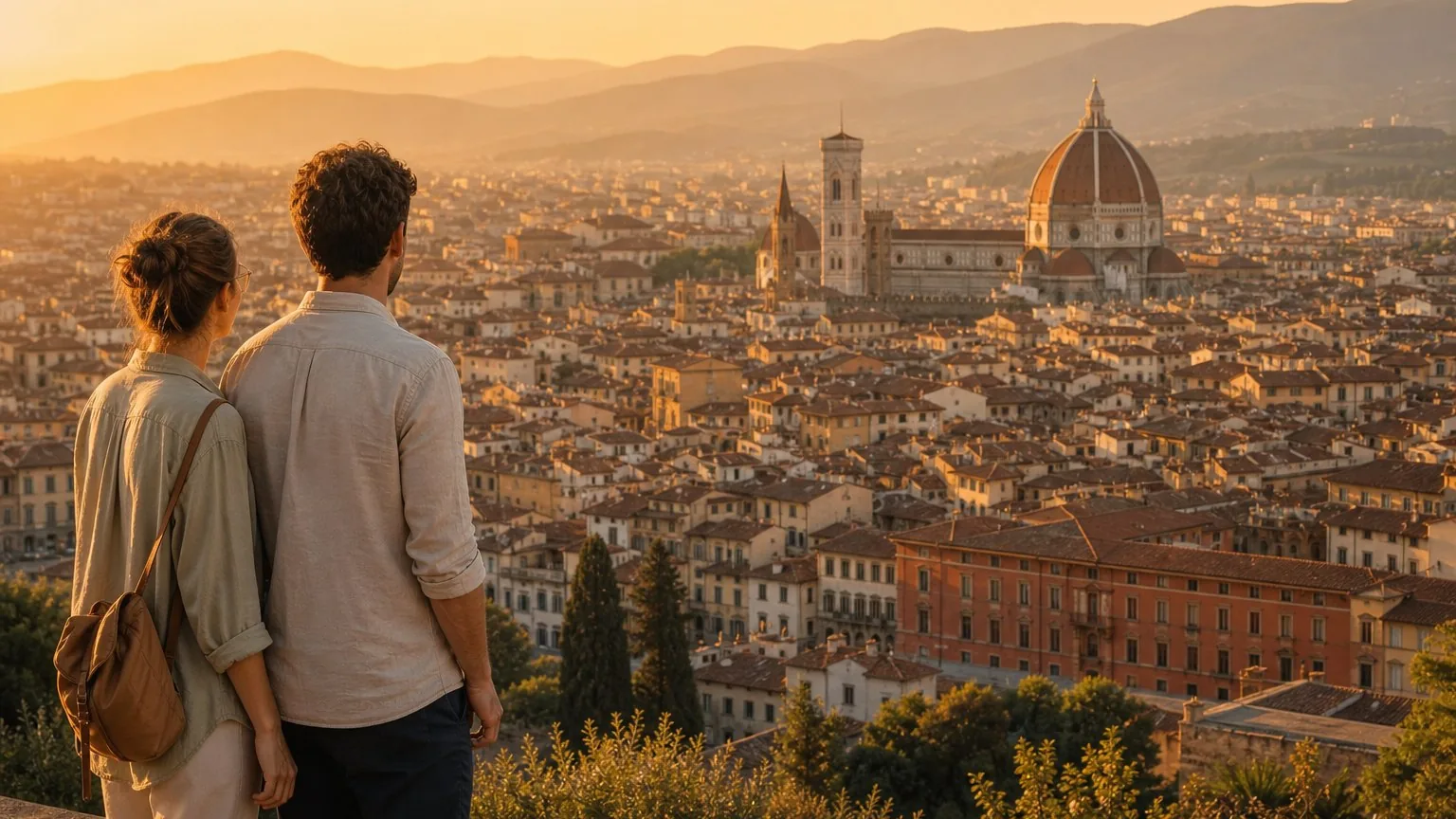
Rome, Florence and Venice is the route to book if your priority is maximum sightseeing with minimum travel time. It asks for two base changes in seven days, both on direct trains under two and a quarter hours, which leaves you enough of each afternoon to settle in rather than live out of a suitcase.
A second structure worth naming honestly: Rome plus the Amalfi Coast. This swaps the northern cities for coastline, running roughly three days in Rome and three to four on the coast, and suits travellers who want beach and cliffside scenery alongside Rome's sightseeing rather than a second and third major city. It has only one base change, but that move is a longer road transfer rather than a train, and the Amalfi Coast has no mainline station.
Both routes teach the same thing: on a week this short, the number of moves decides how the trip feels. Two is comfortable. Three is a different holiday.
| Route | Best For | Verdict |
|---|---|---|
| Rome, Florence, Venice (two nights each) | First timers, couples, art and history lovers, anyone train-averse to driving | The most city per week, on two short and reliable train legs |
| Rome plus the Amalfi Coast | Travellers wanting beach time and cliffside views alongside Rome | One base change, but a longer road transfer and no mainline station |
Pick a coastline or pick a second and third city; Italy will happily let you try to do both, and just as happily eat your whole week doing it.
Two Moves, Six Nights
One direction, north, with both legs short enough to leave the afternoon usable. The hotel-to-hotel figures are Wanderess planning allowances, not operator timetables.
The two legs, and what each one costs you
- Rome to Florence
- direct train, no change — about 1h35 on the train; allow roughly half a day hotel to hotel. Roughly 48 direct Frecciarossa a day in each direction, plus Italo's own service. A midday departure still leaves the Duomo lit for the evening.
- Florence to Venice
- direct train, no change — about 2h15 on the train; allow most of an afternoon hotel to hotel. Roughly hourly Frecciarossa. There is no direct Intercity: those routings change trains and take about four hours.
Bases in order
Click or tap any city to open it in Google Maps.
Services checked 2026-09-19. Times are typical scheduled ranges; confirm your exact date, as timetables shift.
How Many Nights in Each City?
Seven calendar days gives you six nights, and the split that works is two in each city. You arrive in Rome on day one, move north on day three, move again on day five and fly home on day seven. Every city gets one full day, the afternoon you arrive and the morning you leave.
Read that carefully, because it is where most seven-day plans overpromise. Two nights is not two full days. It is one, with two part-days on either side, and Rome feels that most: the Vatican and the Colosseum each want a morning, and they sit on opposite sides of the city.
So if your dates can stretch to eight days, the seventh night goes to Rome and the split becomes three, two and two. That is the version to book if you have it. On a true seven-day week, two-two-two is the honest shape.
Day-by-Day Itinerary Skeleton
Six nights, two moves, both trains at midday so the afternoon still belongs to the next city.
Day 1: Arrive in Rome. Drop the bags, walk the Pantheon and Campo de' Fiori, eat early. Nothing timed.
Day 2: Your one full Roman day. Vatican Museums and St Peter's in the morning, Trastevere in the late afternoon, and keep the evening loose.
Day 3: Colosseum and the Forum at opening, then a midday train north, about 1 hour 35. Check in and see the Duomo lit before dinner.
Day 4: Florence, all of it. The Uffizi or the Accademia in the morning, one rather than both, then the Oltrarno and a slow evening.
Day 5: A last Florentine morning, then a midday train to Venice, about 2 hours 15. Walk the quiet end of the evening once the day-trippers have gone.
Day 6: Venice's full day. St Mark's and the Doge's Palace early, then Cannaregio or a vaporetto to Murano.
Day 7: A last walk, then home. Check the transfer from your own hotel to your departure airport before you plan this morning: leaving Venice takes longer than the map suggests, whichever airport you fly from.
Pisa and Chianti belong to a different trip. Pisa is about an hour each way on a regional train, a half-day Chianti tour runs about five hours and a full day about seven, which is your only Florence day gone. Add one if you add a day.
Getting Between Cities: Train Times and Frequency
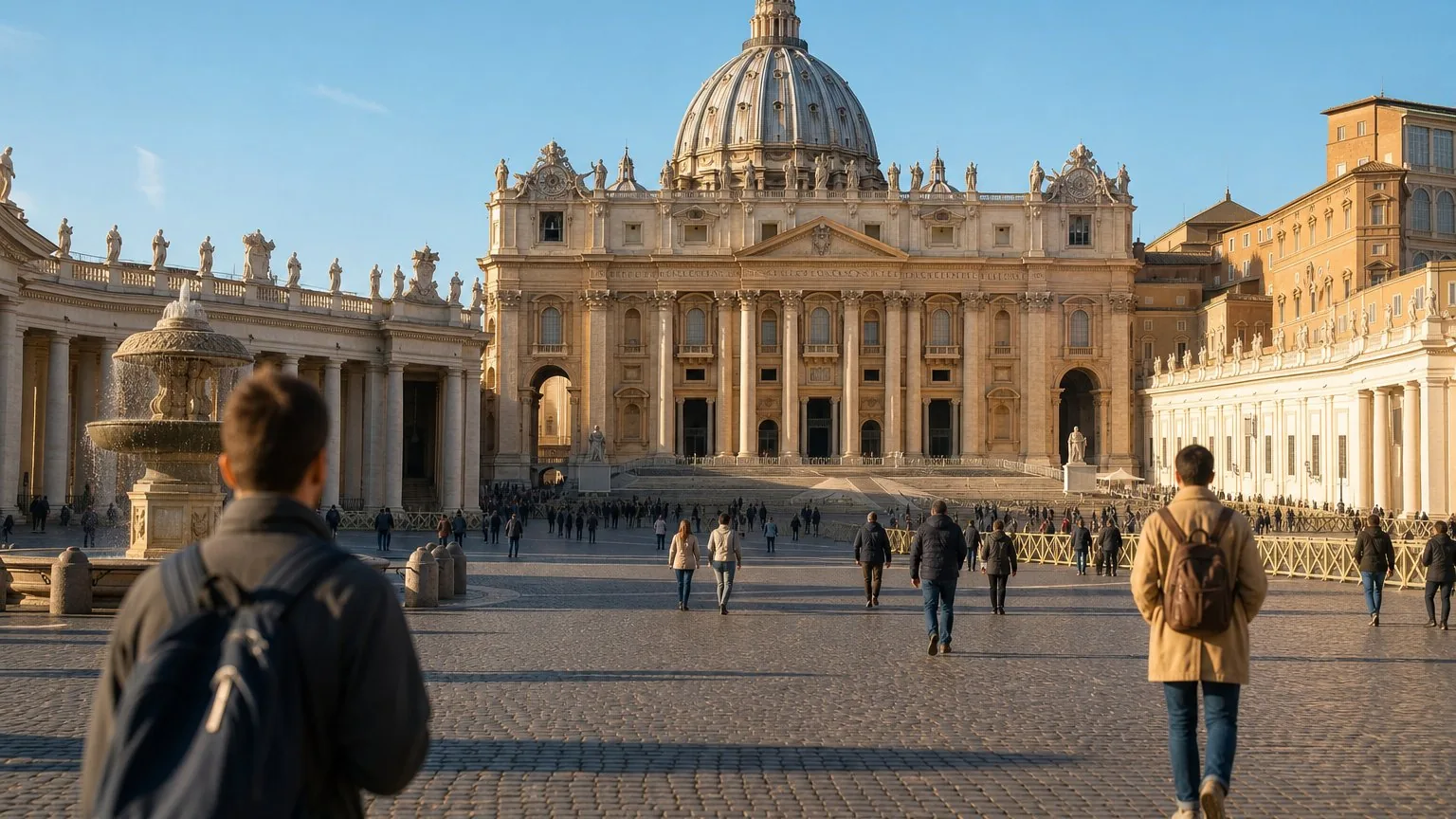
Rome to Florence on Frecciarossa takes about 1 hour 35, with roughly 48 direct departures a day in each direction, so you are choosing a convenient train rather than planning the day around the only one Trenitalia. Italo runs the same route on its own tickets, a few minutes quicker, and is worth pricing alongside.
Florence to Venice is about 2 hours 15 on Frecciarossa, roughly hourly through the day. There is no direct Intercity on this leg: those routings involve a change and take about four hours, which is a whole afternoon rather than a transfer.
Both legs run centre to centre, which is the part that matters on a week this short. A midday departure costs you a morning; an evening one costs you the evening you were saving.
Rail Pass or Single Tickets?
For two fixed journeys in a week, advance singles win, and not narrowly. When we priced travel on 3 November 2026 on Trenitalia's own booking system on 19 September, second class, Rome to Florence came to €23.90 on the cheapest advance fare against €50 fully flexible, and Florence to Venice to €27.90 against €57. Fares move with date and demand, so treat those as a dated example rather than a price list.
Against that, the cheapest pass covering both legs is Trenitalia's own, at €139 for three journeys in seven days, with seat reservations included Trenitalia Pass. Interrail's Italy pass is the other option, and it still needs a compulsory €13 reservation on every Frecciarossa Interrail, so a pass does not remove the reservation cost.
A pass earns its price on a different trip from this one: more journeys, or plans you refuse to fix. Two legs is not that trip.
One condition worth reading before you buy the cheap fare: Super Economy is neither refundable nor changeable, while Economy can be moved to another train for the difference up to the flexible price Trenitalia fare conditions. On a trip with two fixed transfer days, that difference is usually worth a few euros.
How Much to Budget Per Day
For a rough 2026 planning estimate, the travel-cost site RadicalStorage puts comfortable mid-range spending at €80 to €140 per person per day, with budget travel nearer €50 to €70. It is a secondary source rather than an official one, and the exclusion is the part that catches people out: those bands cover food, local transport and small entries, and leave out accommodation and the intercity trains entirely.
The costs we can pin down exactly are the ones worth building your total from. The two train legs came to about €52 booked ahead. Rome charges a city tax of €6 a night per person in most three-star hotels and B&Bs and €7.50 in four-star, capped at ten consecutive nights, with under-tens exempt Roma Capitale. The headline sights are published too: the Colosseum is €18, the Vatican Museums €20 at the door or €25 booked online, the Uffizi €25 on the day or €29 in advance, and the Doge's Palace €35, or €30 online at least 30 days ahead.
Add two airport transfers and you have the shape of the week. That is the number most itineraries leave out.
City Tax, and Where Venice's Access Fee Stands
City tax is the reliable one. Rome bills it per person per night by the class of your accommodation, from €3.50 in hostels to €10 in five-star hotels, and it is collected at the property rather than at booking. Florence and Venice run their own versions on the same principle.
Venice's access fee needs a status check rather than a rule. It ran as a trial on 60 non-consecutive days between April and July 2026, from 8.30am to 4pm, at €5 or €10 depending on how late you paid, and it applied to day visitors rather than to people sleeping in the city. That trial ended on 27 July 2026, and nothing has been announced for 2027 Città di Venezia. If you are travelling in a future spring or summer, check the city's own page before you assume either way.
Visa and ETIAS Requirements
Visa-exempt travellers, including US passport holders, can spend up to 90 days in any 180 across the Schengen area, Italy included, without a visa European Commission. Rules vary by nationality, so check the Italian consular guidance for your own passport.
ETIAS is not running yet. It starts at a date the EU has not yet announced, and the EU has said it will give several months' notice before it does ETIAS official portal. When it does begin it will cost €20, free for under-18s and over-70s, and it will not change the 90-in-180 rule. Check the portal again close to your dates rather than trusting a figure locked in months ahead.
Common Mistakes on a 7-Day Italy Itinerary
Buying a pass without pricing the reservations. On this route the cheapest pass costs about €87 more than two advance singles, and the reservations are compulsory either way.
Planning seven nights into seven days. The trip is six nights, and a plan built on the other number loses a day somewhere, usually in Rome.
Leaving city tax and two airport transfers out of the total, then wondering why the week cost more than the daily band suggested.
Treating Venice's access fee as current. It is not running, and older guides still describe it as though it were.
Expert Insight: The Colosseum is the one sight here you cannot plan around months ahead. Its official calendar opens roughly 30 days before the visit date, so put a reminder in your diary for the morning your date appears and book it then. Everything else on this itinerary can wait.
A seven-day itinerary doesn't punish ambition. It punishes arithmetic.
Before You Book
- Have you planned six nights rather than seven, two in each city, with a third Rome night only if you can add a day?
- Have you booked both train legs in advance, and decided whether Economy's changeability is worth a few euros over Super Economy, which is neither refundable nor changeable?
- Have you priced those two singles against a pass before assuming the pass is cheaper?
- Have you set a reminder for the day your Colosseum date enters the roughly 30-day booking window?
- Have you added Rome's city tax at your own hotel's rate, plus two airport transfers, to the total?
- If you are travelling in a future spring or summer, have you checked whether Venice has reinstated its access fee?
- Have you checked the ETIAS portal for your dates, given the EU has not yet named a start date?
If you're deciding between hotels near the station in each city or a quieter neighbourhood a short walk away, that trade-off matters more on a seven-day trip than on a long one: you are choosing where three afternoons start. You can score any hotel's location for free in about two minutes using the Hotel Check tool, no email required.
Not Sure Your Hotel Is in the Right Area?
A great itinerary can still be undone by a hotel that's a 40-minute walk from everything you planned to see.
Score your hotel's location in 2 minutes →Frequently Asked Questions: Italy 7 Day Itinerary
Is 7 days enough for Rome, Florence and Venice?
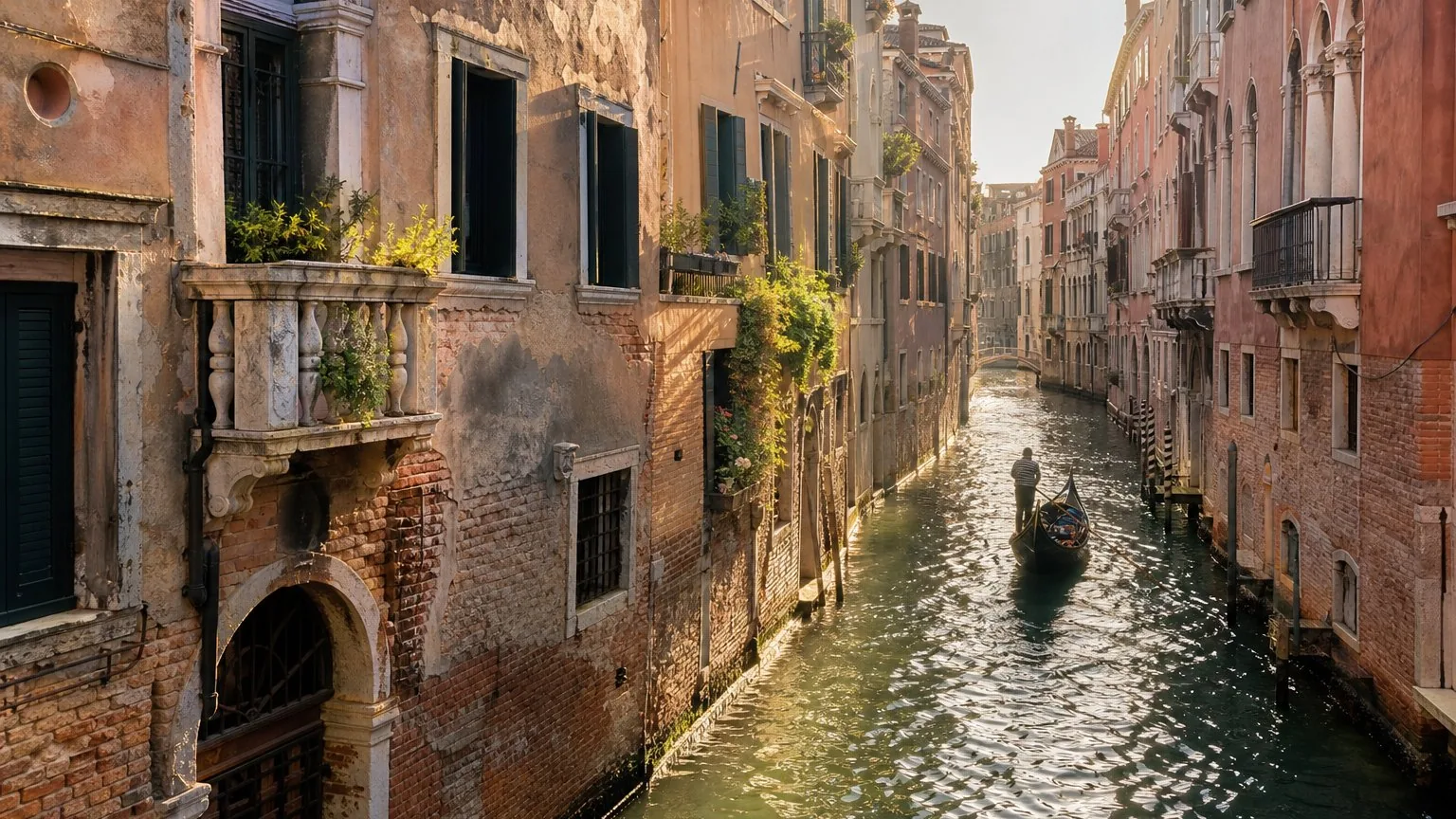
Yes, with two nights in each city and midday trains on the two transfer days. Seven calendar days is six nights, so each city gets one full day plus the afternoon you arrive and the morning you leave. It works because the route moves north once and never doubles back.
How many nights should I spend in each city?
Two in Rome, two in Florence and two in Venice. Three nights in Rome is the better split, but it needs an eighth day: on a true seven-day trip it would leave one of the other cities with a single night, which is the pattern this route exists to avoid.
What is the best order for Rome, Florence and Venice?
South to north: Rome first, then Florence, then Venice, flying home from Venice. It follows the rail line, never doubles back, and puts the longer of the two train legs in the middle of the week rather than on your last morning.
Should I buy a rail pass or individual train tickets?
Individual tickets, for two fixed journeys. Priced on 19 September 2026 for November travel, the two advance fares came to about €52 together, against €139 for the cheapest pass covering both legs, and a pass still needs a compulsory reservation on every Frecciarossa. A pass earns its price on trips with more journeys or less settled plans.
How far in advance should I book the trains?
As soon as your dates are fixed. The cheap advance fares are sold in limited numbers per train, so the price climbs as the date approaches rather than falling. Super Economy is neither refundable nor changeable, while Economy can be moved to another train for the difference, which is often worth a few euros on a transfer day.
How much should I budget for 7 days in Italy?
As a rough planning band, €80 to €140 per person per day, which comes from a travel-cost blog rather than an official source. It covers food, local transport and small entries only: accommodation and the two intercity trains sit outside it, as do Rome's city tax and your airport transfers.
Are there tourist taxes or extra fees to budget for?
Yes, city tax, charged per person per night at your accommodation and set by property class. Rome runs from €3.50 in hostels to €10 in five-star hotels. Venice's separate access fee for day visitors is not currently running: the 2026 trial ended on 27 July and nothing has been announced for 2027, so check the city's own portal for your dates.
Do I need a visa or ETIAS for a 7-day trip to Italy?
Rules vary by nationality, but visa-exempt travellers can use the Schengen allowance of 90 days in any 180, which a week comfortably fits. ETIAS is not in operation and the EU has not announced a start date at a date the EU has not yet announced. When it does begin it will cost €20, with under-18s and over-70s exempt.
Should I add a fourth city?
Not in seven days. A fourth base turns one of your three full days into a travel day, and the week already spends two half-days on trains. Save it for a ten-day trip, where the extra move buys something.
Sources and References
- Trenitalia. Frecciarossa Roma-Firenze connections; Firenze-Venezia services; fares and fare conditions, checked 19 September 2026. trenitalia.com.
- Trenitalia. Trenitalia Pass. trenitalia.com.
- Italo. Rome to Florence services. italotreno.com.
- Interrail. Domestic train reservation fees, Italy. interrail.com.
- Città di Venezia. Contributo di Accesso: 2026 calendar, amounts and the close of the trial on 27 July 2026. cda.veneziaunica.it.
- Roma Capitale. Contributo di soggiorno tariffs. comune.roma.it.
- European Union. ETIAS official portal. travel-europe.europa.eu.
- European Commission. Schengen short-stay calculator. home-affairs.ec.europa.eu.
- Parco archeologico del Colosseo. Official ticketing and booking calendar, checked 19 September 2026. ticketing.colosseo.it.
- Musei Vaticani. Tickets and prices. museivaticani.va.
- Gallerie degli Uffizi. Tickets. uffizi.it.
- Fondazione Musei Civici di Venezia. Doge's Palace tickets. palazzoducale.visitmuve.it.
- RadicalStorage. How Much Is a Trip to Italy: a travel blog's 2026 daily spending estimate. radicalstorage.com.
Part of Europe Itineraries, in Destinations & Itineraries.