Italy Switzerland Itinerary: The Best Route for a First Trip
Trains, not flights, do the heavy lifting between Italy and Switzerland. How many days you really need, how to cross by rail, and sample 7, 10 and 14 day routes.
If you're staring at a map wondering how to link Milan's cathedrals with Swiss glaciers in one trip, you're not alone. A workable Italy Switzerland itinerary needs at least seven days, and most first-timers do better with ten to fourteen. Trains, not flights, do the heavy lifting between the two countries, and the Alps that look like a barrier on the map are actually the point. This guide covers how many days to budget, how to cross the border by rail, which scenic routes earn their extra hours, and how the plan shifts for couples and budget travellers.
Quick Answer
A solid italy switzerland itinerary needs a minimum of seven days for two bases and one scenic detour, but ten to fourteen days lets first-timers add Venice or Rome, the Italian Lakes, and two or three Swiss regions without rushing. Trains, ideally the Bernina Express for the border crossing, beat driving on both cost and scenery.
Key Takeaways
- Seven days covers two bases; ten to fourteen days is the realistic range for a full loop with the Italian Lakes and two Swiss regions.
- Both countries sit inside the Schengen Area, so one visa or visa-free entry covers the whole trip for most nationalities.
- The Bernina Express, running between Tirano and St Moritz or Chur, is the only scenic train that actually crosses the Italy-Switzerland border.
- The Swiss Travel Pass pays off only if you're moving between Swiss regions most days; short crossings are often cheaper on point-to-point tickets.
- Switzerland runs noticeably more expensive than Italy for hotels, meals, and local transport, so budget travellers should weight their nights accordingly.
- Driving suits the Italian Lakes but becomes a liability once you cross into Swiss cities and mountain passes.
In This Article
- How many days do you need?
- Why Italy and Switzerland pair so well
- Planning basics: currency, cost, timing, visas
- Getting between Italy and Switzerland by train
- Scenic rail routes: Bernina and Glacier Express
- Rail passes vs point-to-point tickets
- Should you drive instead?
- Sample itineraries: 7, 10, and 14 days
- Best itinerary for couples
- Best itinerary on a budget
- FAQ
How Many Days Do You Need for an Italy Switzerland Itinerary?
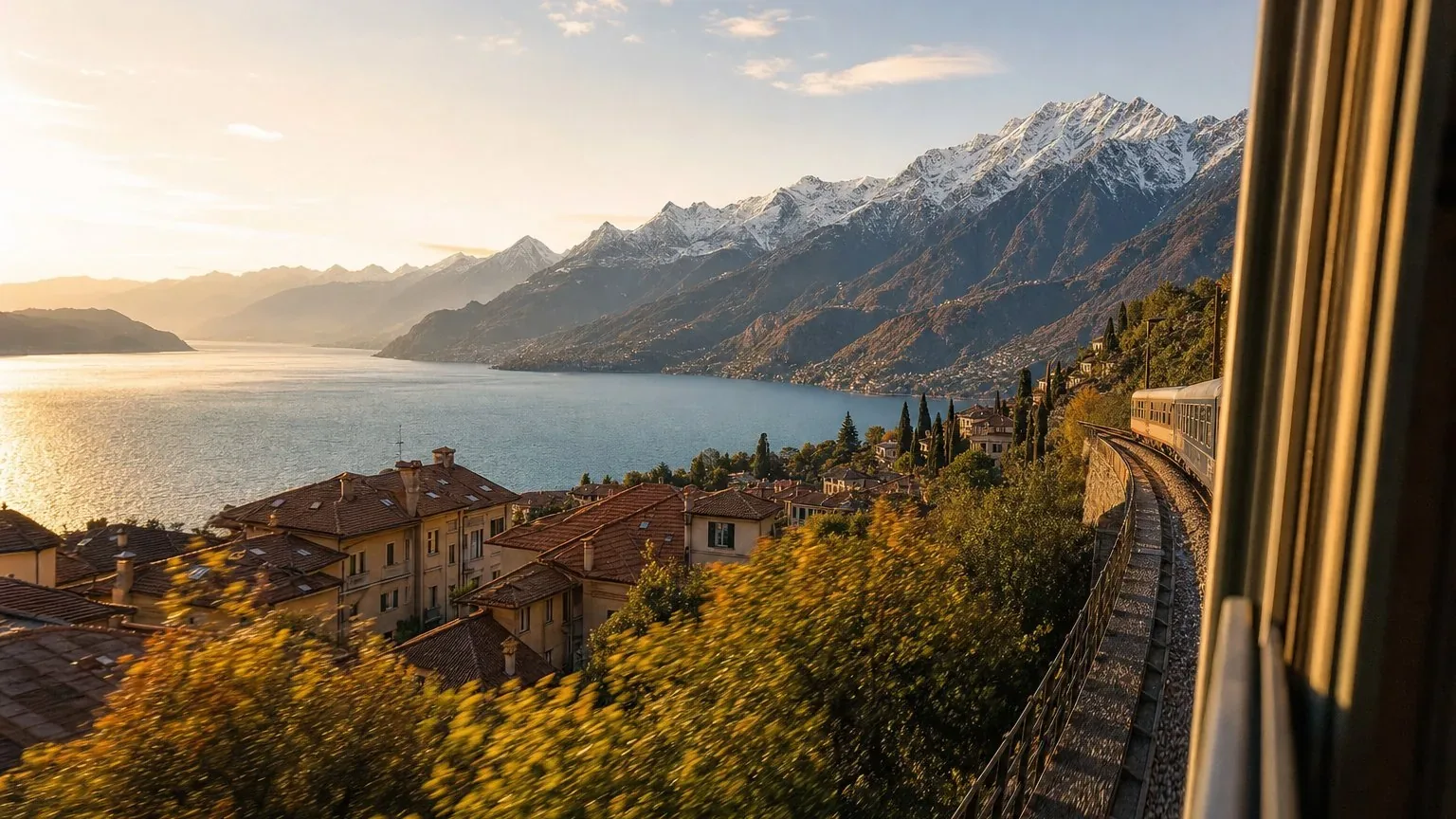
Give yourself at least seven days, though ten to fourteen suits most first-timers better. Seven days supports two or three bases, typically the Italian Lakes paired with one Swiss hub such as Lucerne or Interlaken, without daily hotel changes eating into sightseeing time.
Ten days keeps coming up in planning circles for good reason: it fits a major Italian city, the lakes, a scenic rail crossing, and two Swiss bases without feeling rushed. Fourteen days lets you add Rome, Florence, or the Dolomites at either end for travellers who want one big splurge destination.
The planning mistake I see most often is cramming in too many base changes. Every extra hotel switch costs a half day you didn't budget for, so keep a seven-day loop to two or three bases and save a fourth base for a longer trip.
This applies double to Swiss valley towns: Lucerne and Interlaken sit an hour apart, but pick one as your true base and treat the other as a day trip only if the connection is under 90 minutes each way. They look close together on a map and behave like separate countries on a timetable.
Two countries, one suitcase, and a train timetable that doesn't forgive optimism: plan the days, not just the destinations.
Why Italy and Switzerland Pair So Well for a First Trip
The Alps function as a hinge between Italian culture and Swiss mountain scenery, not a wall. Zurich sits roughly three and a half hours from Milan by direct train, and Lugano, an Italian-speaking Swiss city, is barely an hour away: an easy first taste of the crossing.
Both countries belong to the Schengen Area. There is normally no routine immigration control when travelling between Italy and Switzerland within Schengen, although temporary internal checks can be introduced, so keep your passport or valid travel document with you. A single Schengen entitlement covers the whole trip for most travellers, as confirmed by the European Commission's Schengen guidance.
Planning Basics: Currency, Cost, Best Time to Go, and Visas
Currency and daily budget
Italy uses the euro; Switzerland uses the Swiss franc, despite sharing a border with four eurozone countries, and this catches first-timers out at check-in more than almost anything else.
Switzerland is consistently one of the most expensive countries in Europe for hotels, meals, and local transport, and budget travellers should plan for noticeably higher daily costs once they cross the border.
Best time of year to visit Italy and Switzerland
Shoulder seasons, April to June and September to early October, are the strongest window: fewer crowds and lower prices in both the Italian lake towns and Swiss alpine resorts, with cable cars and scenic trains still running at full service.
Deep winter narrows your options. Certain mountain roads and sections of the Glacier Express route see reduced service or closures, and both the Bernina Express and Glacier Express run reduced winter schedules that can shift your itinerary by a day. Check the seasonal timetable before booking, according to the Rhaetian Railway.
Do you need a separate visa for Switzerland and Italy?
No, in most cases. Non-EU and non-EEA travellers, including US, UK, Canadian, and Australian citizens, can generally enter the Schengen Area, which covers both Italy and Switzerland, visa-free for up to ninety days in any rolling one-hundred-and-eighty-day period, and that single allowance covers your whole trip.
Travellers who do need a Schengen visa should apply through the consulate of the country where they'll spend the most nights, and should confirm entry requirements before booking since rules apply by nationality and do change, according to the UK Foreign, Commonwealth and Development Office. Italy and Switzerland publish separate travel advice pages despite sharing the Schengen zone, so check Italy's entry requirements alongside Switzerland's before you book.
Getting Between Italy and Switzerland by Train
Trains are the standard way to cross the border. Direct EuroCity services connect Milan and Zurich in about three and a half hours, several times daily, and Swiss Federal Railways (SBB) publishes live timetables and fares for every route into and out of Italy. Book a few weeks ahead in peak season: the route draws Swiss commuters as well as tourists.
- Milan to Lugano: about 1 hour, a good taster route.
- Milan to Geneva: around 4 hours, direct via Lausanne.
- Venice or Milan to Interlaken or Lucerne: no single direct route; expect a change at Milan, Basel, or Zurich, adding 1 to 2 hours over a direct city-to-city trip.
Scenic Rail Routes: Bernina Express and Glacier Express
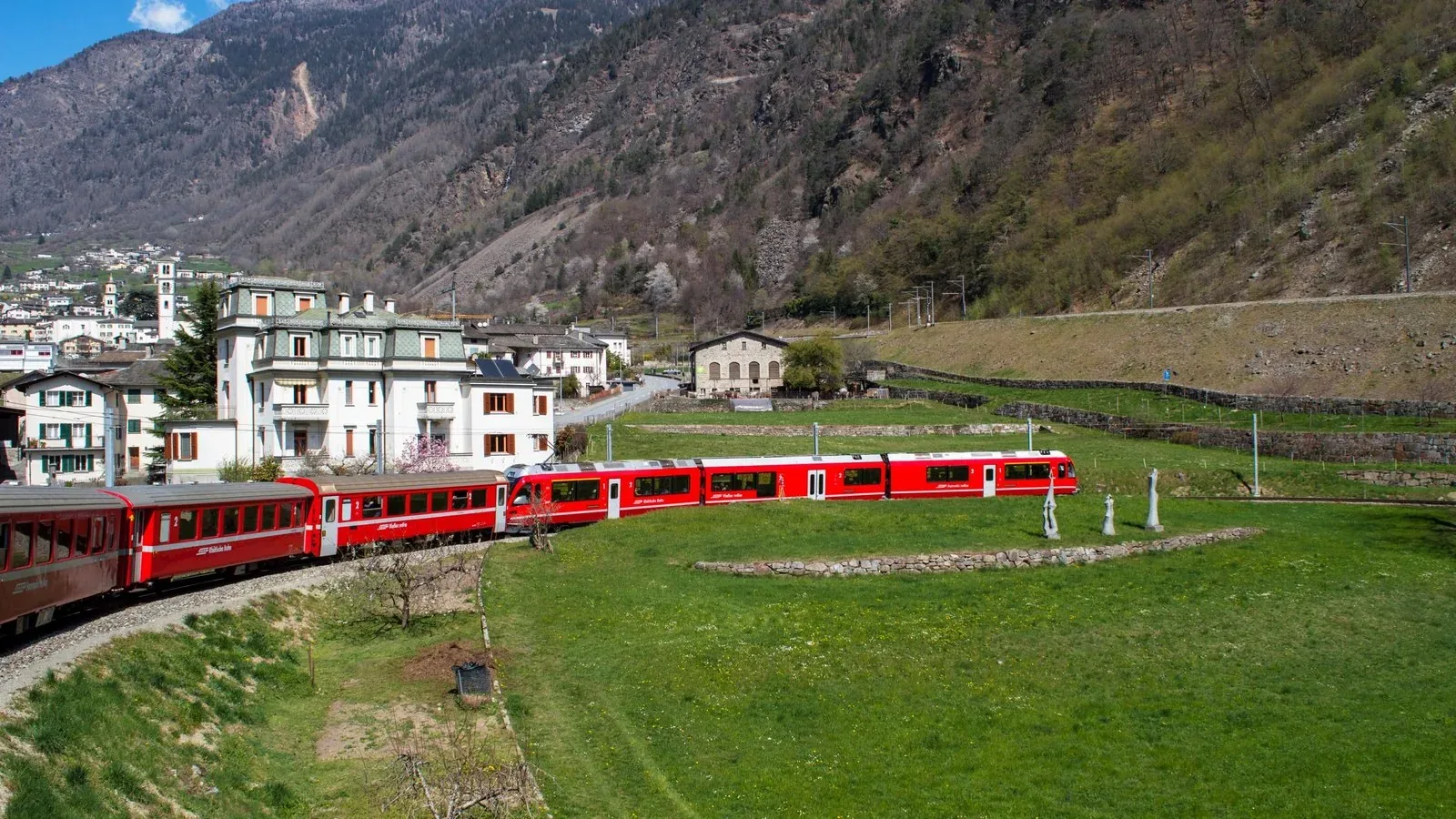
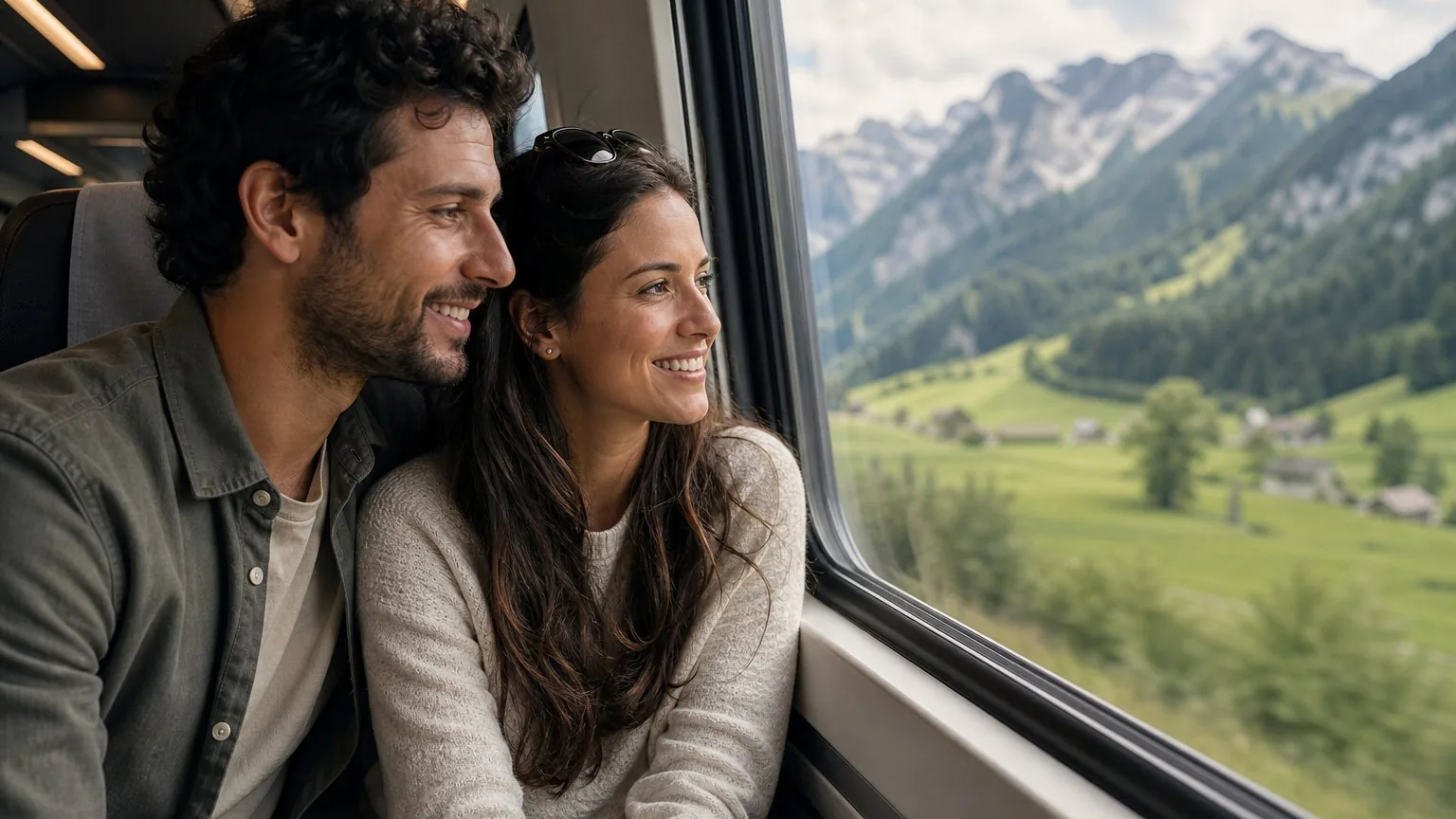
You can take a scenic train from Italy to Switzerland, one of the highlights of the whole trip. The Bernina Express runs between Tirano in Italy and St Moritz or Chur in Switzerland, crossing the Alps via the Bernina Pass on a UNESCO World Heritage line.
A typical Bernina Express day slots neatly into your route. Board in Tirano after a morning in the Italian Lakes, and arrive in St Moritz or Chur by afternoon, ready to continue into Switzerland.
The Glacier Express itself runs entirely within Switzerland, from Zermatt to St Moritz or Davos. Travellers often add it on via Milan through Zermatt, or from the Bernina line via St Moritz.
My advice: Reserve your seats well before summer. I've watched panoramic carriages on both routes sell out completely in July and August, so book the moment your dates are fixed.
Source: Rhaetian Railway (RhB), rhb.ch
A mix-up worth avoiding: the Bernina Express doesn't need an overnight in St Moritz. Ride it from Tirano and back to Milan in a single day if your schedule is tight, or continue to Chur if that suits your onward leg better. Sit on the right side heading north out of Tirano, that's the glacier side.
The Bernina Express doesn't just cross a border, it makes the border the scenery.
Rail Passes vs Point-to-Point Tickets: Swiss Travel Pass vs Eurail
The Swiss Travel Pass earns its cost only if you're moving between multiple Swiss regions most days. It covers nearly all Swiss public transport, plus discounted mountain railways and free museum entry, according to the Swiss Travel System.
For one or two Swiss point-to-point journeys, say Milan to Zurich, then Zurich to Lucerne, individual tickets or a Half Fare Card usually beat a multi-day pass on price.
Eurail and Interrail Global Passes cover both countries, but Italian high-speed trains like Frecciarossa need paid seat reservations on top of the pass, eroding its value there. Swiss trains rarely require reservations, so the pass performs better north of the border, per Eurail's own pass conditions.
| Option | Best for | Verdict |
|---|---|---|
| Swiss Travel Pass | Multi-region Swiss hopping most days | Worth it if you're constantly moving inside Switzerland |
| Eurail/Interrail Global Pass | Long multi-country loops beyond Italy and Switzerland | Good value on Swiss legs, weaker on reserved Italian trains |
| Point-to-point tickets | Simple itineraries with one or two border crossings | Usually cheapest for short, focused trips |
Add up your planned journeys before buying any pass. The Swiss Travel System's own fare calculator will tell you honestly whether individual tickets beat the pass for your route, worth the two minutes it takes.
Rail-pass confusion trips up almost every first-timer here: the Swiss Travel Pass covers the ride, not the seat. Panoramic reservations on the Bernina Express and Glacier Express sit outside any pass, Swiss or Eurail, and cost extra regardless of which one you're holding. Budget for that fee separately, or the pass will feel like it let you down when it didn't.
Should You Drive? The Case Against a Rental Car
A rental car works well in the Italian Lakes, where Como and Maggiore reward flexibility, but becomes a liability once you cross into Swiss cities. Old towns are heavily pedestrianised, parking runs expensive, and Swiss motorways require a vignette rather than pay-per-use tolls like Italy's autostrade.
Mountain passes also close seasonally, and rental agencies rarely allow one-way drop-off across the Italy-Switzerland border without a steep fee. A car cannot replicate a scenic rail crossing like the Bernina Express, since that route is rail-only. If you rent for the Italian Lakes, hand the car back in Italy before crossing into Switzerland by train: mixing driving and rail works far better than driving the whole loop.
Sample Italy Switzerland Itineraries: 7, 10, and 14 Days
7 days: compact first-timer loop (6 nights)
Flagship route: Milan, two nights, then Lake Como, one night, reached by a short regional train. From Como, cross the border to Lugano, one night, then transfer to Lucerne, two nights, via Zurich. Fly out of Zurich on day 7 after a morning in the city, no extra night needed.
That's six nights across seven days, with every transfer under three hours.
Swap: Replace Lucerne with Interlaken for a mountains-first finish; the transfer times and night count stay the same.
10 day Italy Switzerland itinerary: the most recommended balance (9 nights)
Flagship route: Milan, three nights, then Lake Como, one night. On day 5, travel from Como to Tirano and board the Bernina Express into St Moritz, one night, making the train ride itself the day's activity. Continue to Interlaken, two nights, then Lucerne, two nights, and fly out of Zurich on day 10.
That's nine nights across ten days, with one dedicated scenic-rail transfer day built in rather than squeezed between sightseeing.
Swap: Trade Interlaken for Zermatt to ride the Glacier Express as your second scenic leg; the night count doesn't change.
14 days: full loop with Rome or the Dolomites (13 nights)
Flagship route: Rome, two nights, then Florence, two nights, then Milan, two nights. Continue to Lake Como, one night, and on to Tirano for the Bernina Express into St Moritz, one night. From there, Interlaken, two nights, then Lucerne, two nights, and a final night in Zurich before flying out on day 14.
That's thirteen nights across fourteen days.
Swap: Drop Florence for two extra nights in the Dolomites if mountain scenery matters more than Renaissance art; the total still lands at thirteen nights.
Italy Switzerland Itinerary for Couples
Couples generally get more out of fewer, longer stops than a packed sightseeing checklist. Anchor a couples' trip around the ten-day structure, but trade one Swiss city night for an extra night in a mountain base like Lauterbrunnen or Zermatt, where the pace naturally slows down.
Build in one splurge, whether that's a scenic-train panoramic seat, a lake-view dinner in Como, or a cable-car sunset in the Alps, and keep everything else simple. Travel in shoulder season for better rates and quieter panoramic carriages than July and August bring, according to Switzerland Tourism.
Italy Switzerland Itinerary on a Budget
Budget travellers should weight their nights toward Italy and treat Switzerland as a focused, shorter leg rather than an equal split. Spend more nights in Milan, Venice, or the Italian Lakes, where accommodation and food cost less, and compress the Swiss portion into three or four nights around one mountain base and one city.
Cook or self-cater where you can in Switzerland, buy groceries rather than restaurant meals for a few days, and lean on the Half Fare Card if your Swiss train use is light.
One myth worth killing: booking Swiss regional trains a few days ahead rarely saves you money, since most point-to-point fares are fixed regardless of booking window. The real savings come from choosing the right pass, not the right booking date, per SBB.
Before You Book
- Have you counted your actual Swiss train journeys to decide if a pass beats point-to-point tickets?
- Does your route include a scenic crossing like the Bernina Express, and have you checked its seasonal schedule?
- Are you travelling in shoulder season, when both crowds and prices ease off?
- Have you confirmed your passport's Schengen entry allowance covers your full trip length?
- Have you limited your itinerary to four or five total bases for a ten-day trip?
- Have you budgeted separately for Italy and Switzerland, given the real cost gap between them?
Choosing where to stay matters as much as the train logistics: a hotel in the wrong neighbourhood can undo a well-planned route. Score your hotel's location free in two minutes with the Wanderess Hotel Check before you book.
Not Sure Your Hotel Is in the Right Area?
A great itinerary can still fall apart if your hotel is in the wrong part of town. Run a free check before you book.
Score your hotel's location in 2 minutes →For deeper planning tools, including budget calculators, check the Wanderess Shop.
Frequently Asked Questions: Italy Switzerland Itinerary
How many days do you need for an Italy and Switzerland itinerary?
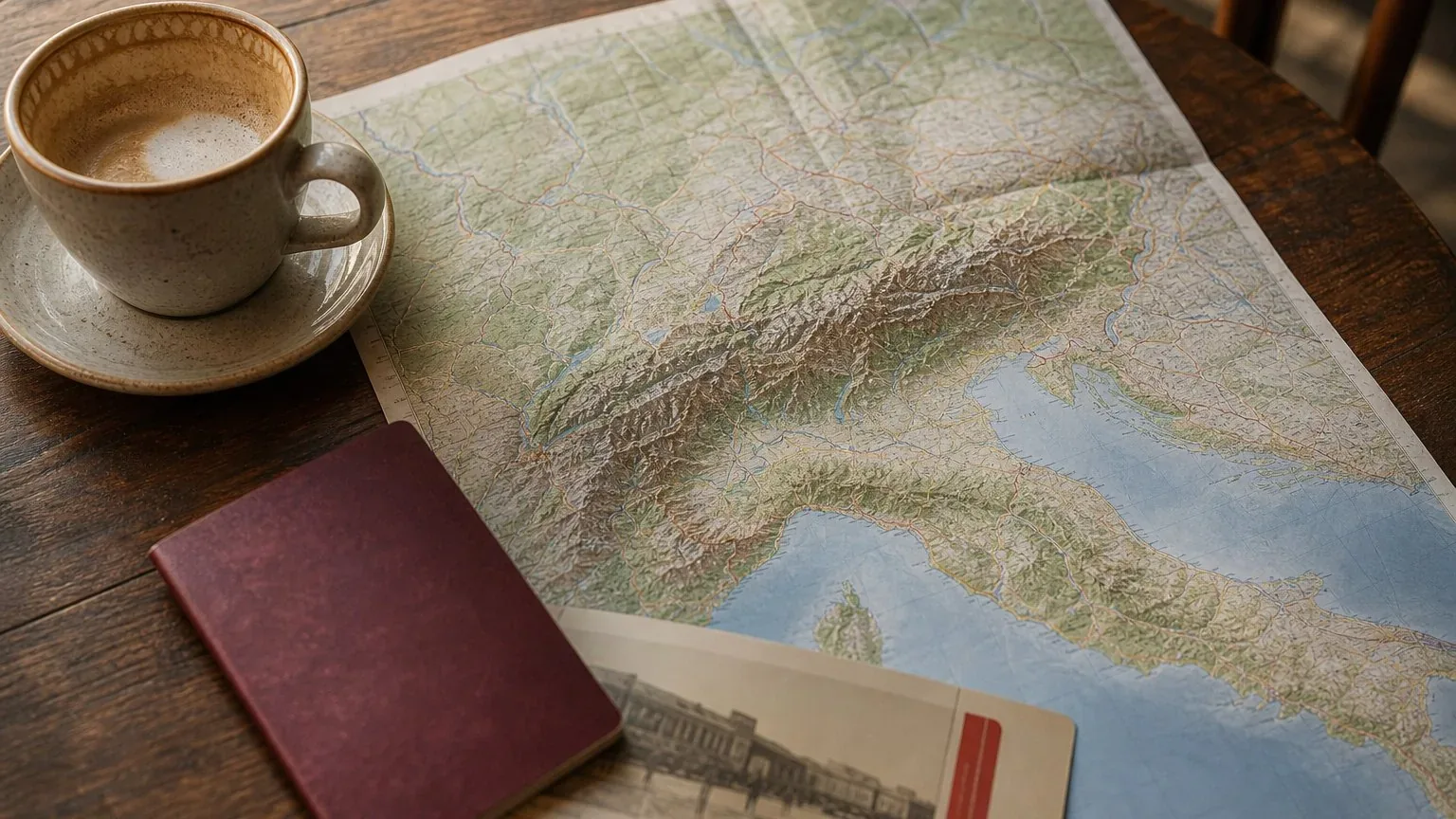
At least seven days for a basic loop; ten to fourteen suits first-timers wanting Venice or Rome, the Italian Lakes, and two or three Swiss regions.
What is the best way to travel between Italy and Switzerland?
Train. Direct EuroCity services link Milan with Zurich, Lugano, and Geneva; the Bernina Express adds a scenic crossing between Tirano and St Moritz.
Do you need a separate visa for Switzerland and Italy?
No, in most cases. Both sit inside the Schengen Area, so a single ninety-day allowance within any one-hundred-and-eighty-day period covers travel across both.
Is the Swiss Travel Pass worth it for an Italy-Switzerland trip?
Only if you're moving between multiple Swiss regions most days; otherwise point-to-point tickets or a Half Fare Card cost less.
What is the best time of year to visit Italy and Switzerland?
April to June and September to early October: fewer crowds, better prices, and cable cars and scenic trains still running at full service.
How much more expensive is Switzerland than Italy?
Switzerland typically costs noticeably more than Italy for the same hotels, meals, and transport, one of Europe's priciest countries to travel through.
Can you take a scenic train from Italy to Switzerland?
Yes. The Bernina Express runs between Tirano in Italy and St Moritz or Chur in Switzerland, crossing the Bernina Pass on a UNESCO-listed rail line.
Is a rental car ever a good idea on this trip?
Only for the Italian Lakes. Return it before crossing into Switzerland: pedestrianised old towns, expensive parking, and vignette requirements make driving there impractical.
Further Reading
Sources and References
- European Commission. Schengen Area. home-affairs.ec.europa.eu
- Swiss Travel System. Swiss Travel Pass. swisstravelsystem.com
- Rhaetian Railway (RhB). Bernina Express. rhb.ch
- Glacier Express AG. Glacier Express Route Information. glacierexpress.ch
- SBB (Swiss Federal Railways). Timetables and Fares. sbb.ch
- UK Foreign, Commonwealth and Development Office. Switzerland Travel Advice. gov.uk/foreign-travel-advice/switzerland
- UK Foreign, Commonwealth and Development Office. Italy Travel Advice. gov.uk/foreign-travel-advice/italy
- Eurail. Global Pass Conditions. eurail.com
- Switzerland Tourism. Planning Your Trip. myswitzerland.com